
Esports betting in New Zealand: where it stands and what each path costs
 Available in US

Since 28 June 2025 a single rule has reshaped the local market: only TAB NZ may take sports and racing bets from people in New Zealand, and its two online brands — TAB and Betcha — are the only lawful online bookmakers for a New Zealand address. Everything else a New Zealand punter sees in the search results sits outside that frame, which is the reason a guide that simply lists “the best esports betting sites” tells only half the story.
This page sets out the three paths a New Zealand bettor actually faces, the price mechanics under each, and where the statute leaves the player. As of October 30, 2026, the licences claimed by every operator reviewed here were verified against the Department of Internal Affairs register of authorised providers.
Responsible gambling tools and the limits New Zealand puts on a TAB NZ account
The local option ships with the safeguards offshore sites do not. TAB NZ’s app exposes deposit limits, time-outs and self-exclusion; the same exclusion covers both TAB and Betcha, so a punter who closes one closes the other. The free Gambling Helpline (0800 654 655, text 8006) sits inside the app, alongside Safer Gambling Aotearoa, and the operator pays a Problem Gambling Levy of 0.74 % in force from 1 July 2025 to 30 June 2028.
The offshore brands do not plug into that framework at all. They name Anjouan, Curaçao, Tobique, Comoros or no licence at all, and none of those jurisdictions answers to the Department of Internal Affairs. A complaint a New Zealand punter files with one of those licences lands in another country under another country’s rules. The advertised deposit caps and withdrawal tiers on those sites are theirs to set and theirs to change.
So the choice between TAB NZ and an offshore brand is not really “where the odds are best”. It is a choice between a tooled, levy-funded harm-minimisation system with an addressable regulator, and a site where the only limit is the one the operator wrote into its terms last week.
Crypto deposits, pseudonymity and the offshore cashier
Esports bettors skew younger and more skew toward Bitcoin and USDT than older racing punters do, which is why the offshore cluster has built its cashier around coins. The audit of those brands shows the same pattern: a Curaçao or Anjouan licence, a wallet that takes BTC, ETH, USDT and a handful of altcoins, and a withdrawal tier that scales with VIP level rather than with any external rule. New Zealand Dollars show up in the limits tables at one brand, the NZD side sitting alongside EUR and USD; at another brand the cashier is crypto-only and the on-ramp runs through a third-party exchange.
The pseudonymity that buys is partial. Crypto wallets are public ledgers; every deposit and withdrawal is traceable by anyone holding the address. New Zealand law puts the liability on the operator serving a New Zealand punter, not on the punter, and there is no published penalty for a player — section 19(4) of the Gambling Act 2003 (inserted in 2025) leaves the individual outside the criminal frame — but a winnings trail on a public ledger is not the same thing as a private cashier, and the Department of Internal Affairs warns that overseas operators may not pay out large wins.
TAB NZ’s own cashier does not run on crypto. It takes cards and bank transfer, with a verified New Zealand address behind every deposit, and the limits live inside the deposit-cap tool in the app. A punter who wants to fund a TAB NZ account with Bitcoin has to convert on an exchange first, and the exchange becomes part of the trail.
Bonus bets, free bets and what “100 % bonus” actually costs
A TAB NZ “bonus bet” promotion sits at one end of the offer spectrum: a token stake the punter uses inside the TAB NZ app, settled like a free bet — the winnings pay back but the stake usually does not. The terms live on TAB NZ’s own pages and are the only local terms, because there is no other lawful bookmaker here.
The offshore cluster runs the other offers the search results tend to surface. LegendPlay lists First Deposit Bonus, Weekly Reload Bonus, Sport Jackpot, Virtual Sports Excitement and Acca Boost. BillyBets builds a coin shop around deposits, betting volume, tournaments and challenges, with the coins swapping for free bets and free spins on a five-tier VIP track. Golden Panda folds cashback, a rewards programme and Prediction Markets into the same wallet. Every one of those offers costs the punter something, and the cost sits in the wagering factor, the minimum price on qualifying bets, the deadline and the cap on free-bet winnings — the headline number reads as the offer, the small print reads as the price.
The single sharpest question to ask any offer is the minimum price for a qualifying bet. A “100 % bonus” with a 5× wagering factor at minimum odds of 1.80 is a different beast from the same line at 1.50, and the difference is several percentage points of expected cost on the turnover. None of that cost is signalled by the bonus headline; all of it lives below it.
Payments and payout speed in New Zealand
TAB NZ’s app pairs deposits with a simplified wallet, racing-form tools and Trackside live-streaming inside the same surface. Withdrawals run through the same wallet, and the timing is a function of the bank rather than of TAB NZ — a card refund clears at card-refund speed, a bank transfer clears at bank-transfer speed.
Offshore, the picture splits. Millioner states openly that e-wallet deposits and payouts are fast while credit card transactions take longer because a bank processes them. BigClash and BetAlright publish a withdrawal-limits table in NZD that climbs from NZ$1,000 a day and NZ$13,000 a month at the lowest VIP tier to NZ$3,000 a day and NZ$35,000 a month at the top — five levels, each with its own ceiling, and a punter at level 1 cannot move the day’s winnings out any faster than the table allows. The escalation is the price of the larger account, and most punters stay at level 1 long enough to learn what “VIP” actually means in the cashier.
The constraint worth naming is the one the cashier cannot show: an offshore operator may not pay out at all. The Department of Internal Affairs warns that overseas operators may be in jurisdictions with minimal consumer safeguards, may not return unspent credits and may not pay out large wins. A payout speed table that assumes the operator pays is not a payout speed table.
The mobile app, the browser and the in-play tote
TAB NZ’s app is the only lawful in-play surface for a New Zealand address. Trackside streams live races into the app, the bet slip lives next to the stream, and the wager settles the moment the result lands. The app is also where the deposit cap, the time-out and the self-exclusion sit, which is why the app is the place the responsible-gambling section of this page points to.
Offshore brands run mobile-first by default. The bet slip sits inside a web app and the markets reload on the same socket the stream uses, so a live bet on a Counter-Strike round fires while the round is still in play. The mechanics work; the licence frame does not, and a punter who opens that app from a New Zealand address is using it through the offshore operator’s terms, not New Zealand’s.
The same split holds for browser access. A TAB NZ browser session looks like every other bookmaker browser session; an offshore browser session looks identical to a TAB NZ one, and the punter is the only one who can tell which frame they are betting under.
Live betting, cash out and the live-esports moment
A live bet on esports is a bet on something still in motion: the next round of a Counter-Strike map, the next dragon kill in League of Legends, the next pistol round in Valorant. The price moves as the game moves, and a punter who clicks at the right second wins a larger price than the pre-match line offered. TAB NZ’s app lists live betting, and an in-play esports market inside that frame is the only lawful live-esports bet a New Zealand punter can place.
Cash out, where the bookmaker offers to settle the bet early at a price the bookmaker sets, is a separate decision on top of the live bet. The price the bookmaker offers is its own price, with its own margin baked in; a punter who cashes out a winning position is selling the rest of the upside for a guaranteed number, and the guaranteed number is the bookmaker’s number. That trade is fair when the bookmaker offers a fair price, and it is rarely that.
The live-esports cluster also catches the FIFA esports markets — the video-game version of football that runs on a separate fixture calendar and a separate in-play rhythm. Same shape as the FPS and MOBA markets: live odds, in-play pricing, a settlement on a real result.
Predictions, “tips” sites and the cost of following a forecast
The search terms around this subject cluster around “esports betting tips”, “esports betting predictions” and the like. The page they tend to land on sells a tipster service or a sure-bet system; the product is the promise, and the promise is the part no one can deliver.
No model and no tipster can know the result of a Counter-Strike map before it is played. What a tip can do is name a price the punter can ignore, flag a market the bookmaker priced too wide, or note a roster change that moves the line. Those are useful, and they are the most a tip will ever be. An offer promising a guaranteed outcome is a contradiction: a price wide enough to be “guaranteed” is a price the bookmaker closes within minutes, and the punter who reaches the page after the link has been clicked is the punter who took the closing line.
A forecast of an esports result is a guess with a tipster’s name on it. A forecast of a margin or a price is a calculation, and this page does the second one.
Bet types, odds and what a decimal price actually says
A TAB NZ bet slip runs in decimals: $1.50, $2.10, $3.40. The return on a winning bet is the stake multiplied by the price — a $10 stake at $2.10 returns $21, with $11 of that being net profit. The same arithmetic holds at every bookmaker; the only thing that changes is which side of the price the bookmaker’s margin sits.
A multi bet multiplies the prices of the legs into one price. A two-leg multi at $1.50 and $2.10 reads as a $3.15 multi; a four-leg multi at $1.50, $1.80, $2.00 and $2.50 reads as $13.50. The multiplication is straightforward; the probability of every leg landing is lower than any single leg landing, and a long multi at a long price is not the same kind of bet as a short multi at a short price.
Same Game Multis (SGMs) are a TAB NZ product where every leg of the multi comes from one event. The price reflects both the leg base and the bookmaker’s correlation view, and the correlation is the part the punter is paying for.
The arithmetic of a single price is the next section.
What the margin looks like inside the odds
A two-way market priced at $1.90 / $1.90 has a payout share of 1 ÷ (1/1.90 + 1/1.90) = 1 ÷ (0.526 + 0.526) = 1 ÷ 1.053 = 94.96 %, and a margin of about 5.0 % on the round. The same market at $1.85 / $1.85 sits closer to 92 % and a margin near 8 %; the same market at $1.95 / $1.95 sits closer to 97 % and a margin near 3 %. The band the price moves in is the band the bookmaker keeps of every dollar bet on that market, and the difference between a 3 % margin and an 8 % margin is the difference between $3 and $8 the bookmaker keeps of every $100 wagered.
A live-esports market is usually wider than a pre-match market on the same event — the price moves faster, the bookmaker’s correlation model is thinner, and the overround reflects that. The arithmetic is the same; the band is wider.
Fixtures, tournaments and the esports competition calendar
The games that draw the betting volume are League of Legends, Dota 2, Counter-Strike, Valorant, Overwatch, Call of Duty, Fortnite, Rocket League and StarCraft. Each runs a competition calendar distinct from the others — League of Legends on the World Championship and the regional splits, Dota 2 on The International and the DPC, Counter-Strike on the Majors and the IEM circuit. A bettor who picks one game and follows it for a season learns the teams, the metas and the bookmakers’ pricing habits on it; a bettor who jumps between five games every week is paying the bookmaker’s margin on a market the bettor does not yet understand.
The Esports World Cup 2026 runs from 6 July to 23 August 2026 in Paris with a US$75 million prize pool across 24 games; the 2025 edition had a US$71.5 million prize pool, and Team Falcons won the Club Championship in 2025 defending its 2024 title. The International 2021 for Dota 2 had a prize pool above US$40 million, the largest in esports history at that time.
The competitions worth knowing
The competitions that move the betting markets are the ones a TAB NZ punter will see priced: the League of Legends World Championship, The International in Dota 2, the Evolution Championship Series (EVO) for fighting games, and Intel Extreme Masters across multiple titles. Each competition has its own format — group stage, double-elimination bracket, single-elimination playoff — and the format shapes the markets the bookmaker prices. A double-elimination bracket produces more matches per round and a different late-tournament price shape than a single-elimination bracket, and the live markets behave differently in each.
Top 10 esports-facing operators a New Zealand punter encounters
This is not a ranking, and it is not a recommendation. TAB and Betcha are the two online brands of the one lawful local operator; the other eight brands are listed because a New Zealand punter meets them in the search results, and each is marked “not licensed in New Zealand”. None of the eight holds a licence that gives it a right to take bets from people in New Zealand, and that is the first thing any review of one of them has to say.
| Brand | New Zealand status | What the operator’s own terms state on the key subject |
|---|---|---|
| TAB | TAB NZ brand — lawful under section 74AAA | Bonus bets settled in the TAB NZ app; deposit limits, time-outs and self-exclusion in the safer-gambling tools; live betting and Trackside live-streaming in the same app. |
| Betcha | TAB NZ brand — lawful under section 74AAA | Same TAB NZ harm-minimisation framework as TAB; exclusion covers both brands; live betting and sportsbook inside the Betcha app. |
| LegendPlay | Not licensed in New Zealand | First Deposit Bonus, Weekly Reload Bonus, Sport Jackpot, Virtual Sports Excitement and Acca Boost listed on the sports promotions page. |
| BetNinja | Not licensed in New Zealand | Holds an online-gaming licence from the Union of the Comoros; New Zealand harm-minimisation framework does not reach it. |
| BigClash | Not licensed in New Zealand | Curaçao licence 8048/JAZ; NZD appears in the withdrawal-limits table from NZ$1,000/day at VIP 1 to NZ$3,000/day at VIP 5; New Zealand not in the excluded-jurisdictions list. |
| BillyBets | Not licensed in New Zealand | Cashback and reload bonuses on sports plus a coin shop where deposits and betting volume convert to free bets and free spins; five-tier VIP. |
| BetAlright | Not licensed in New Zealand | No licence applies in New Zealand; NZD appears in the withdrawal-limits table from NZ$1,000/day at level 1 to NZ$3,000/day at level 5; New Zealand not in the excluded-jurisdictions list. |
| Golden Panda | Not licensed in New Zealand | Sportsbook, esports and virtual sports in the Sports section, with rewards, cashback, a VIP Club and Prediction Markets. |
| Millioner | Not licensed in New Zealand | E-wallet deposits and payouts fast; credit-card transactions slower because a bank processes them; no licence applies in New Zealand. |
| Rooster | Not licensed in New Zealand | Tobique Gaming Commission e-gaming licence No. 0000002 (holder Novatrix SRL); no right to take bets from people in New Zealand. |
TAB — the lawful bookmaker for a New Zealand address
TAB runs the lawful end of the New Zealand market. Its app is the only place a New Zealand punter can bet on esports under a New Zealand harm-minimisation framework with the deposit cap, the time-out and the self-exclusion that the app enforces. Bonus-bet promotions live on TAB NZ’s own terms; Trackside streams live races with the bet slip next to the stream. The closer is the framework, not the odds: TAB NZ runs the local levy, the regulator’s oversight and the complaints route, and that is what a TAB NZ account buys that no offshore account does.
Betcha — the other lawful brand of TAB NZ
Betcha is the same operator group as TAB, run under the Entain partnership that gives Entain a 50/50 share of gross profits with at least NZ$150 million a year going to TAB NZ for the first five years and a one-off NZ$100 million payment to the racing sector. A Betcha account and a TAB account share the same exclusion list, the same deposit-cap tool and the same wallet back-end; the brand is a different skin on the same legal entity. That is the reason a review of Betcha is not a review of a rival bookmaker — it is a review of an alternative front end to the one lawful operator.
LegendPlay — offshore, Anjouan-licensed, sports-promo-heavy
LegendPlay lists five named sports promotions on its homepage — First Deposit Bonus, Weekly Reload Bonus, Sport Jackpot, Virtual Sports Excitement and Acca Boost — and that is the picture of the brand: offer-led, with a sportsbook that runs esports. The Anjouan licence gives no right to take bets from people in New Zealand. The verdict for a New Zealand punter is the same one the offshore cluster wears as a whole: a usable cashier and a deep offer shelf, but no New Zealand harm-minimisation framework, no regulator a New Zealand punter can write to, and an offer shelf whose wagering factors are the only true price.
BetNinja — offshore, Comoros-licensed
BetNinja states it is licensed to conduct online gaming operations by the Union of the Comoros, and that is the licence frame the brand sits inside. The closer for a New Zealand punter is the gap between the licence name and the harm-minimisation framework the local option runs: a Comoros licence does not answer to the Department of Internal Affairs, does not enforce a New Zealand deposit cap and does not feed into the Gambling Helpline. The brand is one of a dozen similar skins; the difference between them is the welcome-offer headline, not the framework.
BigClash — offshore, Curaçao-licensed, NZD in the cashier
BigClash names a Curaçao licence (8048/JAZ) and publishes a withdrawal-limits table that includes NZD — NZ$1,000 a day and NZ$13,000 a month at VIP level 1 climbing to NZ$3,000 a day and NZ$35,000 a month at level 5. New Zealand is not on the excluded-jurisdictions list, so the cashier is technically open to a New Zealand address; the operator’s own terms do not include the New Zealand harm-minimisation framework. A punter at level 1 cannot move more than NZ$1,000 a day out of the wallet, and the climb to level 5 is a function of deposit and betting volume rather than of any external rule.
BillyBets — offshore, no local licence, coin-shop on top of reloads
BillyBets runs cashback and reload bonuses on top of a coin shop where coins collected by depositing, betting, tournaments and challenges convert to free bets and free spins; the VIP track has five levels. The offer shelf is the brand’s selling point. The closer is the same shape every offshore brand closes on: the coin shop rewards volume, the volume spends the punter’s bankroll, and the New Zealand harm-minimisation framework does not reach any of it.
BetAlright — offshore, no local licence, NZD in the cashier
BetAlright’s terms do not list New Zealand among the excluded jurisdictions, the NZD appears in the withdrawal-limits table from NZ$1,000 a day and NZ$13,000 a month at level 1 climbing to NZ$3,000 a day and NZ$35,000 a month at level 5, and the brand names no licence that applies in New Zealand. The combination is the one the offshore cluster wears to its best — a cashier that takes NZD, a withdrawal table that is transparent, no local regulator — and the closer is the same one: a usable cashier with no New Zealand framework behind it.
Golden Panda — offshore, no local licence, sportsbook and esports under one roof
Golden Panda runs a Sports section with a sportsbook, esports and virtual sports, alongside casino, live casino, crash games, rewards, cashback, a VIP Club, Golden Goals and Prediction Markets. The breadth is the brand’s selling point and the brand’s risk — a casino-heavy operator carries a casino-side dispute risk into a sportsbook review. A New Zealand punter who plays esports here plays it through the same cashier that runs slots, and the New Zealand framework does not reach either.
Millioner — offshore, no local licence, e-wallet cashier
Millioner states openly that e-wallet deposits and payouts are fast while credit card transactions take longer because a bank processes them, and that is the clearest cashier description in the cluster. The closer for a New Zealand punter is the gap between a fast e-wallet and a slow card refund: a fast cashier is a fast cashier only if the operator chooses to pay, and the Department of Internal Affairs warns that overseas operators may not pay out large wins. Speed is the brand’s pitch; certainty is the question the pitch does not answer.
Rooster — offshore, Tobique-licensed, Costa Rican operator
Rooster is operated by Novatrix SRL, a company incorporated in Costa Rica with registration number 3-102-893958, under e-gaming licence No. 0000002 issued by the Tobique Gaming Commission. The Tobique licence does not extend to New Zealand, and the closer is the same one every offshore brand closes on: a bookmaker the New Zealand regulator cannot reach, and a cashier the New Zealand harm-minimisation framework does not cover.
Fundamentals of esports and how a betting market sees the game
Esports is a form of competition using video games, usually organised multiplayer competitions between professional players, individually or in teams. The betting market sees the same thing through a different lens: a fixture list, a roster, a price, a margin and a settlement rule. The two views meet in the bet slip, and a bettor who learns the second view first and the first view second reads prices more accurately than the inverse.
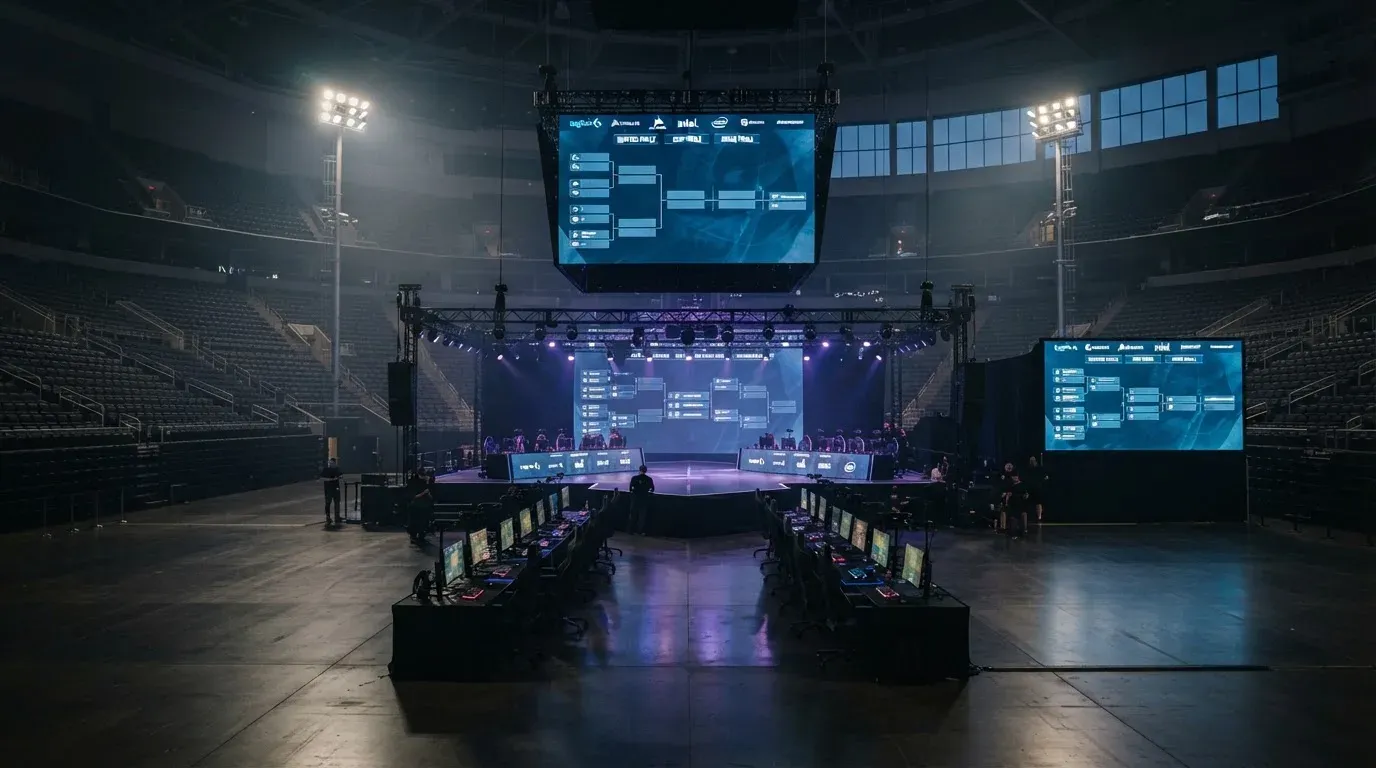
The roster is the first thing the price moves on. A team that swaps a key player between two matches is priced differently on those two matches; the line moves the moment the swap is confirmed, and a punter who caught the swap a day earlier caught the older price. The meta — the dominant strategy in a game’s current patch — moves next, and a roster that built its game around the old meta is priced for the old meta until it shows the new one. The format is the third thing: a single-elimination playoff is a one-shot price, a double-elimination bracket is a multi-shot price, and the live markets behave differently in each.
The settlement rule is the last thing and the most under-discussed. A bet on “first blood” in League of Legends settles on the first kill of the game; a bet on “first to ten kills” settles on the team that hits the threshold first. The same words on two different operators can settle under different rules, and the punter who does not read the rule pays for the rule.
Statute and the licence frame in New Zealand
The Racing Industry Act 2020 establishes TAB NZ as the sole betting provider for racing and sports in New Zealand, and the Racing Industry Amendment Act 2025 inserted section 74AAA: no person other than TAB NZ may offer racing betting, sports betting or other racing or sports betting to a person in New Zealand, regardless of where that person is resident or incorporated; the change took effect on 28 June 2025 and the Department of Internal Affairs told unlicensed providers to withdraw with immediate effect. There is no licensing route for another bookmaker and no licence register for betting, because there is only one lawful operator.

The Online Casino Gambling Act 2026 licenses online casino gambling only and does not license sports betting; TAB New Zealand winning the right to apply for a casino licence does not extend the betting monopoly. Greyhound racing is closing in stages from 1 August 2026, and from that date offshore operators may not take bets on greyhound races either.
What the statute does to the player
The statute puts liability on the operator serving a New Zealand punter, not on the punter. Section 19(4) of the Gambling Act 2003 (inserted in 2025) says an individual may not be convicted for placing a bet with an offshore betting operator in breach of section 74AAA; no source states a penalty for a player. The honest framing is: TAB NZ and Betcha are the only lawful option, with New Zealand harm-minimisation tools, regulator oversight and a complaints framework; offshore is unlawful for the operator to serve New Zealand, with no New Zealand complaints route, with the Department of Internal Affairs’s stated risks, and with limits possible elsewhere. Neither is the safe choice by default.
Tax, advertising and the operator’s own frame
For the player, Inland Revenue guidance says recreational gambling winnings are generally not taxable and prize money from TAB horse, dog and trotting races is not taxable; a person who bets as a business is a different case, and a reader in that case is advised to consult Inland Revenue or an accountant. Operator side: TAB NZ pays the Problem Gambling Levy (0.74 %); overseas operators supplying New Zealand residents pay online gambling duty (12 % of profits since 1 July 2024, 16 % from 1 January 2027), but a duty being payable does not make an offer lawful. The point-of-consumption charge on offshore racing and sports bets ceased on 30 June 2026.
The Advertising Standards Authority’s Gambling Advertising Code applies to betting advertisements: ads must not target children (under 14) or young people (14 to under 18), judged by context, appeal and expected audience (25 % or more of the audience counts as significant where accurate data exists), must not encourage harm, and must be truthful with terms available. There is no New Zealand equivalent of a whistle-to-whistle ban for betting.
Choosing a path in 2026
The three paths a New Zealand esports punter actually faces are narrower than the search results suggest. TAB and Betcha run the only lawful frame, and the choice between them is the choice between two skins on the same operator. The offshore cluster runs the only “alternative” frame, and the choice inside it is the choice between eight brand skins on essentially the same offer. The fantasy of a third path — a New Zealand punter on an unregulated site that pays out reliably under a local regulator — does not exist, and a punter who acts as though it does is acting on a frame that is not there.
For a punter who wants esports markets under a New Zealand harm-minimisation framework, TAB NZ is the answer, and the choice between TAB and Betcha is a UI choice. For a punter who wants a deeper offer shelf, a crypto cashier and a wider VIP track, the offshore cluster is the answer, and the choice inside it is a wagering-factor and minimum-price choice rather than a framework choice. The frame the punter bets under is the frame that decides whether a complaint can be answered, whether a payout can be enforced and whether a self-exclusion applies across both brands — and that frame is decided by the licence, not by the welcome offer.
How to bet on esports in New Zealand
Open a TAB NZ account with a verified New Zealand address, set a deposit cap inside the app, browse the esports markets, pick a market, place a single or multi bet with a stake that fits the cap, and settle the bet on the result the bookmaker records. Bonus bets settle under TAB NZ’s own terms, and a Same Game Multi on one esports event prices every leg of the multi against the same match. A live bet on an esports match settles at the in-play price the bookmaker records at the moment of the result.
How to bet on FIFA esports in New Zealand
The FIFA esports markets run on a separate calendar from real-world football, with shorter fixture cycles and a faster in-play rhythm. A punter who bets on FIFA esports at TAB NZ picks the match, the market (match winner, total goals, handicap), the price and the stake; a Same Game Multi on a single FIFA esports match stacks the legs into one price. The settlement rule is the FIFA esports settlement rule TAB NZ publishes, and a punter who does not read the rule pays for the rule.
Is esports betting legal in New Zealand
It depends on who is offering it. Esports betting through TAB NZ or Betcha is lawful under section 74AAA of the Racing Industry Act 2020. Esports betting through an offshore operator serving a New Zealand punter is unlawful on the operator’s side, with no published penalty on the player’s side and a Department of Internal Affairs warning that overseas operators may not pay out large wins. The statute does not establish whether esports counts as “sports betting” under the Act, so the legal frame is the operator’s frame, not the game’s frame.
Which bookmaker may lawfully take sports and racing bets in New Zealand
TAB NZ may, through its two online brands, TAB and Betcha. No other bookmaker may lawfully take sports or racing bets from a person in New Zealand under section 74AAA of the Racing Industry Act 2020, in force since 28 June 2025, and there is no licence register for bookmakers because there is only one lawful provider.
How is the return on a bet worked out from the stake and the odds
The return is the stake multiplied by the decimal odds. A NZ$10 stake at $2.10 returns NZ$21, of which NZ$11 is net profit. A two-leg multi at $1.50 and $2.10 reads as a $3.15 multi: a NZ$10 stake returns NZ$31.50, with NZ$21.50 net profit. The arithmetic holds at every bookmaker; the price is the price, and the stake is the stake.
What is the bookmaker’s margin and how can it be seen in the odds
The margin is the share of every dollar wagered that the bookmaker keeps. It is the inverse of the payout share, and the payout share of a two-way market is 1 ÷ (1/odds₁ + 1/odds₂). A market at $1.90 / $1.90 has a payout share of about 94.96 % and a margin of about 5.0 %; a market at $1.85 / $1.85 sits near 92 % and a margin near 8 %; a market at $1.95 / $1.95 sits near 97 % and a margin near 3 %. The narrower the price, the lower the margin, and the margin is the single number the punter pays on every bet they place.
Frequently Asked Questions
Can I legally bet on esports in New Zealand?
Esports betting is only lawful when conducted through TAB NZ or its brand Betcha. These are the only operators authorised to offer sports betting services in New Zealand under the Racing Industry Act 2020. Offshore operators are not licensed and do not provide the protections required by New Zealand law.
Are winnings from esports betting taxable?
Generally, recreational gambling winnings in New Zealand are not subject to income tax for the individual. If your betting activity is deemed to be a business, the situation differs significantly. You are advised to consult with Inland Revenue or a qualified tax professional to confirm your specific tax obligations.
How does TAB NZ protect players from gambling harm?
TAB NZ is required to operate under the New Zealand harm-minimisation framework. Its platform includes mandatory tools such as deposit limits, time-out options, and self-exclusion measures. These features are designed to help players manage their betting activity and access support, including the free Gambling Helpline, directly within the mobile application.
Why must I avoid offshore betting sites?
Offshore sites lack oversight from the Department of Internal Affairs and do not contribute to the New Zealand harm-minimisation system. They operate under licences from other jurisdictions that provide no complaints route for New Zealand residents. Additionally, these operators may not guarantee payouts or offer the consumer protections found locally.
What is a “multi bet” in esports?
A multi bet, or accumulator, combines multiple individual selections into a single wager. All legs must be successful for the bet to yield a return. In esports, this might involve picking winners across several matches. While the potential return is higher, the probability of the entire multi succeeding is considerably lower.
Tennis, golf & more – kiwiracingbets
Content created by the «kiwiracingbets» team
