
Where New Zealanders Can Bet on MMA in 2026
 Available in US
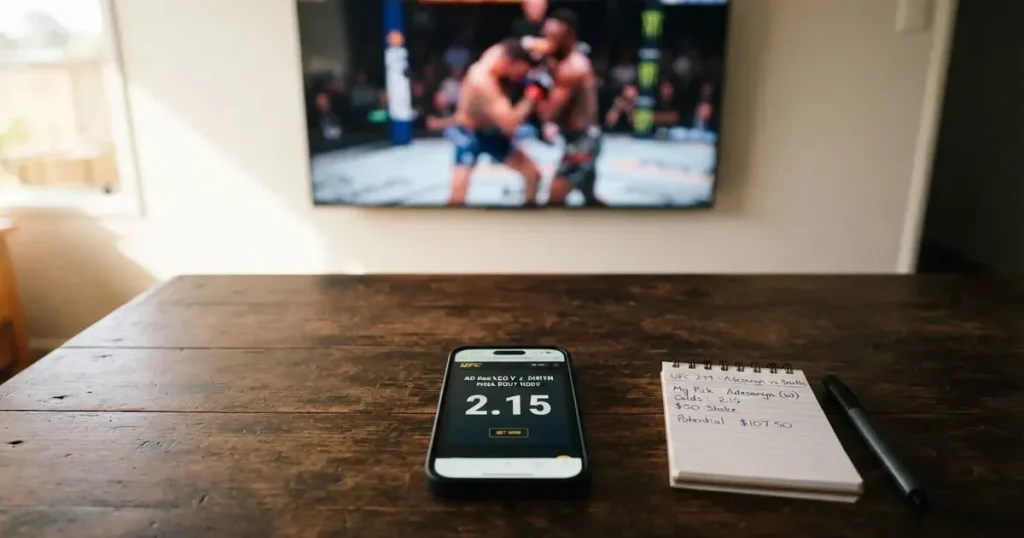
The market for mixed martial arts betting in New Zealand sits inside a regulatory frame unlike almost any other country: since 28 June 2025, one operator — TAB NZ — has held the sole lawful right to take online sports and racing bets from people in New Zealand, and its sister brand Betcha is the only other door into that same monopoly. The eight offshore bookmakers most readers will meet are not licensed in New Zealand and have no New Zealand complaints framework behind them. That divide is the first thing a punter sorting MMA betting needs to understand, because it decides everything that follows: where an account can be opened in the bettor’s name, what kind of ID is needed, which payment methods clear, and what recourse exists if a payout goes missing.
This page walks through what MMA betting in New Zealand actually looks like in 2026: the sportsbooks a New Zealand punter can reach, the bet types MMA bookmakers publish (winner, method of victory, over/under rounds, accumulators and same-game multis), how the margin hides inside the odds, and what it costs a bettor to clear an offer. The same applies to live in-play betting and the cash-out feature on fights. Where the data is thin — and there are real gaps, especially around MMA coverage on offshore books that list only mainstream sports — the page says so plainly, because guessing on a bet is one thing, guessing on a bettor’s choice of bookmaker is another.
Current as of October 30, 2026 and checked against the Department of Internal Affairs register, the Racing Industry Act 2020 (as amended in 2025) and the published terms of each operator named below.
Why MMA bettors in New Zealand see one name everywhere
A search for “mma betting in new zealand” returns the same two logos on every clean source — TAB and Betcha — and then a long tail of offshore brands that cannot lawfully take a New Zealand dollar from a New Zealand resident. The reason is statutory. Section 74AAA of the Racing Industry Act 2020, inserted by the Racing Industry Amendment Act 2025 and in force since 28 June 2025, reads that no person other than TAB NZ may offer racing betting, sports betting or other racing or sports betting to a person in New Zealand, regardless of where that person is resident or incorporated. The Department of Internal Affairs told unlicensed providers serving New Zealand to withdraw with immediate effect on the date the section came into force.

TAB NZ runs the betting business under a 25-year agreement with Entain, signed in 2023. Entain operates TAB and Betcha, splits gross profits 50/50 with TAB NZ and guarantees at least $150 million a year to TAB NZ for the first five years, with a one-off $100 million payment to the racing sector. Betcha is the second online brand of the same operator group, not a competitor, and the page treats it that way throughout — they share accounts, safer-gambling tools and the same licence frame.
For a punter this means a single choice between two apps for the lawful route (the TAB NZ app, published by New Zealand Racing Board, and Betcha, published by Entain New Zealand Limited), and a parallel set of offshore books that do take New Zealand dollars but operate outside New Zealand law and offer no local dispute path. The remainder of this page covers what each side offers for MMA specifically, how the prices are built, and which reader each path actually suits.
Where to bet on MMA in New Zealand: the two lawful doors
Two brands accept MMA wagers lawfully from a person in New Zealand — TAB and Betcha — and the MMA menu on each is one of many sports underneath the broader racing and sports product. There is no separate “MMA bookmaker” in New Zealand; MMA is a vertical on the same platform.
TAB NZ — the monopoly’s flagship
TAB has carried the same role for decades, first as the tote and fixed-odds bookmaker under statutory monopoly, and from 2025 as the sole legal online bookmaker. The current TAB NZ app, listed on the New Zealand App Store as “TAB – Racing & Sports Betting”, was first released on 8 September 2014 and runs under the seller name New Zealand Racing Board. It carries horse and harness racing, rugby union, rugby league and other sports, pre-match and live, and lists MMA among those other sports. The app carries a 17+ App Store age rating while stating that customers must be 18 or over to bet — the casino age (20) does not apply to sports betting under the Racing Industry Act.
For MMA specifically, TAB NZ’s published coverage sits alongside a wider menu of mainstream sports. Pre-match markets on UFC and Bellator cards are typical: winner, method of victory, total rounds over/under, and the same-game multi builder that pairs several legs of one fightcard. Trackside live race streaming with in-app betting, racing form, Blackbook and Jockey Challenge tools, and a simplified wallet for deposits and withdrawals are bundled in the same app — features that the racing customer expects and that the MMA-only reader can ignore.
The legal standing of TAB NZ is the simplest line on the page: it is the only provider lawfully offering racing and sports betting to people in New Zealand. Section 74AAA is in force, the Department of Internal Affairs monitors compliance, and TAB NZ’s own safer-gambling tools (deposit limits, time-outs, self-exclusion) apply across both TAB and Betcha. Self-exclusion on TAB carries over to Betcha because both brands sit inside the same TAB NZ operator group.
Betcha — the second brand, same operator
Betcha, published by Entain New Zealand Limited and first released on the New Zealand App Store on 6 August 2024, is the second online brand of TAB NZ. It carries horse, greyhound and harness racing, rugby, NRL, MMA and UFC, NBA, NFL, tennis, cricket, football, motorsports and esports. The MMA/UFC line is named in the App Store description, which puts Betcha’s MMA menu among its published verticals rather than buried under a generic “other sports” tab.
The reason Betcha sits alongside TAB on this page, and the reason neither is ranked above the other, is that the two brands are not rivals. They are the same operator group’s product range, and a punter with an account on one can carry a balance over to the other. The differences between them are product-led — Betcha’s app layout is built around in-play markets and a younger, mobile-first audience; TAB NZ’s app is the older all-sports-and-racing product — but the underlying licence, odds feed and safer-gambling controls are shared.
For MMA betting specifically, both brands draw from the same market list and the same odds, so the choice between them comes down to interface preference, what sports a punter follows alongside MMA, and whether the punter already has a TAB NZ account from racing.
The offshore shelf: ten bookmakers New Zealanders actually see
Below TAB and Betcha, the New Zealand-facing search results are dominated by offshore sportsbooks that operate from Curaçao, Anjouan, the Union of the Comoros or without a published licence at all. None of them holds a New Zealand licence, because no such licence exists for a second operator, and no New Zealand complaints route or harm-minimisation framework reaches them. The Offshore shelf exists because New Zealanders see the ads, the affiliate pages and the search results, and a betting comparison is not honest if it leaves them out. Each is rated against the same criteria as TAB and Betcha, and each is marked “not licensed in New Zealand” in the comparison.
A note before the reviews: nothing in this section is a recommendation to sign up. DIA warns that overseas operators may be in jurisdictions with minimal consumer safeguards, may not return unspent credits and may not pay out large wins. The Offshore shelf is described so a New Zealand punter knows what they are seeing in the search results and what each brand actually carries for MMA — not as a green light to bypass the local monopoly.
How MMA odds are built: a margin worked through
A bookmaker’s margin is the cut it keeps from every dollar bet on a market, and it lives inside the prices a punter sees on the screen. Take an illustrative two-way market priced at decimal odds 1.90 / 1.90 — an example, not a quote from any operator. The payout share of that market is 1 ÷ (1/1.90 + 1/1.90), which works out to 1 ÷ (0.5263 + 0.5263), or 1 ÷ 1.0526, giving a payout share of about 95%. The remainder, around 5%, is the margin — the slice of every dollar bet the bookmaker keeps regardless of which side wins. If the actual prices were 1.85 / 1.95 instead, the payout share drops to roughly 95% and the margin rises to roughly 5%, because an uneven book carries more margin on the favourite side. The pattern is that symmetric books sit closer to a pure market, while uneven books widen the margin. A punter comparing two bookmakers on the same fight reads the prices first and the headline number second; the price already contains the cost.
The point generalises: a 5% margin on a $10 bet means the bookmaker keeps about 50 cents on average from that bet, regardless of outcome. Across hundreds of bets that 50 cents per $10 compounds. A punter who takes a higher margin book for the same fight pays for the convenience in expected returns, not in headline price.
The same arithmetic applies to three-way markets. A UFC fight priced at 1.40 (Fighter A), 4.50 (Fighter B), and 60.00 (Draw) is rare but not hypothetical, and the payout share across the three outcomes is 1 ÷ (1/1.40 + 1/4.50 + 1/60.00), or roughly 1 ÷ (0.7143 + 0.2222 + 0.0167) = 1 ÷ 0.9532, giving about 95.1% payout share and roughly a 4.9% margin. The draw price carries enormous juice because it almost never lands, and the bookmaker pads it; the favourite price carries a tighter margin because that side gets the volume. A punter reading a UFC card can expect the favourite/underdog two-way lines to sit around 5% margin and the draw or method-of-victory props to sit higher, sometimes 7-10% on the rare outcomes.
Two more worked shapes a punter will see on a UFC card. A same-game multi at decimal odds 1.70, 1.65 and 1.55 has combined odds of 1.70 × 1.65 × 1.55 = 4.345, but the payout share of a multi is the product of the payout shares of each leg, which drops roughly to 0.85 if each leg carries a 5% margin. So a $10 multi returns $43.45 if every leg wins, and the bookmaker’s expected cut on the multi is about 6.50 dollars across all outcomes, not the headline odds’ implied 5%. A live in-play round-fighter market on round 1, priced at 1.91 / 1.91, sits at the same roughly 5% margin by construction but trades faster — the price moves as the fight unfolds and a late punter pays for the information move.
The mechanism matters because no punter beats the margin in the long run by reading the odds well; the margin is the cost of admission to the market, and a punter who knows the margin knows what they are paying. The bookmaker that posts tighter prices on UFC fights is, all else equal, the cheaper bookmaker to bet with.
MMA bet types and how each settles
A UFC card offers more bet types than most other combat sports, and each carries a different margin and a different settlement rule. The set a New Zealand punter will see on TAB NZ or on the offshore books that list UFC broadly follows the same shape.
The simplest market is the winner — a two-way line on Fighter A or Fighter B, with the draw either settled as a push (stake returned) or left as a third outcome depending on the bookmaker. Method-of-victory markets extend the winner line into a wider tree: KO/TKO, submission, decision, and sometimes a “draw or technical draw” line. Each method carries its own price because each has its own probability, and the bookmaker’s margin on the prop tree is higher than on the head-to-head because each outcome gets less action and the book can pad the prices more.
Total rounds over/under markets price the fight’s duration at a set line — 0.5 rounds, 1.5 rounds, 2.5 rounds for a three-round non-title bout, 4.5 rounds for a five-round title bout. The over/under line sits close to the median expected round, and a sharp line moves in the hours before the fight as money lands. Fight to go the distance is a binary yes/no market on whether the fight sees the judges’ scorecards. Round-group betting breaks the fight into round clusters — Fighter A in rounds 1-2, Fighter A in round 3, etc. — and carries more outcomes, more juice, and a higher margin.
Same-game multis (SGMs) are accumulator bets whose legs all come from one fight. A punter might pair Fighter A to win, over 1.5 rounds, and the fight to go the distance into a single bet. The combined odds multiply into one price, and the payout share is roughly the product of each leg’s payout share. SGMs are popular because the headline odds look large, but the compounded margin is real and not advertised. A two-leg SGM with each leg at 5% margin carries roughly a 10% effective margin on the combined bet.
Multi-leg accumulators across the card — the classic “parlay” — multiply several fights into one ticket. The math is the same as the SGM but the legs are independent, so a single upset kills the whole ticket and the bookmaker keeps the stake. The expected value of a multi with n legs at 5% margin each is roughly (1 − 0.05 × n) of the fair payout, before the variance compounds. A six-fight multi at 5% margins carries roughly a 30% effective margin on the combined ticket, before the favourite-longshot bias.
Each way betting, more common in racing than in MMA, settles a win bet and a place bet on the same selection. On a UFC card an each-way line is rare; on a boxing card it is more common. Handicap betting gives one fighter a virtual head start (Fighter A −1.5 round handicap, Fighter B +1.5) and settles against the adjusted total. Over/under on significant strikes, takedown count, and fight-ending strikes are prop markets on stats the broadcast tracks live. They carry the highest margins on the card because they are the hardest to price and the easiest to pad.
The settlement rules matter as much as the price. A KO is settled on the referee’s call, not on the punch landed; a submission is settled when the corner throws in the towel or the referee stops the bout; a decision is unanimous, majority or split under the Unified Rules. A bout that ends in disqualification settles as a KO/TKO loss for the disqualified fighter; an unintentional foul that ends the bout settles as a no contest, and most bookmakers return the stake. A punter who reads the operator’s house rules before betting on a method-of-victory prop avoids the surprise of a push on a fight that ends weirdly.
MMA rules in one minute: how the fights themselves are decided
Mixed martial arts under the Unified Rules — the framework used by the UFC and most US state commissions — has a clean and consistent shape, and a punter who knows them reads the prop markets with more accuracy.
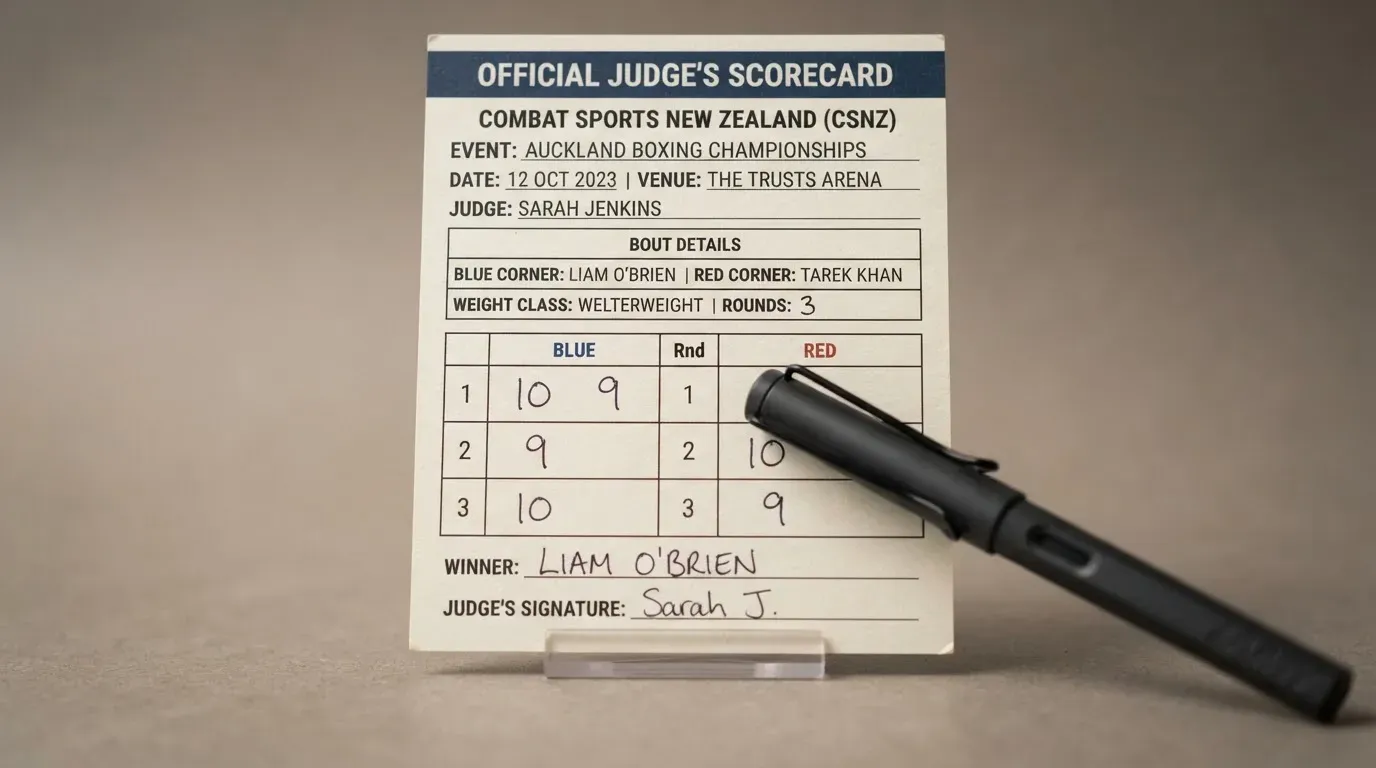
Each round is five minutes long with a one-minute rest between rounds. A non-title bout is scheduled for up to three rounds; a title bout can be sanctioned for five rounds. Three judges score each round under the 10-point must system: the round winner gets 10 points, the loser 9 or fewer, and an even round is scored 10-10. The fight’s scorecards are summed at the end; a unanimous decision means all three scorecards agree, a majority decision means two agree and a split decision means two of three disagree on the winner. A draw can be unanimous, majority or split under the same rules.
A bout ends in knockout when a fighter cannot intelligently defend themselves; it ends in technical knockout when the referee, the doctor or the corner stops the bout; it ends in submission when a fighter taps, verbally submits, or the referee stops the bout on a submission hold. A bout ends in disqualification if an intentional foul incapacitates a fighter and in no contest if an unintentional foul does the same. The result is what settles a method-of-victory prop, and a disqualification is typically settled as a KO/TKO loss for the disqualified fighter.
The weight classes in the UFC are eleven in total: eight men’s divisions and three women’s divisions. The lightest is strawweight (115 lb / 52 kg) for women and flyweight (125 lb / 57 kg) for men; the heaviest is heavyweight (265 lb / 120 kg) for men. The UFC has run since UFC 1, held at McNichols Sports Arena in Denver, Colorado on 12 November 1993.
The rules matter for the prop markets. A fight that goes to a decision clears the “over 2.5 rounds” line for a three-round bout but fails the “fight to go the distance” market if a finish lands in round 3. A disqualification settles the method-of-victory prop as a KO/TKO for the winning fighter, not as a decision. A no-contest returns stakes on most books. Reading the rules means reading the settlement notes for each prop, not just the headline price.
Live MMA betting and cash out: what changes mid-fight
Live in-play betting on UFC cards is one of the growth areas of the sport, and most major operators — TAB NZ included — offer some form of live market in a fightcard. Live markets let a punter back a fighter after the first round, hedge a pre-fight bet when the favourite gets dropped, or lay a “fight to go the distance” position as the clock ticks.
The mechanics differ from pre-fight. Pre-fight prices are set hours before the fight, sometimes days, on the bookmaker’s model and the early money. Live prices are set on the same model re-fed with the in-fight data: strikes landed, takedowns landed, round scores, fighter heart rate where it is broadcast. The bookmaker’s margin on live lines is typically wider than on the pre-fight line because the model is less certain and the book has to defend against a quick sequence of bets from one side as a takedown lands. A punter who bets the favourite to win after the first round on a live market typically pays a 7-10% margin rather than the 5% the pre-fight line carried.
Cash out is the bookmaker’s mid-fight buy-back of the punt. The bookmaker offers a price — usually lower than the fair value of the bet — to settle the wager before the final bell. A pre-fight bet on Fighter A at decimal odds 2.50 ($25 return on a $10 stake) becomes a cash-out offer after Fighter A wins round 1 and the live price on Fighter A drops to 1.40; the cash-out offer is typically somewhere south of $35, the fair value at the new live odds. The offer is the bookmaker’s price, not the punter’s, and the margin on a cash-out sits well above the margin on a normal bet — cash-out offers typically capture 10-15% of fair value for the bookmaker.
A punter using cash out on a UFC card is paying for the certainty of locking in a win (or limiting a loss) before the final bell. The price is the premium, and the premium is the bookmaker’s slice. For a punter who has built an accumulator across the card and wants to lock in a profit when four of five legs have landed, cash out is the tool that does it; the question is whether the cash-out value is closer to fair value than the live odds suggest.
TAB NZ’s app lists Trackside live race streaming with in-app betting as a built-in feature, and the same in-app betting applies to live MMA markets — there is no separate live-betting app. On the offshore shelf, several brands carry a live MMA book, including a cash-out button, but the cash-out margin and the live-market depth vary widely between brands. A punter who bets MMA live is advised to check which rounds the bookmaker takes live prices on (some go dark between rounds), what the cash-out margin looks like, and whether the book suspends betting in a knockdown.
Crypto, Bitcoin and the offshore MMA bookmakers
Crypto sportsbooks — brands that take Bitcoin, Ethereum, USDT and other coins, settle in the same coins, and run on a Curaçao or Anjouan licence — are part of the offshore shelf a New Zealand punter sees. None of them is licensed in New Zealand, and the lawful route for a New Zealand resident remains TAB NZ and Betcha. The crypto angle matters for MMA because several crypto-first brands carry a deeper esports-adjacent offering, and some MMA bettors already hold Bitcoin and prefer to bet without a card on file.
The mechanics differ in three ways from a fiat bookmaker. The deposit is a coin transfer to a wallet the bookmaker controls; the withdrawal is the same in reverse; the balance is denominated in the coin rather than in dollars. That changes the punter’s risk because the coin’s dollar value moves between deposit and withdrawal. A punter who deposits $200 in Bitcoin at a price of $60,000 and withdraws after the Bitcoin price has moved to $70,000 has a balance worth more dollars than they started with, before any bet has been placed. The bookmaker’s odds do not change, but the punter’s bankroll does. The reverse holds if the price drops.
A second difference is settlement speed. A fiat bookmaker withdraws to a New Zealand bank account in one to three business days; a crypto bookmaker settles in the next block, usually minutes. A punter who needs fast withdrawals — and many MMA bettors do, because cards run over a weekend and the next card is on Wednesday — sees the speed as the value proposition. The counterweight is that no New Zealand dispute framework reaches a crypto bookmaker, and a withdrawal that goes missing has no local recourse.
A third difference is anonymity. A crypto bookmaker takes a coin transfer without a name attached; the bookmaker’s KYC kicks in only at withdrawal above a threshold. A New Zealand punter who wants to bet without their sports-betting activity appearing on a bank statement is the target market for a crypto bookmaker, and the trade-off is the absence of New Zealand harm-minimisation tools (deposit limits, time-outs, self-exclusion across the New Zealand industry) and the absence of a complaints path. TAB NZ requires a verified New Zealand address and ID for account opening; the offshore crypto books do not.
The DIA warning applies across the offshore shelf, crypto or not: overseas operators may be in jurisdictions with minimal consumer safeguards, may not return unspent credits and may not pay out large wins. A punter choosing a crypto bookmaker is trading the local protections for speed and pseudonymity, and the cost of that trade is the same whether the book carries UFC or esports.
The MMA tournaments and events a New Zealand punter can bet on
UFC is the headline MMA promotion, and the UFC Fight Night and UFC pay-per-view cards are the spine of the MMA betting calendar. Beyond the UFC, Bellator (now rebranded under PFL ownership), ONE Championship, the regional circuits (LFA, Invicta, Cage Warriors), and the boxing-MMA crossover promotions carry markets on the major bookmakers. TAB NZ’s MMA menu sits underneath the same promotions, and the depth of markets on each card depends on how visible the card is — a UFC pay-per-view gets the full prop tree, a regional show gets the head-to-head line only.
The calendar runs year-round with a peak in the US summer and around the big year-end cards. A punter planning a multi-leg accumulator across a card can expect to see 10-13 fights on a UFC pay-per-view and 6-10 fights on a UFC Fight Night. Bellator and ONE cards run on a similar cadence but with fewer fights per card. The market depth — winner, method of victory, over/under rounds, round group, fight to go the distance, significant strikes props — is richest on UFC pay-per-view, slimmer on Fight Nights, and slimmest on the regional circuits.
A New Zealand punter placing a bet on a UFC card at 2 a.m. New Zealand time on a Sunday morning (the typical pay-per-view slot for a US Saturday night card) is betting through the live markets as the card unfolds. TAB NZ’s live in-play markets run in the broadcast, and the offshore books that carry UFC run the same markets under the same model. A punter planning a bet is advised to check the operator’s cut-off time for pre-fight markets and the depth of live markets on the card.
Choosing a bookmaker for MMA in New Zealand — who each path suits
The New Zealand punter choosing where to bet on MMA sits in front of two paths, each with a clear cost and a clear upside.
The lawful path is TAB NZ and Betcha. The upsides are the New Zealand licence (Racing Industry Act 2020, section 74AAA, in force since 28 June 2025), the New Zealand harm-minimisation tools (deposit limits, time-outs, self-exclusion, both brands), the verified-ID account opening, the New Zealand complaints framework, and the tax treatment (recreational gambling winnings are generally not taxable in New Zealand). The downsides are the smaller MMA menu relative to the largest offshore books, the absence of a no-data-deep prop market on regional shows, and the interface choice being limited to two apps in the same operator group. The lawful path suits a punter who wants the local protections, who bets racing and sports in the same wallet, who wants a New Zealand dollar balance, and who plans to use the safer-gambling tools rather than circumvent them.
The offshore path is the eight brands below. The upsides are a deeper MMA menu, the cash-out feature on more fights, sometimes a lower headline margin on the head-to-head line, and the option of a crypto balance for a punter who already holds Bitcoin. The downsides are the absence of a New Zealand licence, the absence of a New Zealand complaints framework, the absence of New Zealand harm-minimisation tools, the absence of consumer protection if a payout goes missing, and the fact that the operator is breaking New Zealand law by serving a New Zealand resident. The offshore path suits a punter who has weighed those trade-offs knowingly and who plans to keep the bankroll small enough that a missing payout is not catastrophic.
There is no middle path. A punter who wants the offshore menu and the New Zealand protections does not get them from the same book, and the search results that suggest otherwise are wrong.
The TAB NZ and Betcha comparison — what each offers for MMA
The table below compares TAB NZ and Betcha on the criteria that matter for an MMA punter in New Zealand. Both brands sit inside the same operator group and carry the same licence, but the product experience differs.
| Brand | New Zealand status | MMA coverage and market depth |
|---|---|---|
| TAB | TAB NZ brand — sole lawful online bookmaker (Racing Industry Act 2020, section 74AAA) | Full MMA menu on UFC pay-per-view and Fight Nights; winner, method of victory, total rounds, round group, same-game multi; live in-play markets in the card |
| Betcha | TAB NZ brand — sole lawful online bookmaker (Racing Industry Act 2020, section 74AAA) | MMA/UFC listed on the App Store description; same market list and same odds feed as TAB; mobile-first app with in-play markets emphasised |
The comparison is short on purpose: both brands are the same operator, and the punter’s choice is an interface choice, not a market-choice. The MMA menu is identical between them because they sit on the same odds feed.
Responsible gambling and the New Zealand harm-minimisation frame
The harm-minimisation frame for sports betting in New Zealand runs through TAB NZ, the Department of Internal Affairs, and a small set of free services. A punter placing an MMA bet — anywhere, on TAB or offshore — is advised to know what each piece does.
TAB NZ’s apps carry deposit limits, time-outs and self-exclusion as built-in tools. The deposit limit is the punter’s own ceiling on what can flow into the account in a day, week or month; the time-out is a cool-off period that locks the account for a set window; self-exclusion is a longer lock-out, and a self-exclusion on TAB carries over to Betcha because both brands sit inside the same operator group. The exclusion is the strongest single tool, and the cross-brand application is the practical reason both brands share a safer-gambling framework.
The free helpline for gambling harm in New Zealand is 0800 654 655, with a text line at 8006. The service runs alongside Safer Gambling Aotearoa and harm-minimisation work that aligns with New Zealand regulatory standards, distinct from the overseas Gambling Commission. TAB NZ lists the helpline in its app and points excluded customers to it.
The age for betting with TAB NZ is 18 (section 89 of the Racing Industry Act 2020 makes betting under 18 an offence); the age for land-based casinos is 20, and the two ages do not merge. A punter under 20 betting at TAB NZ is within the law; a punter under 18 is breaking it. The offshore books’ published minimum age is typically 18, but the absence of a New Zealand harm-minimisation frame means there is no local check that the offshore book enforces its own age limit.
TAB NZ pays a Problem Gambling Levy of 0.74%, in force from 1 July 2025 to 30 June 2028. The levy funds treatment services and harm-minimisation programmes; it is not the punter’s bill. The offshore shelf carries no equivalent contribution to New Zealand harm services, and the cost of problem gambling treatment falls on the public health system rather than the operator that took the bet.
A punter’s choice, in plain terms
A New Zealand punter choosing where to bet on MMA in 2026 is choosing between one lawful route and a parallel offshore shelf. The lawful route — TAB NZ and Betcha — is the same operator under two brand names, with the same MMA menu, the same odds feed and the same safer-gambling frame. The offshore shelf is wider on menu depth, sometimes tighter on price, and entirely outside New Zealand law and New Zealand consumer protection. The punter who wants the local protections gets them by staying on TAB or Betcha; the punter who wants the deeper menu pays for it in lost protections. Neither is the wrong choice for every punter, and the page names both because the comparison is incomplete without them.
Bet types in MMA, answered plainly
Win / each way / place — the head-to-head line on the fighter; place and each-way are rare on MMA cards.
Method of victory — KO/TKO, submission, decision; settled on the referee’s call.
Total rounds over/under — the line set on the fight’s duration; over 1.5 rounds, over 2.5 rounds on a three-round bout, over 4.5 rounds on a five-round title bout.
Round group — the round cluster a fighter wins in; “Fighter A in rounds 1-2”, “Fighter A in round 3”.
Fight to go the distance — yes/no on whether the judges’ scorecards settle the bout.
Handicap — a virtual head start; rounded and adjusted.
Same-game multi — an accumulator of two or more legs from one fightcard; combined odds multiply, compounded margin.
Card accumulator — an accumulator of fights across the card; same mechanic, more legs, more variance.
Live in-play markets — re-priced mid-fight; wider margin, fast settlement, cash-out offered.
Cash out — the bookmaker’s mid-fight buy-back; carries a 10-15% margin over fair value.
Frequently asked questions about MMA betting in New Zealand
How does MMA betting work?
MMA betting works the same way most sports betting works: a bookmaker posts prices on the outcomes of a fight, a punter backs one of those outcomes at the posted decimal odds, and the bookmaker settles the wager when the fight ends. The two most common bet types are the head-to-head winner line (a two-way market on Fighter A or Fighter B) and method of victory (a market on whether the fight ends in KO/TKO, submission or decision). Over/under rounds, round-group bets and same-game multis extend the menu, and live in-play markets re-price the same fights mid-card. A punter’s cost is the bookmaker’s margin inside the prices, and a punter’s return on a winning bet is the stake multiplied by the decimal odds.
How do you bet on MMA?
A punter bets on MMA by opening an account with a bookmaker that carries UFC, Bellator or the regional promotions, choosing a fightcard, selecting a market and a selection, and staking a dollar amount. On TAB NZ or Betcha the account opens with a verified New Zealand address and ID, the stake is paid in New Zealand dollars from a TAB NZ wallet, and the bet settles when the fight ends. On an offshore bookmaker the account opens with an email address, the stake is paid in the book’s currency (dollar, euro, Bitcoin), and the bet settles the same way but outside New Zealand consumer protection. The settlement rule for each market is in the operator’s house rules, and a punter reading the rules before placing the prop bet avoids the push on a fight that ends in a disqualification or no-contest.
How do you bet on MMA fights specifically?
To bet on a specific fight, a punter opens the card on the bookmaker’s site, picks the fight, picks the market (winner, method of victory, total rounds, same-game multi), picks the selection, and stakes. The decimal odds at the moment the bet is placed are the odds that settle the bet, even if the price moves before the fight ends. A live in-play bet on the same fight works the same way except the bet is placed mid-card and the price reflects the in-fight data. Cash out is the bookmaker’s mid-fight offer to buy the bet back before the final bell, and the offer is the bookmaker’s price rather than the punter’s.
Which bookmaker may lawfully take sports and racing bets in New Zealand?
TAB NZ is the only provider lawfully offering racing and sports betting to people in New Zealand. Section 74AAA of the Racing Industry Act 2020, inserted by the Racing Industry Amendment Act 2025 and in force since 28 June 2025, gives TAB NZ the sole right to take online sports and racing bets from a person in New Zealand, and Betcha is the second online brand of the same operator group. The Department of Internal Affairs told unlicensed providers serving New Zealand to withdraw with immediate effect. Offshore bookmakers taking New Zealand residents are breaking New Zealand law; New Zealand does not block the sites but puts the liability on the operator, not the punter. There is no licence register for betting because there is only one lawful provider.
How is the return on a bet worked out from the stake and the odds?
The return on a winning bet is the stake multiplied by the decimal odds. A $10 stake at decimal odds 2.50 returns $25, of which $15 is net profit (the $10 stake is included in the $25 return). A combination bet’s odds are the product of each leg’s odds: a three-leg multi at 1.70, 1.65 and 1.55 has combined odds of 1.70 × 1.65 × 1.55, or 4.345, and a $10 stake returns $43.45 if every leg wins. The stake is not returned on a free bet — a $10 free bet at 2.50 returns $25 in profit with no stake returned. The decimal-odds version is the form used in New Zealand; fractional odds convert by adding one to the decimal equivalent.
What is the bookmaker’s margin and how can it be seen in the odds?
The bookmaker’s margin is the slice of every dollar bet on a market that the book keeps regardless of which outcome lands, and it sits inside the prices a punter sees. For a two-way market at decimal odds 1.90 / 1.90, the payout share is 1 ÷ (1/1.90 + 1/1.90), which is about 95%, leaving a margin of about 5%. For a UFC three-way line at 1.40 / 4.50 / 60.00, the payout share is 1 ÷ (1/1.40 + 1/4.50 + 1/60.00), which is about 95.1%, leaving a margin of about 4.9%. A market’s margin is the difference between the fair payout share (100%) and the actual payout share, and a bookmaker that posts a tighter line is, all else equal, a cheaper bookmaker to bet with. The margin compounds across the legs of a multi, so a six-leg multi at 5% margin per leg carries roughly a 30% effective margin on the combined ticket.
Tennis, golf & more – kiwiracingbets
Content created by the «kiwiracingbets» team
