
UFC betting in New Zealand: the choices a Kiwi punter actually has
 Available in US

Last checked October 30, 2026 against the Racing Industry Act 2020 and the Department of Internal Affairs’ stated position on unlicensed providers.
UFC betting in New Zealand is shaped by a piece of law that most casual punters never read. From 28 June 2025, an amendment to the Racing Industry Act 2020 (section 74AAA) made a single operator group — TAB NZ, running the TAB brand and Betcha — the only entity allowed to take racing and sports bets from a person in New Zealand. That constraint is the reason this page exists in the form it does: there is one lawful path, and there are several offshore brands a New Zealand resident will encounter elsewhere online and that the law treats differently. The rest of the page is the comparison between those two realities, plus the mechanics of how UFC odds work and what an offer costs once the marketing is peeled back.
UFC as a betting subject: the fixture list, the format, the fights
The UFC held its first event on 12 November 1993 in Denver, Colorado. TKO Group Holdings owns and operates it; Dana White has been president since 2001. By 2026 the promotion had run over 750 events across eight men’s and three women’s divisions. Two fixtures already on the 2026 calendar are UFC 334 (Gane vs. Hokit), scheduled for 14 November 2026 at Madison Square Garden, and UFC 335 (Oliveira vs. Lopes), for 12 December 2026 at T-Mobile Arena, Las Vegas. The roster moves fight to fight, so a UFC bettor in New Zealand is paying closer attention to scheduled bouts than to round-by-round standing.
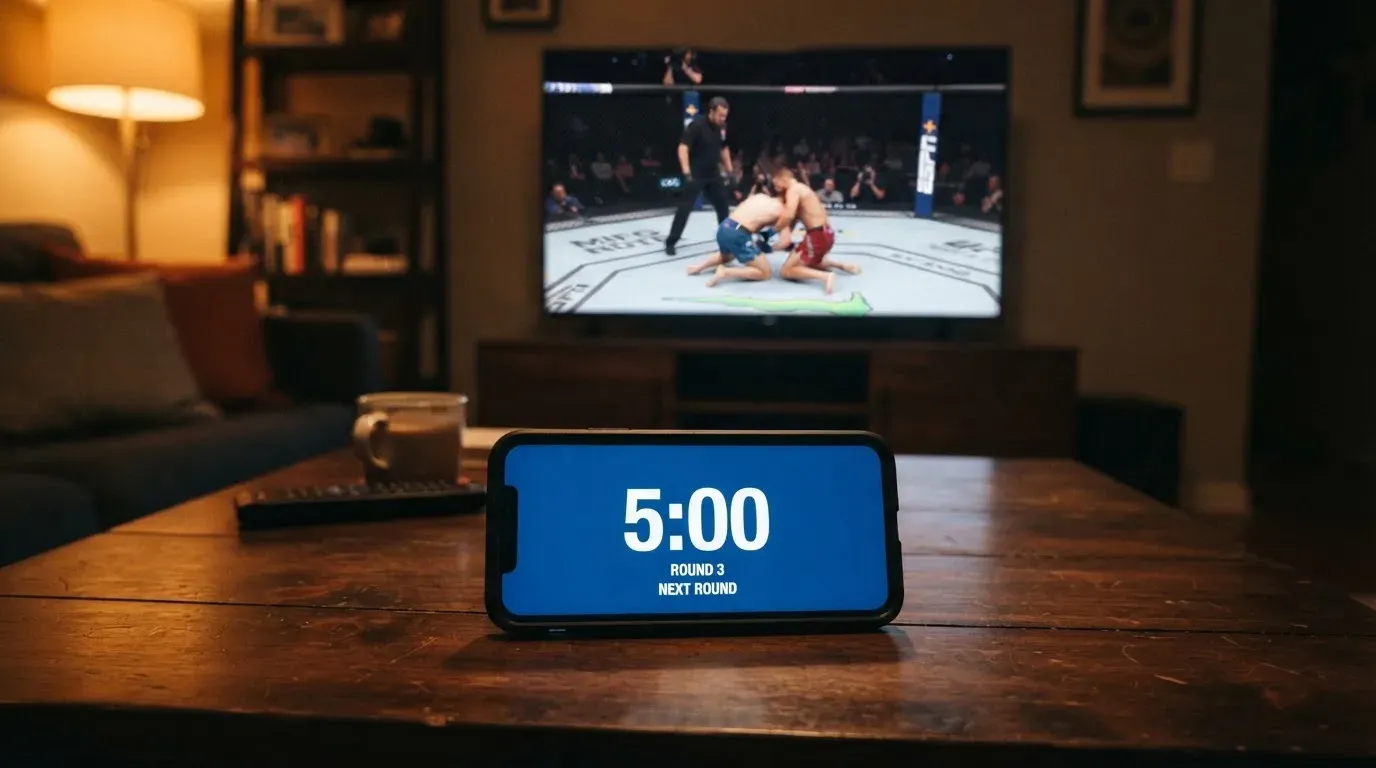
Each UFC round is a maximum of five minutes with one minute’s rest between rounds. Championship fights and non-title main events go to a maximum of five rounds; every other bout on the card is scheduled for three rounds. A bout ends by submission, knockout, technical knockout, judges’ decision (unanimous, majority, split or technical) or disqualification; a referee can also rule a no contest. If a UFC title fight ends in a draw, the defending champion keeps the title, so “draw” is not a vacant-belt outcome the way it is in some other sports. All of this matters because UFC markets are settled off these results, and the rules section of any bookmaker’s site spells out the exact mapping. A bettor who has not read that page is betting on a translation they have never seen.
The judging itself uses the ten-point must system. Three judges score each round, the winner receiving ten points and the loser nine or fewer; a round scored 10-8 is typical when one fighter dominates cleanly. The format produces fewer drawn decisions than combat sports with shorter rounds, which is one reason “fight goes the distance” prices at bigger cards tend to be longer than a casual punter expects.
Where a Kiwi punter can actually bet on UFC
The one lawful option: TAB NZ and its two brands
TAB NZ runs two online brands: TAB (the established betting name, used by most older punters and a familiar sight at race meetings and retail outlets) and Betcha, a newer app published on the New Zealand App Store by Entain New Zealand Limited on 6 August 2024. Both belong to the same operator group, share safer-gambling settings across accounts, and settle from one set of betting rules. Entain runs the operation under a 25-year agreement signed in 2023 that gives it a 50/50 share of gross profits, with at least $150m a year going to TAB NZ for the first five years; Entain also paid a one-off $100m into the racing sector as part of the same deal.

A punter who wants UFC markets in New Zealand in 2026 opens a TAB or Betcha account, verifies a New Zealand address and an ID, and meets the legal age for TAB NZ betting, which is 18 (the land-based casino age is 20, and the two are different rules that should not be conflated). The Department of Internal Affairs told offshore providers serving New Zealand customers to withdraw with immediate effect once the amendment took effect, so the offshore bookmakers a Kiwi can find in 2026 are not licensed to take the bet and do not carry the regulator’s oversight.
The offshore brands a New Zealand resident will encounter
Outside TAB NZ, a New Zealand resident running a search for “UFC betting” will meet several offshore brands. Their UFC markets and their cash-out, in-play and bet-builder features are real; their right to take a bet from a person in New Zealand is not. The features below are written up under each brand in the comparison block that follows.
| Brand | New Zealand status | Operator-side claim on key features |
|---|---|---|
| TAB | TAB NZ brand (TAB and Betcha are the two online brands of TAB NZ) | Racing and sports fixed-odds, live in-play where offered, same-game multi where offered |
| Betcha | TAB NZ brand (TAB and Betcha are the two online brands of TAB NZ) | Racing and sports fixed-odds, live in-play where offered, same-game multi where offered |
| Rabona | Not licensed in New Zealand | Live betting, sports promotions, results, schedule |
| RoyalistPlay | Not licensed in New Zealand | Live betting, sports promotions, results, schedule; e-sports and Predictions sections sit beside it |
| BillyBets | Not licensed in New Zealand | Casino and sportsbook under one account; combat sports among the listed sports |
| Winz.io | Not licensed in New Zealand | Sportsbook with its own Sportsbook T&C, Sports Rules and Bonus Terms pages |
| 22Bet | Not licensed in New Zealand | Over 30 market types per event, including 1X2, Double Chance, totals, both teams to score, correct score and HT-FT |
| Sportaza | Not licensed in New Zealand | Cash out before settlement, Bet Builder (a voided leg voids the slip), multiples, Asian lines, 1/5/10/15-minute interval markets |
| Thunderpick | Not licensed in New Zealand | Esports-first (CS2, LoL, Dota 2, Valorant), sportsbook with cash-out and markets from Champions League to NFL |
| BetNinja | Not licensed in New Zealand | Casino and sportsbook; the listed offers are the operator’s own terms |
The “Not licensed in New Zealand” line carries real weight. Offshore operators name licences — Curaçao, Anjouan, Tobique Gaming Commission, Union of the Comoros — but none of those regimes grants the right to take bets from a person in New Zealand. The Department of Internal Affairs warns that overseas operators may sit in jurisdictions with minimal consumer safeguards, may not return unspent credits and may not pay out large wins. There is no New Zealand complaints route for an offshore bookmaker, and New Zealand harm-minimisation tools do not reach it.
TAB NZ’s offer versus what the comparison recommends
TAB NZ covers horse and harness racing, rugby union and rugby league and other sports pre-match and live. UFC events go through TAB NZ’s sportsbook on the same model as rugby or basketball fights. The TAB NZ app carries a 17+ age rating on the App Store and reminds customers at sign-up that betting is restricted to those 18 and over. The app carries Trackside live race streaming with in-app betting, racing form, Blackbook and Jockey Challenge tools, and a simplified wallet. The two brands — TAB and Betcha — are not separate bookmakers competing on the same fight card; they are two fronts on the same operation. A punter’s safer-gambling settings and exclusions apply across both.
For a UFC bettor in New Zealand, the choice is therefore narrower than a search-engine results page suggests: TAB and Betcha versus an offshore brand that the law has explicitly told not to serve them. The rest of the comparison block runs through those brands anyway, because a reader seeing a Thunderpick ad needs to know what it does, and a reader who has already opened an offshore account needs to know where the rules differ from TAB NZ’s.
The shape of New Zealand’s betting law
The Department of Internal Affairs is the gambling regulator under the Gambling Act 2003 and monitors compliance with the betting prohibition in the Racing Industry Act 2020, section 92A. The Racing Industry Act 2020 establishes TAB NZ as the sole betting provider for racing and sports. The Racing Industry Amendment Act 2025 inserted section 74AAA: no person other than TAB NZ may offer racing betting, sports betting or other racing or sports betting to a person in New Zealand, regardless of where that person is resident or incorporated. The change took effect on 28 June 2025.
There is no licensing route for another bookmaker and no licence register for betting, because there is only one lawful operator. The law does not geo-block offshore websites; it puts liability on the offshore operator. New Zealand does not block bookmaker sites at the network level. A reader who wants to verify this should check the Act text on the New Zealand legislation website.
The Online Casino Gambling Act 2026 licenses online casino gambling only. TAB New Zealand has the right to apply for a casino licence under that law, and the granting of one does not extend the betting monopoly. The two regimes are separate, and a reader who has seen the word “casino” in a licence summary should not read it as “TAB can now take bets from anyone”.
Greyhound racing is closing in stages from 1 August 2026. From that date, offshore operators may not take bets on greyhound races either — the same section 74AAA logic, applied to a specific racing code. UFC is unaffected: it is a sport, not a racing code, and the betting prohibition on it has been live since 28 June 2025.
For the punter: section 19(4) of the Gambling Act 2003 (inserted in 2025) says an individual may not be convicted for placing a bet with an offshore betting operator in breach of section 74AAA. No published penalty for a player has been set out. The honest framing is that New Zealand law targets the operator, DIA warns players of the risks, and no source has been published stating a player-side penalty. A reader who wants to bet on UFC should treat TAB NZ and Betcha as the lawful path and the offshore brands as an option that the regulator has publicly told to stop.
Safer gambling tools and where a punter gets help
TAB NZ’s app carries the safer-gambling tools punters should set up before a UFC card starts: deposit limits, time-outs and self-exclusion. A self-exclusion applies across the TAB NZ group, so a TAB exclusion extends to Betcha and vice versa. The age for betting with TAB NZ is 18 (the 17+ App Store rating is the app-store age gate; the in-country maximum for placing a bet is 18, set by section 89 of the Racing Industry Act 2020). The land-based casino age is 20; the two are not the same rule.
The free Gambling Helpline (0800 654 655) and the text line 8006 are the New Zealand routes for a punter who needs help, alongside Safer Gambling Aotearoa. TAB NZ pays a Problem Gambling Levy of 0.74%, in force from 1 July 2025 to 30 June 2028, which funds the harm-minimisation framework.
There is no single national online-betting exclusion register: the register the casino law will require is for online casinos only, not for the TAB NZ sportsbook. A punter who wants TAB NZ to be more robust about a habit should set the deposit cap inside the app and use the self-exclusion tool if the cap is not enough.
For an offshore bookmaker, none of the New Zealand tools apply. A punter who has opened an offshore account has to rely on whatever the operator itself offers, with no regulator behind it and no complaints framework that reaches them.
UFC betting on a phone: the apps and the browser fallback
TAB NZ publishes its app under the seller name New Zealand Racing Board, first released on 8 September 2014. The app covers horse and harness racing, rugby union and rugby league and other sports pre-match and live. The Trackside live race streaming runs inside the app with in-app betting, the racing form, Blackbook and Jockey Challenge tools sit alongside, and a simplified wallet handles deposits and withdrawals. A 17+ App Store age rating sits on the listing, with the sign-up flow requiring verified New Zealand address and ID and an 18+ check.
Betcha is the newer TAB NZ brand, published by Entain New Zealand Limited on the New Zealand App Store and first released on 6 August 2024. It uses the same wallet, the same safer-gambling settings and the same exclusion framework as TAB, with an interface tuned for the phone-first punter who has not used a TAB retail outlet.
The offline brands a Kiwi will encounter — Rabona, RoyalistPlay, BillyBets, Winz.io, 22Bet, Sportaza, Thunderpick, BetNinja — all run mobile-first as well, with browser fallbacks. A reader’s experience of “best UFC betting app” in 2026 comes down to whether they can place the bet with TAB NZ or with Betcha, since the rest of the apps are not licensed to take it.
UFC predictions, strategy, and what they cannot do
A search for “UFC best bets” in New Zealand returns tipster sites and free predictions. What those predictions actually are is one or more writers naming a fighter they expect to win, with a price attached. The price is a market view, not a probability guarantee: a $1.50 favourite wins more often than a $4.00 underdog, but it does not always win, and a tipster who names the right fighter twice in a row has not demonstrated a system that will work next time.
What UFC betting strategy does is keep the punter in the game long enough for variance to settle into a pattern. Three pieces of advice hold across most responsible money-management writing: keep the bet size to a fixed percentage of the bankroll (a number like 1–3%, set before the card); skip the parlays when the legs are correlated for some other reason than the one the bookmaker is selling; and read the rules page for each market before staking, because a “fight goes the distance” market has a different settlement from a “method of victory” market, and a bet on a fighter that pulls out and is replaced voids differently at different books.
For the punter who has time, the same goes that win coverage holds for any sport: the form guide (recent fights, the opponent’s record, the camp the fighter is coming off) lives on the operator’s site and on dedicated MMA media. The model that prices a UFC fight takes into account things a casual viewer misses — striking volume per round, takedown defence, the rate at which a fighter finishes versus goes to a decision. None of this tells the punter who wins; it produces a market view the punter can disagree with on the basis of those same numbers.
There is no tipster who can be relied on across cards. The honest framing is that UFC predictions are opinions priced into a market, and the best a New Zealand punter can do with them is read several, decide which one they trust on this card, and size the bet to be small enough to take the loss.
Bet types and how UFC odds are built
The four numbers a UFC punter sees most are the head-to-head (which fighter wins), the method of victory (by which route), the round the fight ends in, and the “fight goes the distance” market. Each is set the same way: a bookmaker writes a probability for each outcome, the implied probabilities sum to more than 100%, and the excess is the margin — the slice of every dollar bet that the bookmaker keeps on average.
The arithmetic works the same on any market. Take an illustrative two-way market priced at 1.90 / 1.90. Implied probability for each side is 1 ÷ 1.90, which is 52.63%. Two sides of 52.63% sum to 105.26%, and the bookmaker’s margin is the excess over 100%, which is 5.26% — a band somewhere in the 5% to 6% range for a market like this. For a UFC heavy hitter the margin is often tighter, with both prices close to 1.91 or 1.92 (margin roughly 4.7%); for a UFC method-of-victory market the margin is wider because the bookmaker is taking more outcomes into account. The result is a band that depends on the market: UFC head-to-head sits in the 5% to 6% range for a typical bout, and a UFC method-of-victory market with several finishers listed sits closer to 7% or 8%.
A payout answers what a winning bet pays back, and the formula is straightforward in decimal odds: return = stake × odds, and net profit = stake × (odds − 1). At $10 on a $1.90 fighter, return is $19 and net profit is $9. A combination bet multiplies the odds of each leg into one — three legs at $1.90 each give an overall price of $1.90 × $1.90 × $1.90, which is $6.86, and a $10 stake returns $68.60 on a win across all three. The odds are honest numbers; the catch is that a parlay is harder to win than any single leg, because every leg has to land.
What “free bet” actually means on a UFC offer
A free bet is a stake the bookmaker gives the punter, and what it actually pays on a win is the winnings only, not the stake. A free bet of $10 at odds of $1.90 returns $9 if it lands (the winnings, with the $10 stake not returned), and returns nothing if it does not land. The arithmetic of the free-bet value, averaged across the markets it can be used on, is the stake × (odds − 1) ÷ odds × the payout share of that market. The value of a $10 free bet at odds of $1.90 on a market with a 95% payout share is $10 × 0.9 ÷ 1.90 × 0.95, which is $4.50. That is the offer’s worth on average. The marketing word “free” covers the stake; the arithmetic covers what it costs the bookmaker to honour the offer on average.
What “boosted odds” actually means
A boosted odds promotion takes a price the bookmaker would otherwise offer and moves it up for one bet. A $1.90 favourite boosted to $2.20 looks like the punter is getting more; what the punter is getting is one bet at a higher price, and the rest of the card at the regular price. Whether the boost beats the underlying value depends on whether the boosted price covers the bookmaker’s margin on that leg.
What “risk-free” actually means
A risk-free bet refunds the stake if it loses. The catch is that the refund is usually paid as a free bet, not as cash, and the free bet has the same stake-not-returned rule as a regular free bet. So a “risk-free” $10 bet at $1.90 that loses returns a $10 free bet, which on a $1.90 market returns $9 if it wins and nothing if it does not. The arithmetic of the refund’s worth on average is the free-bet value of the refund on a market with the same payout share as the original bet.
A cap on free-bet winnings
A cap on free-bet winnings is the rule that the winnings from a free bet cannot exceed a stated amount. A free bet at $1.90 returns $9 if it wins with no cap. A free bet at $1.90 on a market capped at $5 returns $5. The cap turns a free bet on a long-priced outsider into a free bet the bookmaker has already written down to a known maximum cost.
What a bonus bet actually costs
A bonus bet is a deposit-matched amount the bet bookturns over a number of bets. The arithmetic of a bonus offer is the required turnover = bonus base × wagering factor; the number of bets at a given stake size = required turnover ÷ stake per bet; and the expected cost = required turnover × the margin of the market the bonus is cleared on. A $100 bonus with a 5× turnover requirement and a $10 stake size means $500 of qualifying bets across roughly 50 bets, at a market with a 5% margin the expected cost is roughly $25. That is what clearing the offer costs on average; it is also what the punter ends up paying for the bonus, before any winnings are settled.
The qualifier: minimum odds
A minimum-odds requirement is the rule that a bet only counts toward turnover if the price is at or above a stated number. The wagering factor is the number of turns the bonus base has to go through; the minimum price is the rule that some bets do not count. A bonus that requires 5× turnover at minimum odds of $1.50 looks like a smaller stakes than a bonus that requires 5× at minimum odds of $2.00, because more bets count at the lower minimum and the punter can clear the bonus on more conservative bets. The audit on a bonus offer is to read the minimum price and the wagering factor together.
Deadlines and qualification windows
A deadline is the date by which the turnover has to be cleared. A 90-day qualification window is the rule that the turnover must be completed within 90 days of the bonus being issued. A deadline that falls before a major UFC card is not friendly to a punter who wants the bonus to clear on a specific event.
A punter’s audit of any bonus offer
For any UFC offer in 2026, the items that matter are: the size of the bonus; the wagering factor; the minimum odds; the deadline; the cap on free-bet winnings; and the margin of the market the offer is cleared on. A punter reading six items takes longer than reading one, but the one item is the marketing line and the six are the offer.
The ten bookmakers ranked for UFC betting in New Zealand in 2026
The ranking is by what a UFC punter in New Zealand actually has to choose between: the two TAB NZ brands first, because they are the only lawful path, then the offshore brands in the order a New Zealand resident is most likely to encounter them. The frame is the same for every brand: licence status in New Zealand, the UFC markets it actually offers, the cost of its offers, and what it is worth to the punter.
TAB (TAB NZ brand)
TAB is the established TAB NZ brand, and it is one of the two online brands of TAB NZ, the only provider lawfully offering racing and sports betting to people in New Zealand since 28 June 2025 (Racing Industry Act 2020, section 74AAA). The site offers racing and sports fixed-odds, live in-play where offered, and same-game multi where offered. UFC fights sit in the schedule alongside rugby union, rugby league and the racing codes. Account opening needs a verified New Zealand address and ID; the legal age for TAB NZ betting is 18.
For a Kiwi punter who wants to bet on UFC without leaving the New Zealand regulatory frame, TAB is the default. The wagering experience is the same as it has been for years: a familiar interface, deposits in NZD, withdrawals to a New Zealand bank account, and a wallet shared with Betcha. UFC markets depend on the card, but a title fight at UFC 334 or UFC 335 will have head-to-head, method of victory, round groupings and a fight-goes-the-distance market. The bonus bet promotions are TAB’s own; the safer-gambling tools — deposit limits, time-outs and self-exclusion — sit in the app, and exclusions apply across the TAB NZ group.
A TAB account is also where the New Zealand harm-minimisation framework applies. A punter who wants help from the Gambling Helpline (0800 654 655, text 8006) and a TAB account, has the regulatory route. The downside is that TAB’s UFC offering is necessarily narrower than a global sportsbook: UFC is one sport among several, and the depth of markets on a particular undercard fighter is not always the depth a serious UFC bettor wants.
The right punter for TAB is a New Zealand resident who wants to bet on UFC inside the law, on a regulated account, with safer-gambling tools built in. The punter for whom TAB is not enough is the one whose UFC interests run to undercard fighters and exotic markets, and that punter has no lawful path to those markets in New Zealand in 2026.
Betcha (TAB NZ brand)
Betcha is the second of the two online brands of TAB NZ, and it shares TAB’s licence position: one of two online brands, the only provider lawfully offering racing and sports betting to people in New Zealand since 28 June 2025 (Racing Industry Act 2020, section 74AAA). The site offers racing and sports fixed-odds, live in-play where offered, and same-game multi where offered.
Betcha is published on the New Zealand App Store by Entain New Zealand Limited and was first released on 6 August 2024. The interface is built for a phone-first punter; the wallet, the safer-gambling settings and the exclusion framework are the same as TAB’s, and a TAB exclusion extends to Betcha and vice versa.
For a Kiwi punter who wants a phone-tuned UFC experience with the same regulatory cover as TAB, Betcha is the path. A punter who already has a TAB account can do everything on the TAB app that the Betcha app does, and the choice between them is interface preference, not market access. A punter who does not have a TAB or Betcha account yet, and who wants to bet on UFC inside the New Zealand regulatory frame, opens one of the two — the registration flow, the verification step and the deposit options are the same.
The right punter for Betcha is a phone-first Kiwi who wants the regulatory cover of TAB NZ. The right punter for TAB is a Kiwi who has spent decades with the TAB brand and does not want to switch. The two are one operator, and the choice is about feel.
Rabona (not licensed in New Zealand)
Rabona launched on 23 December 2019 as the sixth online sportsbook of the Soft2Bet group. The sportsbook offers live betting, sports promotions, results and a schedule, with football, basketball, tennis, handball, ice hockey, volleyball and table tennis among the top sports; a Predictions section sits beside the sportsbook. The licence Rabona names is Curaçao, which does not cover New Zealand customers.
For a UFC punter, what Rabona offers is the same sportsbook shape the operator offers to its licensed markets: a wide UFC schedule, the standard market types and the same cash-out pattern. The cost of the offer is the regulatory cost of betting on a brand that the Department of Internal Affairs has publicly told to withdraw from serving New Zealand customers. There is no New Zealand complaints route; there are no New Zealand harm-minimisation tools that apply; the operator is in a jurisdiction the regulator warns may not return unspent credits and may not pay out large wins.
A New Zealand punter who wants to bet on UFC through Rabona is paying a real cost for a feature set that TAB NZ does not match on the undercard, and the cost is the regulatory one. The punter who picks Rabona anyway is the punter who has decided the regulatory cover does not matter to them on this bet. That is a personal call, not one this page makes for the reader.
RoyalistPlay (not licensed in New Zealand)
RoyalistPlay’s sportsbook offers live betting, sports promotions, results and a schedule, with football, basketball, tennis, handball, ice hockey, volleyball and table tennis among the top sports; separate e-sports and Predictions sections sit beside it. The licence RoyalistPlay names is a Tobique Gaming Commission e-gaming licence (No. 0000002), holder Novatrix SRL, which is no authority to serve New Zealand customers.
The same regulatory frame applies as for Rabona: New Zealand law targets the operator; the Department of Internal Affairs has publicly told providers to withdraw with immediate effect; no New Zealand complaints route or harm-minimisation framework reaches the brand; the operator is in a jurisdiction the regulator warns may not return unspent credits and may not pay out large wins.
A punter weighing RoyalistPlay against the other offshore brands is weighing the same thing: how much weight to give to the regulatory cover TAB NZ offers on every other UFC card.
BillyBets (not licensed in New Zealand)
BillyBets runs a casino and a sportsbook under one account. The sportsbook covers football, tennis, table tennis, basketball, ice hockey, American football, baseball, combat sports, esports, virtual sports and live betting. The licence BillyBets names does not apply in New Zealand.
A punter who wants casino and UFC betting on one account has that combination at BillyBets. The cost is the same regulatory cost as the other offshore brands: no New Zealand complaints route, no New Zealand harm-minimisation tools, and the Department of Internal Affairs’ warning about jurisdictions that may not return unspent credits or pay out large wins. A punter weighing BillyBets against TAB NZ is weighing a one-account convenience against the regulatory cover a New Zealand account offers.
Winz.io (not licensed in New Zealand)
Winz.io runs a sports betting bonus promotion, with separate Sportsbook T&C, Sports Rules and Bonus Terms and Conditions pages. The licences Winz.io names are Anjouan and Tobique, holder Novatrix SRL, neither of which gives the right to take bets from a person in New Zealand.
A punter reading the Bonus Terms and Conditions page gets the same kind of detail as a punter would from any offshore sportsbook: a bonus with a wagering factor, a minimum price, a deadline, and the market the bonus is cleared on. The cost of the offer is the same regulatory cost as the other offshore brands, and the audit on the bonus is the same audit: read the wagering factor, the minimum price, the deadline and the cap on free-bet winnings.
22Bet (not licensed in New Zealand)
22Bet offers over 30 market types per event, including 1X2, Double Chance, totals, both teams to score, correct score and HT-FT, plus tennis game, set and handicap markets. The licence 22Bet names is Curaçao (8048/JAZ), holder TechSolutions Group N.V., and it is not a licence to take New Zealand bets.
A punter who wants the depth of market types on UFC fights — the head-to-head, the method of victory, the round groupings, the “fight goes the distance”, and the corner markets on the undercard fighters — has more of them at 22Bet than at TAB NZ, by design. The cost is the regulatory cost: no New Zealand complaints route, no New Zealand harm-minimisation tools, and the Department of Internal Affairs’ warning. The audit on any 22Bet promotion is the same audit as any other bonus offer.
Sportaza (not licensed in New Zealand)
Sportaza offers cash out before an event or market is finalised, Bet Builder (a voided leg voids the slip), multiples, Asian lines and interval markets in 1, 5, 10 or 15-minute ranges. The licence Sportaza names is Anjouan (ALSI-202606064-FI2), which gives Sportaza no standing with New Zealand customers.
For a UFC punter, Sportaza’s cash-out and Bet Builder features are the live-betting tools a serious card punter uses. The cost is the same regulatory cost as the other offshore brands. A punter who has decided to use an offshore brand for the live markets is choosing between Sportaza and the others on the basis of features, and the regulatory frame is the same for every one of them.
Thunderpick (not licensed in New Zealand)
Thunderpick is esports-first, covering CS2, League of Legends, Dota 2 and Valorant. The sportsbook offers a cash-out feature and markets from the Champions League to the NFL. The licence Thunderpick names is Curaçao (OGL/2024/677/0722), holder Paloma Media B.V., which gives no right to take bets from a person in New Zealand.
A punter whose UFC interest sits alongside esports and Champions League has a one-wallet account at Thunderpick. A punter whose interest is UFC alone does not get more from Thunderpick than from the other offshore brands, and the regulatory cost is the same. The audit on any Thunderpick promotion is the same audit as any other bonus offer: the wagering factor, the minimum price, the deadline and the cap on free-bet winnings.
BetNinja (not licensed in New Zealand)
BetNinja advertises a casino welcome and a sports offer, and runs a casino and a sportsbook under one account. The licence BetNinja names is from the Union of the Comoros, which gives no right to take bets from a person in New Zealand.
A punter who wants casino and UFC on one account has that combination at BetNinja. A punter weighing BetNinja against TAB NZ is weighing a one-account convenience against the regulatory cover a New Zealand account offers, and the same audit applies to the bonus offers on either side.
How a Kiwi punter reads the FAQ
The questions that follow are the ones this page has tried to answer in three places at once: the legal frame, the mechanics of a UFC bet, and the cost of an offer. The answers restate the key facts in the form that fits the question, and they do not add new ones.
Frequently asked questions
Can UFC fighters bet on fights?
UFC fighters are prohibited from betting on UFC fights under the UFC’s own conduct rules and under the rules of the state athletic commissions that license the bouts. The prohibition covers the fighter themselves, their immediate family and their managers, and the period covered is the active competition period. A breach of the prohibition by a fighter is a conduct violation handled inside the promotion, and depending on the jurisdiction may also be a regulatory violation. The detail of the prohibition depends on the state commission handling the bout, and the UFC’s own conduct rules are stricter than any one state’s.
Can UFC fighters bet on other fighters?
The same prohibition that covers UFC fighters betting on their own fights covers UFC fighters betting on other UFC fights. The UFC’s own bench marks the prohibition as covering any UFC event, including events the fighter is not competing in. The state commissions extend the prohibition on a fighter-by-fighter basis, with the period of exclusion depending on the bout’s date.
How does a New Zealand punter bet on UFC?
A New Zealand punter who wants to bet on UFC opens a TAB NZ account (TAB or Betcha), verifies a New Zealand address and ID, and meets the 18-year-old legal age for TAB NZ betting. The card is in the TAB NZ schedule; the markets are head-to-head, method of victory, round groupings and fight-goes-the-distance, with the depth of markets depending on the card. Deposits are in NZD and withdrawals are to a New Zealand bank account. Offshore brands a Kiwi will encounter in search results are not licensed to take the bet, and the Department of Internal Affairs has publicly told them to stop.
Which bookmaker may lawfully take sports and racing bets in New Zealand?
TAB NZ is the only provider lawfully offering racing and sports betting to people in New Zealand since 28 June 2025, under section 74AAA of the Racing Industry Act 2020. The two online brands of TAB NZ are TAB and Betcha. There is no licensing route for another bookmaker and no licence register for betting, because there is only one lawful operator.
How is the return on a bet worked out from the stake and the odds?
In decimal odds, return = stake × odds, and net profit = stake × (odds − 1). At $10 on odds of $1.90, return is $19 and net profit is $9. For a combination bet the odds of the legs multiply into one price: three legs at $1.90 each give $6.86, and a $10 stake returns $68.60 if all three legs win. The arithmetic is the same on every market, and the same on every bookmaker that uses decimal odds.
What is the bookmaker’s margin and how can it be seen in the odds?
The bookmaker’s margin is the slice of every dollar bet that the bookmaker keeps on average. For a two-way market at decimal odds of 1.90 and 1.90, implied probability for each side is 1 ÷ 1.90, or 52.63%; the two sides sum to 105.26%, and the margin is the excess over 100%, which is 5.26%. For a UFC head-to-head the margin is often in the 5% to 6% range; for a UFC method-of-victory market with several finishers listed, the margin is wider, often 7% or 8%. The margin is the cost of every bet on the market, before the punter’s skill comes into play.
Tennis, golf & more – kiwiracingbets
Content created by the «kiwiracingbets» team
