
Sports Betting Calculators in New Zealand
 Available in US
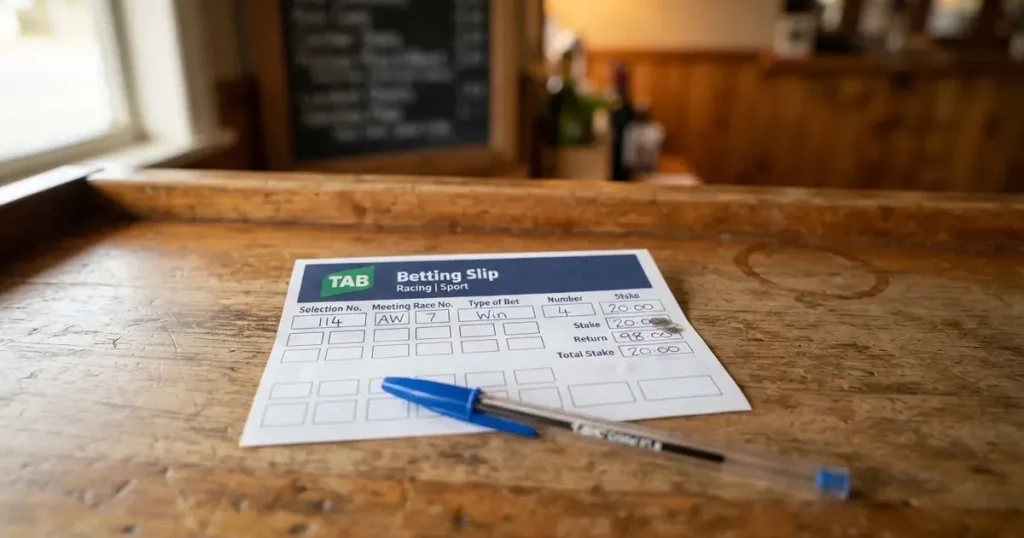
A betting calculator is a small piece of arithmetic with a marketing problem. The arithmetic is the same everywhere two odds are multiplied together: stake × odds returns the gross payout, the bookmaker’s margin sits inside the price, and a free bet whose stake is not given back is worth less than its headline number. The marketing problem is that “calculator” is a useful word to attach to almost any tool — a matched-betting sheet, a Dutching table, an odds-converter, a Kelly-criterion sheet — and each of those solves a different question. The page below works through what each one does, what it actually costs, and where a New Zealand bettor sits in 2026 when the only legal way to bet is via TAB NZ and Betcha.
What follows is not a product round-up. There are no working promos and no bonus codes here, and there is no advice to sign up with anyone. The point of a calculator page is the arithmetic: the inputs, the outputs and the gap between the number on the screen and the number in the betting account a week later. New Zealand has its own structure on top of that arithmetic, and the structure shapes everything a calculator is asked to do.
October 30, 2026 — licence status verified against the Department of Internal Affairs.
What a Betting Calculator Actually Does
The maths at the heart of every calculator is one multiplication: stake × odds = return on a win. From there everything else is a layer.

A stake of $10 at decimal odds of $3.50 returns $35, of which the net profit is $25. A stake of $10 at $1.20 returns $12, of which the net profit is $2. That is the whole engine. Every other calculator the search results throw up — accumulator calculators, Yankee calculators, Lucky 15 calculators, each-way splitters, lay calculators — is the same multiplication with more inputs bolted to the side.
A multi is several selections bundled into one bet, and the odds of the legs multiply into one combined price. Four legs at $2.50, $1.80, $3.00 and $1.60 do not add to $8.90 — they multiply to $21.60. A $1 stake at that combined price returns $21.60 if all four legs land, and zero if any one of them fails. That single fact — a multi is “all or nothing”, with all the legs’ odds multiplying — is what makes multi calculators a separate product rather than a simple multiplication.
A same-game multi, the kind TAB NZ calls a Same Game Multi, is the same arithmetic with the constraint that every leg comes from one match: a rugby multi on first try-scorer, half-time score and total points, or a football multi on goals, corners and cards, all from the same fixture. The odds of the legs still multiply, but the bookmaker now controls correlations the bettor cannot see. Two legs of the multi become easier to combine when the bettor’s own reading of the game priced one of them differently — a goal and over 2.5 goals are not independent events — and the price the calculator shows is whatever the bookmaker chose to publish for the combination. That is worth pausing on, because it is where margin hides most comfortably in modern betting.
Dutching, a less common word on New Zealand books, is splitting a stake across two or more selections so that every outcome returns the same amount if it wins. A $100 total stake dutched across two runners at $3.00 and $2.50 puts $45.45 on the first and $54.55 on the second; if either wins the return is $136.36, and the margin takes the rest. The same calculator that does a multi also dutches.
The duty of the calculator is to do this arithmetic correctly and to leave the bettor in charge of which inputs to feed it. Everything else — the “system” calculators, the “matched betting” calculators, the staking-plan spreadsheets — is the same core engine dressed for a different question.
The Margin Inside Every Price
The number on a betting screen is not what the bettor eventually keeps. The bookmaker keeps a slice of every market on every event, and that slice is called the margin (also called the overround, the vig or the juice in different markets).
For a two-way market like a tennis match or a head-to-head NFL game, the margin is the gap between the implied probabilities and 100%. Decimal odds of $1.90 and $1.90 imply 52.63% on each side, totalling 105.26% — and the 5.26% above 100 is the margin. The implied probability of an outcome is the inverse of the decimal price: $1.90 implies 1 ÷ 1.90 = 52.63%, and the two sides of the market are not independent events in the probabilistic sense, they are mutually exclusive outcomes, so the implied percentages add to more than 100. The size of the over-shoot is the margin.
This is the calculation that shows how market margins work. Worked through with the illustrative two-way example:
- Market price: $1.90 on each side
- Implied probability each side: 1 ÷ 1.90 = 0.5263, or 52.63%
- Sum of implied probabilities: 105.26%
- Payout share: 1 ÷ 1.0526 = 95.00%
- Margin: 5.00%, give or take the rounding
So out of every dollar a bettor wagers on this market, the bookmaker keeps about five cents on average across the two sides, and the bettor collectively gets back ninety-five. The margin is not a fee per bet: a bettor on the winning side takes home the full odds price on their stake, and a bettor on the losing side gets nothing. The 5% is what the bookmaker keeps across the whole market over time, not a per-bet deduction. This is the gap between a market’s quoted prices and its true probabilities, and a calculator that does not show it has skipped the most important number.
For an illustrative three-way market like a 1X2 football result — home, draw, away — the same arithmetic with three hypothetical prices, say $2.10 for home, $3.40 for the draw and $3.60 for an away win, gives 1 ÷ 2.10 = 47.62%, 1 ÷ 3.40 = 29.41% and 1 ÷ 3.60 = 27.78%. Those add to 104.81%, leaving a payout share of 95.39% and a margin of 4.61%. Real-world three-way margins on top football leagues sit in the 4%–8% band depending on the bookmaker and the timing of the price. Two-way markets on tighter events (tennis, basketball, NFL) often run higher than 5% on the head-to-head line, because they are easier to keep in range and the vig goes up with the bookmaker’s confidence that bettors cannot out-price it on each side. The Australian-listed codes at TAB NZ, which are the racing products most New Zealand readers meet first, have lower margins — tote dividends are by definition a near-100% payout pool with the operator taking only its commission out of the pool — but the fixed-odds racing product has a margin just like a sports market does.
A bettor who runs the arithmetic before placing a bet sees something the screen does not show: a market at 6% is more expensive to bet into than a market at 4%, and the difference compounds over many bets. It is also the reason two bookmakers can quote different odds on the same event: their margins are different, the inputs to those margins are different, and the marketing line of “best odds” usually means “best on this one match” rather than best across the calendar. Margin is the average; one matched bet at a great price does not undo the next nine at 7%.
Free-Bet Calculators and the Honest Reading of a “Free Bet”
A free bet is a promotion that gives the bettor a stake they did not pay for. The arithmetic around it is two steps, and most punters miss the second one.
Step one is the headline. A “free bet” is published with a number — $10 in bonus cash, $25 in free bets — and the marketing message is that it is yours to keep. Step two is the part the marketing message leaves out: when a free bet wins, the stake is usually not given back. A $10 free bet at $3.00 returns $30 in profit, not $40 in return. The $10 is gone either way, win or lose.
The standard value of a free bet is the free-bet amount × (decimal odds − 1) ÷ decimal odds × payout share of the market it is bet into. Plug in a $10 free bet at $3.00 in a market with a 95% payout share (a 5% margin): 10 × (3.00 − 1) ÷ 3.00 × 0.95 = 10 × 0.6667 × 0.95 = $6.33. That is the average value of that free bet to the bettor. It is not a guaranteed win and not the most the bettor can extract from a free bet — a back-and-lay matched-betting structure can sometimes do better — but it is the honest baseline for what a non-staked bet on a normal market is worth.
What changes the value:
- Higher odds on the bet the free bet is laid on: at $4.00, the same free bet is 10 × 0.75 × 0.95 = $7.13. At $5.00 it is $7.60. Higher-odds bets are the natural home for free bets.
- Lower odds: at $1.50 the value falls to 10 × 0.333 × 0.95 = $3.17. Free bets dumped at short odds give much of their value back to the bookmaker’s margin.
- Market payout share: a market at 90% payout (10% margin) pulls the value down by about 5%; a 97% market pushes it up by about 2%.
- A minimum price rule: a free bet that must be taken at odds of $1.50 or longer does not let the bettor pick the $4.00 price, and the rule’s presence is a sign the offer is poorer than the screen suggests.
- A cap on winnings: a “free bet up to $100 in winnings” turns a high-odds win into a paid-out-bet at the cap, and the bettor is back on standard margin from there.
A free-bet calculator that ignores the stake-not-returned rule is misleading. Most “free bet calculator” tools online are just stake-times-odds boxes that print the headline return and forget that the $10 was not the bettor’s in the first place. A reader using one to size up a free-bet offer is using the wrong tool.
Bonus Cash, Turnover and the Real Cost of an Offer
A bonus is a different product from a free bet. The bettor is still depositing real money — the bonus is added on top — and the bonus comes with a turnover requirement that almost always turns the headline number into a smaller expected value.
The required turnover is the bonus base times the wagering factor. If a bonus of $100 has a 5× wagering factor on the bonus amount, the bettor has to place $500 of qualifying bets before the bonus (and any winnings from it) becomes withdrawable. If the wagering factor is 10× on the deposit plus bonus, the same $100 deposit plus $100 bonus at 10× requires $2,000 of turnover.
The number of bets at a fixed stake is simple: turnover ÷ stake per bet. $500 at $10 per bet is 50 bets; $2,000 at $10 per bet is 200 bets. Each of those bets has to clear the minimum-odds rule the offer sets — minimum odds of $1.50 is ordinary, minimum odds of $2.00 is heavy, and the rule is what makes the turnover number honest. A bet at $1.20 does not count toward turnover at most bookmakers, and a $1.50 floor halves the universe of qualifying markets on most racing cards.
The expected cost to the bettor of clearing the bonus is the turnover × the margin of the market the bonus is being cleared into. At 5% margin, $500 of clearance costs $25 on average; at 8% margin, the same clearance costs $40. The bonus is “free” only if the offer’s value to the bettor exceeds this expected cost, and a common offer with low headline value fails that test quietly. The user gets a bonus, plays through it, and ends up slightly behind where they started.
This is the content of a “bonus turnover calculator”: it asks for the bonus base, the wagering factor, an average stake and the minimum-odds rule, and tells the bettor roughly how many bets the offer requires and what it costs on average. The right framing is “what does this offer cost the person accepting it”, not “is this offer good”. Two offers with the same headline number can have completely different underlying costs.
Accumulator Insurance, Odds Boosts and Other Words Worth Reading
“Accumulator insurance” is the offer that returns a free bet or bonus cash if a multi loses by one leg. A 5-leg multi at $25 per leg with insurance against one losing leg does not turn a $25 risk into a free ride — it returns the stake as a free bet at the bookmaker’s own odds, and the new free bet has the same stake-not-returned problem the next free bet had. The insurance usually has a maximum free-bet value (a $25 cap is common), an odds floor (each leg at $1.20 or longer, sometimes $1.50), and a market restriction (often football or a small set of sports). The headline reads like protection; the arithmetic reads like one more multi at the bookmaker’s margin.
“Odds boost” or “boosted odds” is the offer that posts a higher price on a specific outcome for a window. A boosted price of $5.00 on a selection normally at $4.00 puts $1.00 of extra value on a $1 stake, but the bettor has to take the offered price — not the higher one they preferred — and the boost usually excludes the bet types the bettor intended to use to lock in the value (the boost often cannot be combined with another leg on the same slip). Boosted odds at one price are not a margin cut; they are a marketing line on top of an unchanged margin.
“Risk-free bet” is the phrase that means most often a free bet refunded if the first bet loses. The refund is in bonus cash or a free bet, not in real money, and the second bet has the same stake-not-returned rule. Calling it risk-free without saying that the refund is in the bookmaker’s own money is the entire marketing problem with the phrase.
“Matched betting” is the practice of backing an outcome at a bookmaker and laying it at an exchange to lock in a profit from a free bet or bonus. The calculuses used to do it (the “matched-bet calculator”, “lay calculator” and “back-lay calculator”) are the same core engine with three inputs: back odds, lay odds and the free-bet or bonus amount. The expected value calculation is the same as the free-bet value above. The matched-bet side has a separate practical problem in New Zealand: no licensed betting exchange operates here, and the offshore exchanges whose pages appear in search results are not the matching side of the law New Zealand wrote. The legal frame is the subject of the next section.
“Arbitrage” is the practice of betting every outcome of a market across two bookmakers whose prices overlap. For a true arb the implied probabilities have to sum to less than 100% — opposite of margin — and an online arbitrage calculator does the stake-splitting. Real arbs are rare and short-lived, and most “arb calculators” the bettor finds online are paired with affiliate links to the offshore books the calculator assumes are available. New Zealand’s law does not make arbing illegal, and it does not give the bettor any tool to do it from inside the country.
The Statutes That Decide Who a New Zealand Bettor Can Bet With
New Zealand is not a regulated market in the multi-licence sense. There is no Gambling Commission register of sports bookmakers, and there is no application process for a sports-betting licence, because the law does not allow any other operator to apply.

The Racing Industry Act 2020 sets TAB NZ as the betting operator for racing and sports. The Racing Industry Amendment Act 2025 inserted section 74AAA: no person other than TAB NZ may offer racing betting, sports betting or other racing or sports betting to a person in New Zealand, regardless of where that person is resident or incorporated. The change took effect on 28 June 2025, and the Department of Internal Affairs told providers serving New Zealand to withdraw with immediate effect. The statute is the rule and TAB NZ is the operator; there is no secondary pathway and no grandfathering of previously licensed brands.
The Gambling Act 2003 is the broader gambling statute, and the Department of Internal Affairs is the regulator that monitors compliance with both. The Gambling Act’s section 19(4), inserted in 2025, sets out the rule for individuals: a player cannot be convicted for placing a bet with an offshore operator in breach of section 74AAA. The statute targets the operator; the player’s risk is the practical one the regulator warns about — that an offshore book has minimal consumer safeguards, may not pay out large wins and may not return unspent credits. The framing is not “offshore betting is illegal for the player” — that line reads as advice it cannot back up — and it is not “offshore betting is legal”. It is that the law is written against the operator and the player carries the practical risk.
The Online Casino Gambling Act 2026 licenses online casino gambling only. It does not extend TAB NZ’s betting monopoly; casino and betting are separate permits. The point matters because a search for “online gambling New Zealand” can return casino news that does not apply to sports betting, and a casino licence is not a betting licence.
TAB NZ is run under a 25-year partnership signed in 2023 with Entain. Entain takes a 50/50 share of gross profits, with at least $150 million a year to TAB NZ for the first five years and a one-off $100 million payment to the racing sector at signing. The partnership runs the betting engine; the licence and the statutory right to take bets stays with TAB NZ. The structure explains why TAB and Betcha are two apps for one operator, not two rivals.
Player Protection and How TAB NZ’s Tools Stack Up
The minimum age for betting with TAB NZ is 18. Land-based casinos are 20 — the two are different thresholds and the difference matters when an offer or a venue is described. The TAB NZ app carries a 17+ App Store rating while making clear that customers must be 18 or over to bet; that gap between the store’s age rating and the operator’s age rule is in the app’s own description, not in the operator’s terms.
Account opening requires a verified New Zealand address and ID. There is no route to a TAB NZ account that does not run through identity checks; the deposit side of the register, the withdrawal side and the law side all assume the same person from end to end.
TAB NZ publishes deposit limits, time-outs and self-exclusion in its apps. The self-exclusion is for both TAB and Betcha at the same time, because the two apps are one operator. The exclusion register that the casino law will require is for online casinos only and does not cover sports betting. There is no national online-betting exclusion register at present, and a TAB exclusion is the practical safeguard a New Zealand bettor has.
The Problem Gambling Levy is set at 0.74% from 1 July 2025 to 30 June 2028, paid by operators into the harm-mininimisation fund. The levy is the operator side, not the bettor side; it is what the betting industry pays to fund the help the next paragraph names.
Help is the part of the player-protection framework that is not an operator tool. The Gambling Helpline (0800 654 655) and text line 8006 are free from a New Zealand phone, and Safer Gambling Aotearoa is the public-facing service. A self-excluded bettor who is trying to come back, or a bettor who reads a friend’s behaviour has changed, has somewhere in the public system to go. The offshore bookmakers on the comparison table below do not.
Bonuses at TAB NZ and What They Cost
TAB NZ’s promotions are described in its app store listing and in its own betting rules, and the analysis here is what those descriptions say, not advice to take any of them.
The TAB NZ app lists a Mega Multi bonus of up to $50 in Bonus Cash when a multi of four or more legs falls short by a set number of legs. The promotion is an “accumulator insurance” offer: if the multi does not land but loses on the last leg, the bettor gets a portion of the stake back in bonus cash up to $50. The bonus cash carries the same turnover and minimum-odds rules the rest of TAB NZ’s bonus cash carries. At the headline level it is “insurance against the last leg”; at the arithmetic level it refunds in bonus cash, not real money, and the bettor has to clear the bonus cash before the value is theirs to withdraw.
Bonus Cash from new-customer offers can be split across multiple bets. That is the structural detail that lets the bettor clear the bonus in small chunks rather than one giant multi; the size of the bonus cash each bet contributes is set by the offer’s terms. The detail to read is which markets the bonus cash can be used on, what the minimum odds are, and how long the bonus cash is valid. Each of these is in the offer’s small print.
Same Race Multis, Same Game Multis and one-tap Popular Multis are TAB NZ’s product names, not bonuses. They are the multi types the bettor builds inside the app. The Place Extra option lets a bettor back a runner to finish up to tenth in selected races, which is a bigger each-way-type product on the racing side. None of these is a free bet; they are the betting menu.
TAB NZ runs “boosted odds” promotions on headline events. The price is what the offer page says it is, the offer usually excludes combining the boost with anything else, and the boost is not a permanent reduction in TAB NZ’s margin. It is a marketing line on the same markets the rest of the app runs.
The Offshore comparison table
A page like this normally runs a long table of ten bookmakers and asks the reader to pick. The legal frame above makes that table a different thing in New Zealand. TAB and Betcha are the two lawful options; the eight brands below them take bets from people in New Zealand without a New Zealand licence. They are described for completeness because New Zealand players meet them — through word of mouth, through affiliate ads, through rugby-league pages that route to them — and a comparison that left them out is incomplete. None of them is the right choice for a New Zealand bettor; each has features a New Zealand reader will recognise, and each has features a New Zealand reader cannot use.
| Operator | New Zealand status | What the brand’s own terms state |
|---|---|---|
| TAB | TAB NZ brand, licensed under the Racing Industry Act 2020 | Fixed-odds and tote on racing, football, rugby, cricket, basketball and other sports; Same Race Multis, Same Game Multis and Place Extra to tenth; Trackside live-stream racing in-app; safer-gambling tools (deposit limits, time-outs, self-exclusion) apply across TAB and Betcha |
| Betcha | TAB NZ brand, licensed under the Racing Industry Act 2020 | Sports and racing fixed-odds with a daily Toolbox of odds boosts and insurance tools, Bet Social section for sharing bets and following tipsters, Playbook with tips and match analysis; tools and self-exclusion shared with TAB |
| Sportaza | NOT licensed in New Zealand | Cash out before an event settles, Bet Builder on selections from one event with a “one void leg = whole slip void” rule, multiples, Asian lines and interval markets in 1, 5, 10 or 15 minute ranges |
| RTbet | NOT licensed in New Zealand | Cash out that fixes the amount at the moment it is accepted; the feature is not guaranteed to be available, and the amount shown can move before the bettor clicks |
| BetNinja | NOT licensed in New Zealand | States a licence from the Union of the Comoros in its own footer; provides sportsbook and casino products without a New Zealand licence or complaints framework |
| Alawin | NOT licensed in New Zealand | Cash out with partial cash out, available on most settled sports markets; not available on free bets or risk-free bets; the feature is not guaranteed to be available |
| Winz | NOT licensed in New Zealand | States Anjouan and Tobique licences; sportsbook and casino product; no New Zealand complaints or harm-minimisation framework |
| Rooster | NOT licensed in New Zealand | Operated by Novatrix SRL (Costa Rica), states e-gaming licence No. 0000002 from the Tobique Gaming Commission; sportsbook with Live, Sports Promotions, Results, Schedule, E-sports and Predictions sections; six odds formats |
| Rabona | NOT licensed in New Zealand | Soft2Bet sportsbook launched 23 December 2019, Curaçao licence; sportsbook and casino product |
| BetAlright | NOT licensed in New Zealand | Customers must be 18 or over; no New Zealand licence or complaints framework; sportsbook and casino product |
The verdict on each block closes on what it actually costs the reader.
TAB
TAB is the lawful option for New Zealand betting and the only brand with a New Zealand complaints route. The product covers racing codes (thoroughbred, harness and greyhounds until greyhound racing closes from 1 August 2026), rugby union and rugby league, football, cricket and other sports with fixed odds and tote betting. Same Race Multis and Same Game Multis build multibets inside one race or one match; Place Extra extends place markets out to tenth in selected races. Trackside in-app live-stream racing is available, and the safer-gambling tools (deposit limits, time-outs, self-exclusion) cover both TAB and Betcha accounts. Bonus Cash from new-customer offers can be split across multiple bets and the Mega Multi bonus refunds up to $50 in bonus cash if a multi of four or more legs falls short. The reader-side win is the regulator; the question the reader asks is whether the TAB product set is wide enough for their betting, and for most rugby-, racing- and football-focused New Zealand readers it is.
Betcha
Betcha is the second TAB NZ brand, not a rival bookmaker. The product is sports and racing fixed-odds with a daily Toolbox of odds boosts and insurance-style tools, a Bet Social section for sharing slips and pools and following tipsters, and a Playbook with match analysis and tips. The product is sports-led where TAB is racing-led, but the operator is the same — TAB NZ, with Entain running the engine under the 25-year partnership — and the safer-gambling tools and self-exclusion cover both apps. For a bettor who wants the social tools and the boosted-odds panel without leaving TAB NZ, Betcha is the alternative front-end; for a bettor comparing it against an offshore bookmaker as if it were one, the comparison is wrong on its face.
Sportaza
Sportaza takes bets from New Zealand without a New Zealand licence, names an Anjouan licence in its own terms, and offers a sportsbook with cash out, Bet Builder, multiples, Asian lines and interval markets in 1, 5, 10 or 15 minute ranges. The Bet Builder rules void the whole slip if one leg is void, which is a consumer-side rule most bettors do not read until a fixture gets postponed. The product is broader in some markets than TAB NZ — Asian lines are a real differentiator for sharper football bettors — but the New Zealand player has no recourse if a withdrawal stalls, no harm-minimisation framework that reaches the account, and no operator’s representative inside the country. The product is suited to a bettor who is outside New Zealand’s betting-monopoly law; for someone inside it, the law is what the regulator enforces.
RTbet
RTbet’s terms describe cash out that fixes the amount at the moment the bettor accepts it, with a non-guarantee of availability. The “non-guaranteed” line is the honest part of a cash-out product: the bookmaker can pull the offer mid-event, and the bettor’s screen showing a price is not a binding offer until the bettor clicks and the bookmaker accepts. The structure is the same as most cash-out implementations; the difference is that RTbet spells it out. Same as above: Curaçao licence, no New Zealand complaints route, the same warnings from the Department of Internal Affairs about minimal consumer safeguards.
BetNinja
BetNinja states a licence from the Union of the Comoros in its own footer. The Comoros is a common offshore-licence jurisdiction and is not a New Zealand regulatory framework. The operator runs a sportsbook and casino, and the product can include bigger bonuses than TAB NZ’s. The same offshore caveat applies: no New Zealand complaints framework, no harm-minimisation tools that reach an account from the regulator’s side, and a withdrawal process that runs on the operator’s own terms.
Alawin
Alawin offers cash out with partial cash out, available on most settled sports markets but not on free bets or risk-free bets. The “not on free bets” exclusion is the part of the offer that determines its real value: a bettor cannot combine a free bet with the cash-out safety net, so the headline “cash out” applies to real-money bets only. No New Zealand licence applies; the structure of the offer is readable from the operator’s own terms in a way that an offshore product often is not.
Winz
Win states Anjouan and Tobique licences, runs a sportsbook and casino product, and has no New Zealand regulatory framework. The product is similar to other offshore brands in the comparison. The point of including it on the page is not to recommend it but to make the offshore side of the comparison full so a reader who lands on it elsewhere knows what it is.
Rooster
Rooster is operated by Novatrix SRL (Costa Rica) and states e-gaming licence No. 0000002 from the Tobique Gaming Commission. The sportsbook has Live, Sports Promotions, Results, Schedule, E-sports and Predictions sections and shows six odds formats. The Tobique Gaming Commission is a regulator in its own jurisdiction and is not a regulator in New Zealand. The structural detail is the same as the other offshore brands: legal in the licensing country, not authorised to take bets from people in New Zealand under section 74AAA.
Rabona
Rabona is the sixth Soft2Bet sportsbook, launched 23 December 2019, with a Curaçao licence. Soft2Bet is a multi-brand operator; the same group runs several sportsbook-casino products from a Curaçao licence. The structure is a single licence and many brands behind it, which is a common offshore pattern. For a New Zealand bettor, the bettor’s dispute is with the brand; the licence is in Curaçao; and there is no New Zealand complaints or harm-mininimisation framework that reaches the account.
BetAlright
BetAlright states that customers must be 18 or over and runs a sportsbook-casino product without a New Zealand licence. The brand is one of the offshore products the comparison covers. The note about age is in the brand’s own footer — a sign that the operator sets its own rules rather than answering to a regulator that sets them.
The Calculation in Plain Sentences
The illustrative two-way market at $1.90 on each side gives a payout share of about 95% and a margin of about 5%. Worked through: $1.90 on each side implies 52.63% on either outcome, the two probabilities add to 105.26%, the payout share is 1 ÷ 1.0526 = 95.00% to the cent, and the margin is 5.00% to the cent. Real-world two-way markets range from around 3% on tightly priced tennis and basketball to around 8% on side markets the bookmaker is less sure of; $1.90/$1.90 is at the upper end of what a bettor will see on a major head-to-head event.
The margin as a band rather than a single figure: a two-way market at decimal odds near $1.90 on each side has a payout share around 95%, give or take a couple of tenths of a percent depending on rounding, and a margin of about 5%. A $1.90/$1.90 market with prices at $1.95/$1.95 shifts the margin down toward 2.5%. A $1.80/$1.80 market shifts the margin up toward 11%. The band “approximately 5% on tight two-way markets, rising toward 10% on looser markets” is the honest single-line summary.
A bettor comparing markets by margin sees the cost of the market in a way the raw odds do not show: a market at 5% margin and a market at 8% margin do not advertise the difference on their prices — $1.90/$1.90 looks the same as $2.05/$1.85 with marginally different roundings — but they compound into a meaningful difference across a season of betting. The arithmetic is the same on every market and every bookmaker; it does not change anything other than what the bettor sees.
Selecting Between Bookmakers When the Law Has Already Selected For You
The selection question is shorter in New Zealand than in any other market this comparison covers. TAB and Betcha are the two front ends for one operator; the reader is choosing which app to use, not which operator to back.
For a racing-heavy bettor, TAB is the natural home: the racing codes are the product that runs deepest, the tote dividends come from inside the app, Place Extra goes out to tenth in selected races, and Trackside live-streams selected meetings. For a sports-heavy bettor who likes boosted-odds panels and the social side of betting — sharing slips, following tipsters, playing in pools — Betcha is the natural home, with the same product underneath. The two apps sit on the same wallet; a deposit in one is the deposit in the other; a self-exclusion in one is the self-exclusion in both.
For any reader who is considering an offshore bookmaker, the legal frame the previous section set out is the answer: those operators are not authorised to take bets from people in New Zealand, the Department of Internal Affairs has told them to withdraw, there is no New Zealand complaints route if a withdrawal stalls, and the bettor carries the practical risk. The fact that an offshore bookmaker offers a bigger bonus, a wider market or an Asian line is not a counter to the legal frame. It is a different product in a different legal environment, and the right framing for the reader is that the two are not on the same comparison axis.
How the Selection Question Changes for a Self-Excluded Bettor
A self-excluded TAB NZ bettor who is trying to come back does not need a different bookmaker — the self-exclusion is the same across TAB and Betcha because both apps run on one operator. What the bettor needs is to come off the exclusion through TAB NZ’s own process, or to stay excluded, which the operator’s safer-gambling team will help enforce. The offshore bookmakers on the comparison page accept self-excluded New Zealand TAB bettors readily, because they have no New Zealand exclusion register to honour. That is the practical risk the regulator warns about: the offshore route is open precisely when the safer one is closed. The right answer is to use the help lines named in the safer-gambling section, not a different bookmaker.
A Calculator for One Reader, a Spreadsheet for Another
A reader who bets a handful of multi bets a week does not need more than the calculator built into the TAB NZ slip. The slip multiplies the leg odds, shows the return, and accepts the stake; that is enough for almost every New Zealand bettor.
A reader who runs a matched-betting operation through offshore books and an exchange is likely already familiar with the back-lay split and the rating rules of the offers they take. New Zealand’s legal frame makes that structure unavailable inside the country, and describing it as if it were a normal hobby misreads what the country’s statute permits.
A reader who wants a staking-plan spreadsheet — a Kelly-criterion sheet, a Labouchere system plan — to control bet size by form is using a different tool. The arithmetic the staking plan is built on (wins, losses, average odds, bank size) is real, and a good spreadsheet helps. What the spreadsheet cannot do is change the bookmaker’s margin, which sits inside every price the staking plan feeds off. A staking plan on a 10%-margin market will leak faster than the same staking plan on a 5%-margin market, regardless of how the bank is sized.
The right calculator for the right job is the short version of the page. The multi-multiplication engine inside the betting slip is enough for one reader. A spreadsheet with turnover expectations and minimum-odds floors is what another reader wants. A back-lay setup is what a third reader runs, and the legal frame of New Zealand keeps that setup offshore. None of them is a marketing claim, and none of them is a better bettor.
The Line Between a Calculator and a Tipster
A tipster page gives named selections: the All Blacks to win at $1.60, the favourite in the Melbourne Cup, a 5-leg multi the tipster has built. A calculator page gives the arithmetic: how the price becomes the return, how the multi becomes a single price, how the free bet becomes a refund.
This page does not name selections and does not give an edge. New Zealand’s legal frame remains unchanged even if it pointed at a different operator: the arithmetic does not predict outcomes. A market at 5% margin pays back 95% over time regardless of whether the bettor picks the right side. The 5% gap is what the bookmaker keeps, and the bettor’s job is to know the gap and to bet inside markets where the gap is consistent with their bank.
A “best odds” claim from a tipster is not always a claim about the bettor’s edge. Often it is a claim about the marketing page the bettor is reading. The right response is to look at the margin the calculator works out and to compare markets on that basis rather than on the headline price of the moment.
Frequently Asked Questions
Which bookmaker may lawfully take sports and racing bets in New Zealand?
TAB NZ is the only provider lawfully offering racing and sports betting to people in New Zealand under the Racing Industry Act 2020, with section 74AAA (in force 28 June 2025) confirming that no other operator may do so. TAB and Betcha are the two online brands TAB NZ runs, and the partnership with Entain operates the engine under that licence. Offshore bookmakers are not authorised to take bets from people in New Zealand and carry the consumer risks the Department of Internal Affairs has flagged.
How is the return on a bet worked out from the stake and the odds?
The return on a win is stake × decimal odds, and the net profit is stake × (decimal odds − 1). A multi multiplies the odds of its legs into a single combined price, so a $1 stake on a 4-leg multi at combined odds of $21.60 returns $21.60 if all four legs land and zero otherwise. A free bet whose stake is not given back only returns the profit, not the headline figure.
What is the bookmaker’s margin and how can it be seen in the odds?
The margin is the gap between a market’s implied probabilities and 100%. Decimal odds of $1.90 imply 52.63% on each side, summing to 105.26%, and the 5.26% overshoot is the margin. A two-way market at $1.90 on each side keeps about 5 cents of every dollar bet on average, and a three-way market at $2.10/$3.40/$3.60 keeps about 4.6%. Markets the bookmaker is less sure of run higher.
What does a player lose by betting with a bookmaker that has no New Zealand licence?
The bettor loses the New Zealand complaints and harm-minimisation framework that TAB NZ falls under. There is no national exclusion register honouring the self-exclusion, no regulator to chase a stuck withdrawal, no Australia-comparable harm-minimisation guarantee from the operator, and no certainty that the operator will pay out a large win. The Department of Internal Affairs has flagged these risks in its statement on providers serving New Zealand.
From what age can bets be placed with TAB NZ, and what is checked when opening an account?
The minimum age is 18 for TAB NZ betting. Account opening requires a verified New Zealand address and ID, and the same applies to both TAB and Betcha since they are two front ends of TAB NZ. Land-based casinos in New Zealand set 20 as the minimum age; the two are different thresholds and an offer that names a casino’s age rule does not transfer to TAB NZ.
Are betting winnings taxed in New Zealand?
Inland Revenue’s general guidance is that recreational gambling winnings are not taxable, and prize money from TAB horse, dog and trotting races is not taxable. A person who bets as a business is a different case — the rules around business income from gambling carry their own conditions, and the right next step is to check Inland Revenue guidance or to ask an accountant. Operator-side tax (the online gambling duty on offshore operators and the Problem Gambling Levy) is not the player side of the question.
Tips & strategy – kiwiracingbets
Content created by the «kiwiracingbets» team
