
Mobile betting in New Zealand: which apps are legal, what they cost, and what offshore books can't promise you
 Available in US
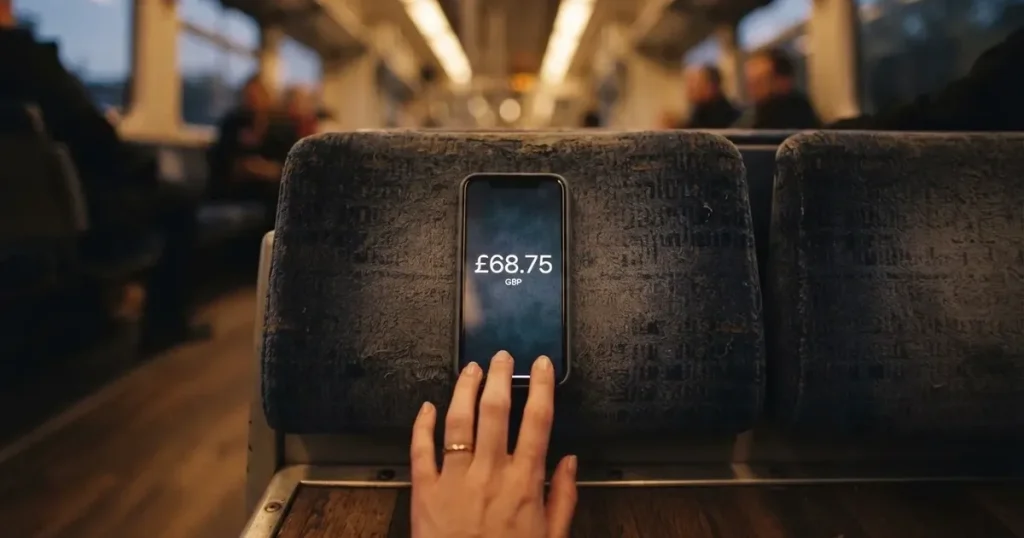
Since an amendment to the Racing Industry Act 2020 took effect on 28 June 2025, TAB NZ and its online sister brand Betcha are the only operators allowed to take online sports and racing bets from people in New Zealand, and the Department of Internal Affairs told every other provider to withdraw with immediate effect. There is no list of licensed bookmakers to compare against, no application to make, and no second chance to apply once the door closes — because the law does not licence bookmakers at all. It names one lawful channel.
*Current as of October 30, 2026 · verified against the Department of Internal Affairs register and the Racing Industry Act 2020.*
That single fact reshapes every other question a searcher of “mobile betting in New Zealand” carries into the page. The answer to “which app to install?” is short and almost rude in a market that is supposed to be a comparison: install TAB or Betcha, or accept that what you are doing is not covered by New Zealand law. The interesting questions sit one layer down — what the two lawful apps actually carry, what an offshore book can and cannot promise a bettor sitting in Auckland or Dunedin, and what safer-gambling support is reachable from a phone in the middle of the night. This page works through all of it.
Staying in control of the bet: what the safer-gambling tools on a New Zealand phone actually do
Responsible gambling is the first cluster in this guide because the question it answers is the one the law’s drafters had in mind. New Zealand’s gambling-harm policy is built around the player, not the operator: the same phone that takes the bet also carries the off-switch. TAB NZ’s apps expose that off-switch directly. Deposit limits, time-outs and self-exclusion sit inside the account, and an exclusion applies across both TAB and Betcha because they are run as one operator group. That single exclusion covering two brand names is the practical reason the law names a monopoly instead of licensing rivals — one regulator to reach, one self-exclusion to enforce, one set of harm-minimisation obligations on the operator side.

A punter who hits the exclusion button is not taking a week off. The exclusion is real, it is recorded once, and it follows the punter’s identity across both apps rather than being something they can sidestep by redownloading under a different brand. Time-outs are the lighter version: a 24-hour cool-off, a seven-day break, a month out. Deposit limits are the most useful tool for someone who is still betting but wants a ceiling they cannot raise without a waiting period — the limit goes down immediately, but raising it takes a deliberate step and a clock the operator cannot shorten.
Help is one tap away. The free Gambling Helpline on 0800 654 655 and the text line on 8006 are listed inside both apps, run 24 hours a day, and are staffed by people who understand New Zealand’s gambling landscape — not a generic offshore call centre. Safer Gambling Aotearoa is the public-facing education arm, the place to read what the warning signs look like before the punter needs the helpline. Both lines sit alongside the in-app tools, never instead of them. The pattern across all three is the same: an in-app lever for the everyday call, a phone number for the urgent one, and a public agency for the longer conversation.
The same three layers exist at the regulator. The Department of Internal Affairs monitors compliance with section 92A of the Racing Industry Act 2020, the rule against unauthorised betting, and is the body to tell about an offshore operator serving New Zealand. The Problem Gambling Levy of 0.74% — in force from 1 July 2025 to 30 June 2028 — is paid by TAB NZ and funds the public-health response to gambling harm. A bettor sitting in New Zealand is paying, with every bet, into the very system that funds the helpline they may need to ring. That is the structural design: the operator is also the funder of the safety net.
What none of this can do is reach a bet placed with an offshore book. Deposit limits and self-exclusion belong to the operator whose app carries them. An exclusion at TAB NZ does not stop a bettor who has also installed an offshore app on the same phone; those apps carry no New Zealand exclusion register, no New Zealand complaints route, and no obligation to honour a request made under New Zealand harm-minimisation norms. The point is not that offshore books are careless with player safety — some run their own exclusion systems — it is that the system New Zealand builds is for the operator it licences, and there is only one.
Bonuses and free bets: what TAB NZ actually gives, and what the words on a promotion page mean
New Zealand has no rule on bet-bonus size or wagering terms — the only lawful bookmaker is TAB NZ, and TAB NZ writes its own promotional terms. That is unusually clean for a market where every other country has spent years negotiating minimum odds, wagering multiples and time limits on bonuses. Here the question is just what TAB NZ does.

New TAB NZ customers can receive Bonus Cash that can be split across multiple bets, and the app lists a Mega Multi bonus of up to $50 in Bonus Cash when a multi of four or more legs falls short by a set number of legs. The terms sit on the app — wagering factor, minimum odds, expiry, whether the stake comes back — and the punter reads them before claiming, because none of them is standardised. The shape is the one offshore books offer too: a bonus is a credit with strings attached, and the strings are written by the operator. New Zealand’s contribution is that there is exactly one operator writing them, so a punter only has to learn one set of terms rather than ten.
The shape of the strings matters more than the headline number. A “free bet” is a credit on which the stake is usually not paid back with a win: a $10 free bet at odds of 3.00 returns $20 in profit, not $30. A “bonus bet” with turnover means the bonus amount has to be wagered a set number of times at minimum odds before any winnings can be withdrawn, and “boosted odds” inflate one selection’s price without changing anything else. None of these terms is more generous than its plain reading suggests, and a punter who skips the small print finds out what was always written there. A 100% bonus sounds like the bookmaker giving you back your deposit; it is not — it is the bookmaker lending you theirs, with conditions.
The arithmetic that decides what an offer is worth is the same everywhere. For a free bet whose stake is not paid back, value = free-bet amount × (odds − 1) ÷ odds × payout share of the market being bet on. A $10 free bet at odds of 4.00 on a market with a 95% payout share is worth roughly $7.13 on average — what the offer costs over many such bets, never what one bet wins. The number is an average, not a promise, and the punter who reads it as a guarantee is reading it wrong. The same caveat covers a wagering requirement: required turnover = bonus base × wagering factor, and the expected cost of clearing it = that turnover × the margin of the market. The numbers stack. A $100 bonus with a 5x wagering requirement on football at a 6% market margin costs an expected $30 to clear, before the punter sees a cent of profit. That is not the bonus being unfair — it is the bonus being a credit, and credits cost.
TAB NZ’s Mega Multi bonus is structured the same way: bonus cash, conditions, expiry. The wording “up to $50” is a ceiling, not a default, and depends on stake size and how many legs fell short. Reading the offer as a guarantee that any near-miss multi returns $50 is reading it wrong. The honest framing is that a TAB NZ bonus is the same kind of promotion as anywhere else, only with one operator’s terms to learn rather than ten.
The mobile app layer: what TAB NZ and Betcha put on a phone, and what an offshore app does differently
The two lawful New Zealand betting apps are TAB and Betcha, both run by TAB NZ and operated under a 25-year agreement with Entain signed in 2023 that gives Entain a 50/50 share of gross profits, with at least $150m a year going to TAB NZ for the first five years. Entain also pledged a one-off $100m payment to the racing sector. TAB NZ publishes its “TAB – Racing & Sports Betting” app on the New Zealand App Store under the seller name New Zealand Racing Board; the app was first released on 8 September 2014 and has been refined since. Betcha sits beside it, also on the New Zealand App Store, published by Entain New Zealand Limited and first released on 6 August 2024. The two apps share a wallet and a self-exclusion but present themselves differently: TAB carries the full racing-and-sports product with form tools and live racing, Betcha is the cleaner sports-led front.
What is actually on the phone is closer to a small betting terminal than a website. The TAB app covers horse and harness racing, rugby union, rugby league and other sports, pre-match and live. It carries Same Race Multis, Same Game Multis, one-tap Popular Multis, and a Place Extra option that lets punters back runners to finish up to the tenth in selected races — a market that does not exist on most offshore books because it depends on the local racing code. Trackside live race streaming runs inside the app with in-app betting, and racing form, Blackbook and Jockey Challenge tools sit alongside the bet slip. A simplified wallet handles deposits and withdrawals. The app carries a 17+ App Store age rating while stating that customers must be 18 or over to bet — the App Store’s rating is a content guideline, the operator’s age rule is a legal one, and the operator’s 18 is the rule that matters.
Betcha carries a 17+ age rating, offers Safer Betting tools in the app, and lists the free 24/7 Gambling Helpline 0800 654 655. The product set is narrower than TAB’s: sports-led, clean, mobile-first, racing handled through the sister brand. Together they cover the full racing-and-sports range that New Zealand law allows, on two apps that share a back office and a self-exclusion.
An offshore book on the same phone looks similar and is not. SpinBetter offers iOS and Android apps and a mobile version of the site, its footer states an age limit of 21+ — a different age rule from New Zealand’s 18, which matters because age-verification is run by the operator, not the regulator. Megapari’s English site, served from a mirror, offers sports betting with Live, Multi-LIVE and Turf sections, a casino, Crash and Dice games, and iOS and Android apps; its footer also states an age limit of 21+. BetWinner lists Sports, Multi-LIVE, Live and Toto betting, a casino with Win Games and a live casino, iOS and Android apps, an affiliate programme and a 21+ age notice. Paripesa offers a cricket-led sportsbook alongside Line, Live, Multi-LIVE, slots, live casino, virtual sports, TV games and bingo, with iOS, Android and web apps and a 21+ age notice. Each of these is a real sportsbook; none is licensed to serve a person in New Zealand, none plugs into the New Zealand self-exclusion, and the difference is the law that sits behind the app, not the screen.
Two practical consequences follow. The first is that an offshore app on a New Zealand phone is a product the operator is not allowed to sell to the person using it. The second is that any complaint about that app — a payout dispute, a stuck withdrawal, a bonus term read in two directions — has no New Zealand path. The operator’s own complaints route applies, whatever it is, and an offshore regulator is the only appeal beyond that. The Department of Internal Affairs tells providers to withdraw, but the bookmaker’s home regulator is the one a New Zealand punter has to deal with. That is the cost of the offshore app, and it is paid in the moment something goes wrong.
The ten brands on this page, ranked by what they offer a New Zealand phone
TAB NZ and Betcha are the two lawful brands. The other eight — BillyBets, Alawin, RTbet, FunBet, 22Bet, Rooster.bet, Golden Panda, Winz.io — are offshore books that New Zealand players meet online and that the Department of Internal Affairs has told to withdraw. They are listed for reference because they show up in the comparison any New Zealand punter runs by themselves, and a guide that omits them reads as if it has not heard of them. The headline is the law, not the rank.
| Brand | New Zealand status | What the operator’s own terms state |
|---|---|---|
| TAB | TAB NZ brand — one of two lawful online operators | Bonus Cash for new customers split across multiple bets; Mega Multi bonus up to $50 when a 4+ leg multi falls short by a set number of legs; deposit limits, time-outs and self-exclusion in app |
| Betcha | TAB NZ brand — one of two lawful online operators | Safer Betting tools in app; free 24/7 Gambling Helpline 0800 654 655 listed in app |
| BillyBets | Not licensed in New Zealand | Live chat and Help Centre support available 24/7; site runs on Android and iOS via the mobile-optimised platform |
| Alawin | Not licensed in New Zealand | Accepts customers aged 18 or over only |
| RTbet | Not licensed in New Zealand | Sportsbook covers football, tennis, table tennis, basketball, ice hockey, American football and baseball; live betting and virtual sports |
| FunBet | Not licensed in New Zealand | Sportsbook covers football, ice hockey, American football, basketball, volleyball, tennis, rugby and baseball; live betting; bookmaker described as open 24/7 |
| 22Bet | Not licensed in New Zealand | Run by TechSolutions Group N.V. (Curaçao registration 144920); Curaçao licence 8048/JAZ |
| Rooster.bet | Not licensed in New Zealand | Operated by Novatrix SRL (Costa Rica registration 3-102-893958); Tobique Gaming Commission e-gaming licence No. 0000002 |
| Golden Panda | Not licensed in New Zealand | Sports section with sportsbook, esports, virtual sports, plus casino, live casino, crash games, rewards, cashback, VIP Club, Golden Goals and Prediction Markets |
| Winz.io | Not licensed in New Zealand | Footer states licence delivered by Anjouan and Tobique |
TAB — Racing & Sports Betting
TAB is the elder of the two New Zealand apps, the place racing sits. The product spans horse and harness racing, rugby union, rugby league and the rest of the New Zealand sporting calendar, pre-match and live. Same Race Multis, Same Game Multis and one-tap Popular Multis build the multi-bet experience around local racing and sport, and Place Extra extends Place markets to tenth place in selected races — a local-flavour market that an offshore book does not carry. Trackside live race streaming sits inside the app with in-app betting, and the racing form, Blackbook and Jockey Challenge tools turn the app into a small terminal. The wallet is simplified: deposit, bet, withdraw, with deposit limits and self-exclusion accessible from the account. New TAB NZ customers can receive Bonus Cash split across multiple bets, and the Mega Multi bonus pays up to $50 in Bonus Cash when a multi of four or more legs falls short by a set number of legs. Verdict: the only lawful channel for New Zealand racing and sport, built around local market structures and the national harm-minimisation framework — any other app is either the Betcha alternative or an offshore provider operating against New Zealand law.
Betcha — Sports Betting
Betcha is the newer of the two TAB NZ brands, published by Entain New Zealand Limited and first released on 6 August 2024. The product is sports-led rather than racing-led — rugby union, rugby league, football, the major codes — with a cleaner mobile interface and the same Safer Betting tools as TAB. The free 24/7 Gambling Helpline 0800 654 655 is listed in the app. Because Betcha and TAB share a back office, a self-exclusion set on one applies to both, and the wallet sits behind the same identity verification. Verdict: the right pick for a punter who bets sport and not racing, and wants the lighter of the two interfaces — anything more specialist on racing lives on the TAB app.
BillyBets
BillyBets is an offshore mobile casino and sportsbook that runs on Android and iOS through the mobile-optimised platform rather than a downloadable app, and supports customers 24/7 through live chat and a Help Centre. The cashier accepts New Zealand players but only shows Euro as the currency filter, which means a New Zealand punter is depositing in Euros and wearing the FX spread on every transaction — a quiet cost the headline bonus does not show. The site is not licensed in New Zealand: there is no New Zealand complaints route and no harm-minimisation framework that reaches it. Verdict: a competent offshore sportsbook for a punter who has accepted the legal position; weaker on racing than the TAB app, and the Euro-only cashier is a real cost for a New Zealand-dollar punter.
Alawin
Alawin is an offshore book that accepts customers aged 18 or over only, sitting at the same age threshold as TAB NZ rather than the 21+ that several offshore books use. The site carries no licence that applies in New Zealand, so the New Zealand punter has no domestic complaints path and no harm-minimisation obligation the operator has to meet under New Zealand law. The product set is the standard offshore package — sportsbook, live betting, casino — without a racing specialisation. Verdict: ordinary offshore book with the right age threshold for a New Zealand punter; the law does not change, and neither does the absence of a New Zealand complaints route.
RTbet
The site is Curaçao-licensed, a licence that does not authorise betting in New Zealand. A New Zealand punter can place a bet, but the New Zealand harm-minimisation framework does not reach the operator and the Department of Internal Affairs has told the operator to withdraw. Verdict: wide sports coverage and live betting; the legal position is unchanged, and a punter wanting local racing markets still needs the TAB app.
FunBet
FunBet’s sportsbook covers football, ice hockey, American football, basketball, volleyball, tennis, rugby and baseball, with live betting and a bookmaker described as open 24/7. Rugby on the menu is the closest thing to a New Zealand-friendly signal on the list — the rest is the standard offshore package. The site names no licence that applies in New Zealand, the New Zealand complaints route does not exist, and the harm-minimisation framework does not apply. Verdict: useful for a punter who wants a rugby market on an offshore book; the legal position remains the same as every other entry below the line, and a TAB account stays the primary lawful choice for New Zealand racing.
22Bet
22Bet is run by TechSolutions Group N.V., a Curaçao company with registration number 144920, which also runs 20Bet, Bizzo and National Casino, and the Curaçao licence number tied to 22Bet is 8048/JAZ. This licence is not valid for New Zealand customers, no domestic complaints route applies, and the Department of Internal Affairs has told the operator to withdraw. The product is a wide offshore sportsbook with casino attached. Verdict: a long-established offshore brand with a recognised Curaçao licence; the licence does not authorise New Zealand play, and a New Zealand punter on 22Bet is outside the New Zealand harm-minimisation framework and complaints system.
Rooster.bet
Rooster.bet is operated by Novatrix SRL, a company incorporated in Costa Rica with registration number 3-102-893958, under e-gaming licence No. 0000002 issued by the Tobique Gaming Commission. The Tobique licence is invalid in New Zealand, no domestic complaints route applies, and the operator is not subject to New Zealand harm-minimisation rules. Verdict: a Tobique-licensed offshore book; the licensing body is not New Zealand, the local framework does not reach it, and a New Zealand punter is betting under foreign rules rather than local ones.
Golden Panda
Golden Panda offers a Sports section with a sportsbook, esports and virtual sports, plus casino, live casino, crash games, rewards, cashback, a VIP Club, Golden Goals and Prediction Markets — a feature-heavy offshore product that leans casino more than most on this list. Verdict: a casino-heavy offshore brand for a punter who wants the casino product alongside a sportsbook; the legal position is unchanged, and all betting on New Zealand racing must be done through a TAB account.
Winz.io
Winz.io states in its footer that it holds a licence delivered by Anjouan and Tobique. These licences are not valid in New Zealand, no domestic complaints route applies, and the Department of Internal Affairs has told the operator to withdraw. Verdict: a dual-licensed offshore book whose licences do not authorise New Zealand play; the same legal position as every other entry below TAB and Betcha on this list.
The shape of the New Zealand mobile betting market
New Zealand’s mobile betting market is not a market in the ordinary sense. There is one lawful provider, two apps under that provider’s name, and a long list of offshore books the law has told to stop serving New Zealand. That is the whole thing, and the shape of it decides what a punter can compare.
The fundamentals are short. New Zealand dollars are the only currency that matters at the lawful operator; offshore books quote in Euros or US dollars, and the spread is a quiet cost on every transaction. Deposit and withdrawal methods are TAB NZ’s own terms, with no statutory payment rule that overrides them. The minimum age is 18, and account opening at TAB NZ needs a verified New Zealand address and ID. The advertising code is the Advertising Standards Authority’s Gambling Advertising Code: ads must not target under-18s or encourage harm, must be truthful with terms available. None of this generalises to an offshore book on the same phone, because the offshore book is not subject to any of it.
The landscape is thus not a comparison table with one winner. It is a rule with two exceptions: TAB or Betcha. A punter who wants to bet on a Black Caps match, an All Blacks test, a NRL round, a Warriors game, the Melbourne Cup or a local harness meeting has one lawful place to do it from a phone, and that place is the TAB or Betcha app. A punter who wants to bet on a market those apps do not carry — an esports tournament, a politics market, a spread bet — has no lawful New Zealand option, and is in the territory the Department of Internal Affairs has warned about. The honest framing is that the market is narrow by design, and the narrowness is the price of the harm-minimisation framework that comes with it.
The legal frame: how section 74AAA changed the market
The Racing Industry Amendment Act 2025 inserted section 74AAA into the Racing Industry Act 2020: no person other than TAB NZ may offer racing betting, sports betting or other racing or sports betting to a person in New Zealand, regardless of where that person is resident or incorporated. The change took effect on 28 June 2025, and the Department of Internal Affairs told providers serving New Zealand to withdraw with immediate effect. There is no licensing route for another bookmaker and no licence register for betting, because there is only one lawful operator.
The Department of Internal Affairs is the gambling regulator under the Gambling Act 2003 and monitors compliance with the betting prohibition under section 92A of the Racing Industry Act 2020. The Racing Industry Act 2020 establishes TAB NZ as the sole betting provider for racing and sports in New Zealand. The Online Casino Gambling Act 2026 licenses online casino gambling only and does not license sports betting; TAB New Zealand winning the right to apply for a casino licence does not extend the betting monopoly, and the page writes nothing about a New Zealand betting exchange because none exists and spread betting is outside TAB NZ’s sports-betting definition. Greyhound racing is closing in stages from 1 August 2026, and from that date offshore operators may not take bets on greyhound races either.
What may be bet on is racing and sports betting from TAB NZ only. TAB NZ takes fixed-odds and tote (pool) bets; its published betting rules define bets such as Win, Place, Each Way, Quinella, Exacta, Trifecta, First Four, Double, Treble, Daily Double, Running Double, Quaddie and Big6, and Multis and Same Game Multis. Live betting is listed in the TAB NZ apps; any statutory restriction on in-play markets is not established. The ban covers events held inside and outside New Zealand. Bets on politics and novelty markets are not established. Virtual (computer-simulated) sport is treated by the 2026 online casino law as casino gambling; whether esports betting is “sports betting” under the Racing Industry Act is not established. No statutory per-bet cap exists; limits are TAB NZ’s own terms.
The player side of the law is unusual and worth reading closely. Section 19(4) of the Gambling Act 2003, inserted in 2025, says an individual may not be convicted for placing a bet with an offshore betting operator in breach of section 74AAA; no source states a penalty for a player. The honest framing is that New Zealand law targets the operator, the Department of Internal Affairs warns players of the risks, and no published penalty for a player was found. Betting offshore is not illegal for the player; it is also not legal, and the operator is the one breaking the law by serving the player.
For the player, Inland Revenue guidance says recreational gambling winnings are generally not taxable and prize money from TAB horse, dog and trotting races is not taxable. A person who bets as a business is a different case — general information, not tax advice. Operator side: TAB NZ pays the Problem Gambling Levy of 0.74%; overseas operators supplying New Zealand residents pay online gambling duty (12% of profits since 1 July 2024, 16% from 1 January 2027), but a duty being payable does not make an offer lawful — never write that tax payment shows a bookmaker is legal. The point-of-consumption charge on offshore racing and sports bets ceased on 30 June 2026.
The Advertising Standards Authority’s Gambling Advertising Code applies to betting advertisements: ads must not target children (under 14) or young people (14 to under 18), judged by context, appeal and expected audience (25% or more of the audience counts as significant where accurate data exists), must not encourage harm, and must be truthful with terms available. Because only TAB NZ may offer betting here, the Department of Internal Affairs reads the prohibition as covering promoting or taking such bets for another operator; how the Department treats betting affiliates is not established, so the page describes the monopoly and never invites readers to sign up with an offshore brand.
The offshore picture closes the frame. Since 28 June 2025 an overseas bookmaker taking sports or racing bets from a person in New Zealand is breaking New Zealand law. The penalty for breaching section 74AAA is not stated in the section and no prosecution of an offshore bookmaker was found. New Zealand does not block bookmaker sites. The Department of Internal Affairs warns that overseas operators may be in jurisdictions with minimal consumer safeguards, may not return unspent credits and may not pay out large wins. No payment-blocking order or bank obligation was found. Nothing states a rule on crypto or VPN use; account opening at TAB NZ requires a verified New Zealand address. TAB and Betcha are the only lawful option, with New Zealand harm-minimisation tools, regulator oversight and a complaints framework; offshore is unlawful for the operator to serve New Zealand, with no New Zealand complaints route, the Department of Internal Affairs’s stated risks, and limits possible elsewhere. Neither is “the safe choice” by default — that framing is editorial, and a page that uses it stops being one.
What the odds actually mean: how the bookmaker’s margin shows up in the price
Every price on a betting app carries a margin inside it, and the margin is the same thing as the “overround” or the “bookmaker’s edge”. It is the cut the bookmaker takes of every dollar bet on the market, built into the prices themselves rather than charged separately. It is what makes the bookmaker’s business work, and it is also what decides what a “good price” looks like compared with a bad one.
The arithmetic is short. On a three-outcome market such as a 1X2 football match (home win, draw, away win), the payout share = 1 ÷ (1/odds₁ + 1/odds₂ + 1/odds₃) over all outcomes, and the margin = 1 − payout share. A market with 95% payout share has a 5% margin. A market with 90% payout share has a 10% margin. The lower the margin, the better the prices for the punter — every bet pays out more of every dollar staked, and over many bets that adds up.
The same arithmetic runs on a two-outcome market such as a head-to-head or a totals line. The same arithmetic runs on a Same Game Multi, where the legs multiply into one price and the margin compounds across them. A four-leg multi at 95% per leg has roughly an 81% payout share on the combined bet — the price looks generous because the four odds multiplied together are large, but the share of every dollar the bookmaker keeps has grown four times over. That is the trade a Same Game Multi asks the punter to make: bigger price, worse margin.
The honest framing is that no market is margin-free. The punter who compares markets by headline odds is comparing prices that already include the cut; the punter who compares by payout share is comparing what the bookmaker actually keeps. The second comparison is the one that decides what a bettor is paying over many bets. TAB NZ publishes its odds the way every bookmaker does, and the punter who reads the price as the cost of the bet is reading it right; the punter who reads it as the cost of the bet plus nothing else is reading it wrong.
Frequently asked questions
Which bookmaker may lawfully take sports and racing bets in New Zealand?
TAB NZ is the only provider lawfully offering racing and sports betting to people in New Zealand under section 74AAA of the Racing Industry Act 2020, in force since 28 June 2025. TAB and Betcha are its two online brands, run together as one operator group. No other bookmaker — offshore or domestic — may lawfully take such bets from a person in New Zealand.
How is the return on a bet worked out from the stake and the odds?
Return = stake × odds. Net profit on a winning bet = stake × (odds − 1). A $10 stake at odds of 3.50 returns $35 and pays $25 in profit; the original $10 stake comes back with the winnings. The arithmetic is the same for a combination bet, where the odds of the legs multiply into one combined price.
What is the bookmaker’s margin and how can it be seen in the odds?
The margin is the cut the bookmaker keeps of every dollar staked on a market, built into the prices. On a 1X2 market, payout share = 1 ÷ (1/odds₁ + 1/odds₂ + 1/odds₃), and margin = 1 − payout share. A 95% payout share is a 5% margin. The lower the margin, the more of every dollar the punter gets back over many bets, and comparing markets by payout share is the comparison that tells a punter what a bookmaker actually costs.
What does a player lose by betting with a bookmaker that has no New Zealand licence?
The player loses the New Zealand harm-minimisation framework: no TAB NZ deposit limits, time-outs or self-exclusion apply; the Gambling Helpline on 0800 654 655 is not connected to the operator’s complaints route; and any dispute about payouts or bonus terms is handled under the operator’s home jurisdiction rather than New Zealand law. The Department of Internal Affairs warns that overseas operators may be in jurisdictions with minimal consumer safeguards, may not return unspent credits and may not pay out large wins.
From what age can bets be placed with TAB NZ, and what is checked when opening an account?
The minimum age for betting with TAB NZ is 18, set by section 89 of the Racing Industry Act 2020. Account opening requires a verified New Zealand address and ID. The TAB NZ app carries a 17+ App Store age rating, which is the platform’s content guideline; the operator’s 18 is the legal rule that governs who may place a bet.
Are betting winnings taxed in New Zealand?
Inland Revenue guidance says recreational gambling winnings are generally not taxable, and prize money from TAB horse, dog and trotting races is not taxable. A person who bets as a business is a different case. Operator-side taxes exist — TAB NZ pays the Problem Gambling Levy of 0.74%, and overseas operators supplying New Zealand residents pay online gambling duty — but those are operator taxes, not player taxes, and paying duty does not make an offshore offer lawful in New Zealand.
Live & mobile – kiwiracingbets
Content created by the «kiwiracingbets» team
