
Where the 2026 NRL Can Be Bet in New Zealand — and What the Market Actually Costs
 Available in US

Current as of October 30, 2026 · verified against the Racing Industry Act 2020 (as amended), the Department of Internal Affairs, and the licence and terms statements each operator publishes.
The NRL question for a New Zealand bettor in 2026 is narrower than the same question in Sydney. A single statutory framework names one provider, and one provider only, as the lawful route for racing and sports betting inside the country. Everything else in this article sits inside that constraint — what gets priced, what you can do about an in-play move, where the safer-gambling tools live, and what the second name on the list is for. Ten brands are named for comparison because New Zealand players meet them; only two of them answer the question this page is built around.
The 2026 NRL season ran from 28 February to 4 October 2026, with seventeen teams contesting the home-and-away rounds before the top eight ran through the finals. Penrith Panthers finished the regular season as minor premiers, and the Sydney Roosters took the grand final at Accor Stadium on 4 October 2026, beating the Newcastle Knights for the club’s sixteenth premiership. The whole competition sits inside one calendar year; the betting conversation runs across the same nine months.
The New Zealand Betting Market for the NRL
The shape of the market follows from a single legal fact, so the legal fact is worth knowing first.
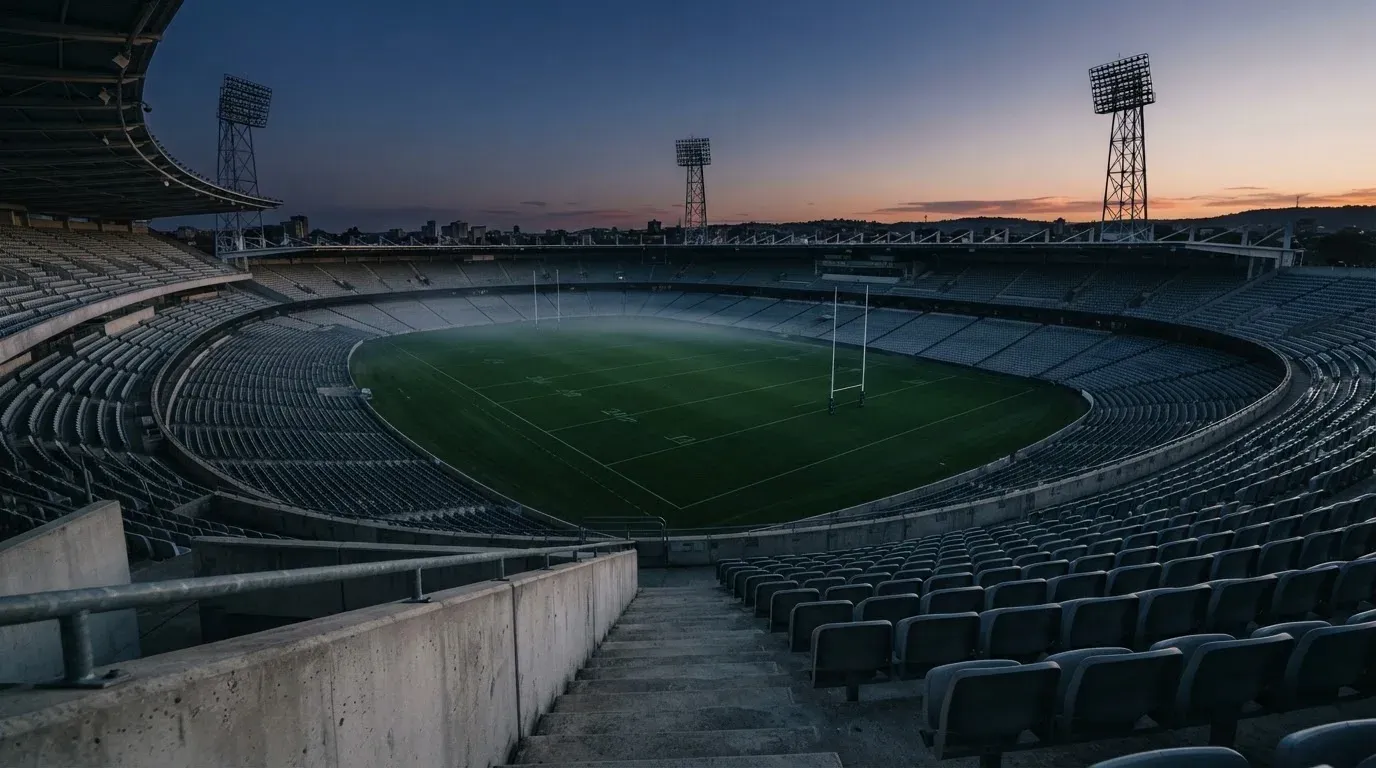
A statutory monopoly, not a competitive field
Since 28 June 2025, section 74AAA of the Racing Industry Act 2020 — inserted by the Racing Industry Amendment Act 2025 — has placed a hard prohibition on offering racing betting, sports betting, or other racing or sports betting to a person in New Zealand. The only operator lawfully able to do so is TAB New Zealand, trading through two online brands, TAB and Betcha. The Department of Internal Affairs told unlicensed providers to withdraw with immediate effect when the change came into force; no separate bookmaker licence register exists, because there is no licence to apply for. The monopoly is on TAB NZ, not on the brands. TAB and Betcha are the same operator at the same balance, the same wallet and the same harm-minimisation framework, with the same KYC and the same complaints channel. Treating them as rivals to be weighed against each other is a category mistake; what differs is the product, the app surface, and the markets each app surfaces most prominently.
TAB NZ’s partner in running the operation is Entain, under a 25-year agreement signed in 2023. Entain operates the TAB business day-to-day and takes 50 per cent of gross profits; TAB NZ keeps the other 50 per cent, with at least $150 million a year committed to TAB NZ for the first five years. Entain also pledged a one-off $100 million payment to the racing sector on signing. The point of those terms for a bettor is that TAB NZ is the home of New Zealand racing’s funding, not a pure commercial bookmaker — a slice of every bet stays in the industry that stages the meetings being bet on.

What the offshore brands look like to a New Zealand player
The other eight brands on this page — Telbet, BetAlright, Roobet, Winz.io, Golden Panda, FunBet, Rabona and Alawin — are bookmakers and casino operators based offshore. They hold licences in jurisdictions that do not include New Zealand: Roobet names a Curaçao licence, Winz.io names Anjouan and Tobique licences, Rabona names a Curaçao licence, and the rest name no licence that applies in New Zealand at all. None of them is licensed in New Zealand. New Zealand law does not geo-block their websites; instead, the prohibition puts the liability on the operator, not the player. Section 19(4) of the Gambling Act 2003 (as inserted in 2025) says an individual may not be convicted simply for placing a bet with an offshore operator that is in breach of section 74AAA. The honest framing is what the Department of Internal Affairs says: offshore brands serving New Zealand may be in jurisdictions with minimal consumer safeguards, may not return unspent credits, and may not pay out large wins. None of the offshore names on this page offers the New Zealand harm-minimisation tools, the New Zealand complaints channel, or the levy-funded support services that TAB NZ does.
What the practical effect is
A New Zealand resident who wants to bet on the NRL in 2026 is, by law, betting through TAB or Betcha. The market list of NRL matches, the prices, the same-game multis, the in-play markets and the live-stream integration are consequently the TAB NZ product. Offshore names will accept sign-ups and deposits; that does not put them inside the law. A reader who wants a New Zealand-licensed operator with a New Zealand complaints channel is choosing between two surfaces of the same business.
The NRL Season as a Betting Calendar
The 2026 season gives a bettor a clean rhythm: pre-season, regular rounds, the State of Origin window, finals and the grand final. Each phase has its own market depth and its own pricing logic, and TAB NZ’s list grows when the calendar is full.
The regular season: twenty-four rounds, week in, week out
The home-and-away ran over 24 rounds across 27 weeks, with each of the 17 teams playing 24 matches and having two byes. The long tail of the season is the bulk of the betting volume: head-to-head lines, line betting, total points, first try-scorer, anytime try-scorer, half-time / full-time, and the same-game multi combinations built from them. TAB NZ’s racing-and-sport app surfaces NRL markets on a weekly cadence, with the Friday night fixture usually first on the list and the Sunday afternoon game as the closer. Markets settle on the published result; a try-scorer market voids if the named player does not take the field.
Origin, mid-season and the international window
State of Origin runs across three Wednesday nights, with NSW and Queensland taking a 1-3 format that briefly reshapes the round-by-round market depth: players become unavailable for club sides, and the round’s pricing has to absorb that. The mid-season representative window otherwise is thin for NRL, with clubs losing players to international duty in a Rugby League World Cup year. The 2026 NRL had a heavier Origin swing than most seasons, with at least six regular rounds sitting inside a representative window or recovering from one.
The finals and the grand final
The top eight teams on the ladder play through four rounds: qualifying finals, elimination finals, semi-finals, preliminary finals, and the grand final. TAB NZ’s market depth peaks here. The same-game multi list stretches to combinations that aren’t available in the regular season, head-to-head markets sit alongside line and total markets for the same match, and a finals-specific market list opens (player of the match, team to score first in the second half, race to ten points). The grand final at Accor Stadium on 4 October 2026 was the season’s closing market; pricing on it had been live for the closing third of the season in some form, with futures outright markets opening before round one.
What the season’s shape does to a bettor’s bankroll
A season-long punter who works a single $10 bet on the head-to-head each round will, over 24 rounds, have a flat $240 in play if every bet is at the same stake. A bettor who works an each-way futures book — picking four teams at $50 each, with the book paying out on the minor premiership, the top four, the top eight and the premiership — runs a different risk profile, and TAB NZ’s terms make clear what each of those markets is and how each settles. The size of the bankroll the bettor is willing to commit to a season has to be set before round one, because the temptation to chase a losing finals position is the cost the season actually imposes.
How the Odds Are Built — and What the Margin Takes
Every price a bookmaker offers is the same trade dressed in different numbers: the bettor is overpaying on the loser and underpaying on the winner, and the gap between the two is the bookmaker’s edge.
Decimal odds and the return on a winning bet
TAB NZ publishes prices in decimal form: the price includes the stake and the profit. A $10 bet at $2.10 returns $21 ($10 in profit plus the $10 stake). A multi at combined price $4.50 returns $45 on a $10 stake if all legs win. A multi’s combined price is the product of its legs: $2.10 × $2.15 = $4.515, which the bookmaker rounds to $4.50. The bookmaker’s rounding is itself a small part of the margin.
The margin on a two-way market
A two-way market is a market with two outcomes that between them cover every possibility (head-to-head with a draw priced separately, line betting where one side is favourite and the other is underdog, total points over or under). At decimal odds of 1.90 on each side of a two-way line, the calculation is straightforward. The payout share — the fraction of every dollar staked that the bookmaker will return to bettors if every outcome paid out at the stated price — is 1 ÷ (1/1.90 + 1/1.90), which equals 1 ÷ 1.0526, or roughly 95.0 per cent. The bookmaker’s margin is the rest: about 5.0 per cent on this market, on this pair of prices, on this snapshot.
A 5 per cent margin is an example, not a quoted price, and the actual margin on the markets TAB NZ lists for a given NRL fixture will sit above or below that figure depending on the market. Head-to-head and handicap markets on big matches tend to be tighter (the bookmaker’s edge can compress to around 3-4 per cent once liquidity and the bookmaker’s own view settle). Outright markets on the premiership, exotic player markets and same-game multi legs are typically wider — 6 per cent to 10 per cent, sometimes more on long-priced markets where the bookmaker is less confident in the line. The way to read a price is to compare it to the equivalent market on another bookmaker; the gap is the bettor’s first rough check on whether the price is fair.
Why the same fixture carries different margins on different markets
The same NRL match will have a head-to-head margin of around 4 per cent, a line margin of around 5 per cent, a total-points margin of around 6 per cent, and a same-game-multi margin of around 8 per cent on a representative fixture. The reason is the cost of pricing risk: a head-to-head outcome settles on a binary question (win or not), the line market lets the bookmaker fine-tune the favourite’s handicap, totals are a market of subjective opinion on attacking and defensive form, and same-game-multis combine several of those markets into one structure with the bookmaker’s edge applied at each leg. Each step adds basis points of margin. The bettor reading the market has to know that the same fixture carries different edge depending on which market the bettor takes.
Bet Types Available on the NRL in 2026
The bet types on the TAB NZ product are a standard NRL menu with a same-game multi on top.
Head-to-head and the line
Head-to-head is the simplest market: pick the team to win. If the match is drawn at full time, the head-to-head bet voids (the bettor’s stake is returned) unless the draw has been priced as a separate outcome. Line betting moves the favourite’s margin of victory into the market: a market of Panthers -6.5 means the Panthers win the bet if they win by seven points or more; the Knights +6.5 means the Knights win the bet if they win outright or lose by six or fewer. The favourite’s price shortens; the underdog’s lengthens. The same mechanism is “handicap” in bookmaker vocabulary.
Totals and points markets
Total points is a market on the combined score of the match, with an over and an under: a market of 48.5 means the bet wins on the over if 49 or more points are scored, and on the under if 48 or fewer are scored. The line moves in increments of half a point to remove the draw as an outcome. The TAB NZ app also runs team totals (one side’s points only) and player totals on a small list of named players per match.
Try-scorer markets
First try-scorer is the highest-priced NRL-specific market on the TAB NZ product. The favourite is usually a winger or a fullback in the top attacking line of the dominant side, with prices that can run into the $20-$35 range on a long-priced chance. Anytime try-scorer is the more stable version: pick a player to score at any time, with the bet void if the named player does not take the field. Same-game multis often combine a head-to-head, a line, a total and a try-scorer selection in a single multi.
Same-game multi (SGM) and multi bet
A multi is a bet on several selections combined into one price: the bettor picks the head-to-head, the line, the total and the first try-scorer, and the combined price is the product of all four. The multi wins if all legs win; one losing leg loses the whole bet. A same-game multi is the same structure, with all legs from one match. SGMs are a high-margin product for the bookmaker — each leg carries its own margin, and the product of those margins is the multi’s overall margin. The bettor reading the price has to know that a multi at a price that looks “good” is doing work on the combined margin of its legs.
Futures outrights
The premiership market opens before round one and runs through to the grand final. The top four, the top eight, the minor premiership, and the wooden spoon are all available. Each is a long-priced market on a long field; the bookmaker’s margin on these markets is wider than on round-by-round markets, and the long tail of the field means a bettor picking at random has a low probability of a positive return.
Responsible Gambling Tools in the New Zealand NRL Market
The harm-minimisation framework for the NRL in 2026 sits with TAB NZ, because TAB NZ is the operator. The offshore brands do not offer it.
What TAB NZ makes available
The TAB NZ app lists three named safer-gambling tools: deposit limits, time-outs and self-exclusion. A deposit limit caps the amount a customer can deposit into the account over a chosen window; the cap applies at the deposit stage, not the stake stage, so a bettor’s stake is not directly capped but the balance feeding the stake is. A time-out is a short self-imposed block, typically 24 hours to several weeks. A self-exclusion is a longer block, which the terms describe as a minimum period throughout which the account cannot be re-opened and a minimum cooling-off period before re-opening. A self-exclusion at TAB NZ applies across both TAB and Betcha, because both are the same operator group. Standard harm-minimisation tools are integrated at the operator level.
The free New Zealand helpline
TAB NZ lists the free Gambling Helpline (0800 654 655) and the text line 8006 in its app, alongside Safer Gambling Aotearoa. The helpline is funded out of the Problem Gambling Levy, which TAB NZ pays at 0.74 per cent (in force from 1 July 2025 to 30 June 2028). Inland Revenue general guidance is that recreational gambling winnings are not taxable, but a person who bets as a business is a different case, and any specific tax position are to be checked with Inland Revenue or an accountant.
What the offshore brands do not offer
None of the eight offshore brands on this page publishes a New Zealand-specific harm-minimisation framework. Their tools — where the brands publish any at all — are typically self-exclusion at the brand level, sometimes a deposit limit, with no link to the New Zealand helpline. A New Zealand resident with a concern about their own betting has a New Zealand-shaped support system only if they are betting with TAB NZ. The Department of Internal Affairs warns that offshore brands are in jurisdictions with minimal consumer safeguards; for a reader who is concerned about gambling harm, the only New Zealand-shaped response is the New Zealand-shaped operator.
The Comparison Field for NRL Betting in 2026
The table below compares the ten brands a New Zealand bettor is most likely to meet. The first two are the lawful option; the rest are bookmakers a reader sees named in the wider market and are to be understood, not switched to.
| Brand | New Zealand status | What the operator’s terms state on NRL and the wider market |
|---|---|---|
| TAB | TAB NZ brand | The TAB NZ app covers racing, rugby union and rugby league, pre-match and live, with a 17+ App Store age rating and a stated minimum age of 18 to bet. The app carries Trackside live race streaming, racing form, Blackbook and Jockey Challenge tools, and a single wallet for TAB and Betcha. |
| Betcha | TAB NZ brand | Betcha is the second online brand of TAB NZ, published by Entain New Zealand Limited and first released on 6 August 2024. The product covers horse, greyhound and harness racing plus rugby, NRL, MMA / UFC, NBA, NFL, tennis, cricket, football, motorsports and esports. |
| Telbet | Not licensed in New Zealand | A crypto casino and sportsbook with a Russian-language site. No New Zealand licence, no New Zealand helpline, and no NRL-specific market list published on the public site. |
| BetAlright | Not licensed in New Zealand | Sportsbook covers football, tennis, table tennis, basketball, ice hockey, American football and baseball, with Live Betting and Virtual Sports. Rugby league is not in the public list. |
| Roobet | Not licensed in New Zealand | Sportsbook covers soccer, basketball, tennis, Counter-Strike, FIFA, baseball, ice hockey, MMA and table tennis. Terms require players to be 18 or older. No New Zealand licence; Curaçao licence (OGL/2024/687/0427). |
| Winz.io | Not licensed in New Zealand | Sportsbook bonus promotion with separate Sportsbook T&C, Sports Rules and Bonus Terms and Conditions pages. Anjouan and Tobique licences; no New Zealand licence. |
| Golden Panda | Not licensed in New Zealand | Sports, esports and virtual sports under a casino-led product. Casino, live casino, crash games, rewards, cashback, a VIP Club, Golden Goals and Prediction Markets alongside the sportsbook. No New Zealand licence. |
| FunBet | Not licensed in New Zealand | Sportsbook covers football, ice hockey, American football, basketball, volleyball, tennis, rugby and baseball, with live betting. Rugby league is on the rugby list, not a stated NRL-specific product. No New Zealand licence. |
| Rabona | Not licensed in New Zealand | Online sportsbook launched on 23 December 2019 as the sixth brand in the Soft2Bet group. Curaçao licence; no New Zealand licence. |
| Alawin | Not licensed in New Zealand | Sportsbook covers football, tennis, table tennis, basketball, ice hockey, American football and baseball, with Live Betting, Virtual Sports and esports. No New Zealand licence. |
The single most important column in the table is the second. A brand being on the list does not put it on equal footing with the first two; the New Zealand status column is what separates the lawful New Zealand operator from the rest. The first two rows are one business; the rest are not licensed in New Zealand, do not publish a New Zealand licence, and do not offer a New Zealand-shaped harm-minimisation framework. The rest of the table is informational — what each brand offers, where each brand’s licence is, and where the brand sits in the wider market. A reader who treats any of the last eight as a substitute for the first two is making a different choice to the one this article is built around.
The Reviews: A Closer Look at Each Brand
Each review below covers the operator’s profile, the practical question the operator answers, and where the operator falls short of what a New Zealand NRL bettor is most likely to need. Verdicts are written on the gap between the brand and the question this page was built to answer.
TAB (tab.co.nz) — the New Zealand surface of TAB NZ
TAB is the original New Zealand face of the operator, with the retail outlet footprint that still sets the product apart: a TAB outlet sits in most towns, and a punt at a counter is part of the same product as a punt in the app. The app’s market list reflects that heritage. Racing sits at the top of the navigation, with Trackside live streaming of New Zealand race meetings and the Blackbook tool for tracking runners. NRL is on the sports side, with the weekly fixture list on Friday and Sunday nights, head-to-head, line, totals and a strong same-game multi menu. The wallet is shared with Betcha, so a deposit into TAB appears in Betcha and vice versa; the safer-gambling tools — deposit limits, time-outs, self-exclusion — apply across both. The downsides are the ones that follow from a statutory monopoly: no price competition on any market, and the bookmaker’s margin on exotics and multi legs is wider than the head-to-head on a big round. TAB is the local standard for a safe, regulated experience.
Betcha (betcha.co.nz) — the newer TAB NZ surface, built for sport
Betcha launched on 6 August 2024 as the second online brand of TAB NZ, and the product looks younger than TAB’s. The market list puts sport at the centre, with NRL, NBA, NFL, MMA, cricket, football, motorsports and esports alongside the racing menu. The app is published by Entain New Zealand Limited, which signals the partnership that runs the operation; the Entain-built product surface in some of the same-game multi presentation. For a bettor whose NRL betting is the bulk of the activity, Betcha is the surface that does the sport work, with the same legal and operator backing that TAB has. The bettor who wants a long-form racing product with Blackbook, Jockey Challenge and the racing form tools is better served by TAB. The two are not rivals and the bettor does not have to pick one; the deposit cap applies across both.
Telbet (Telbet.com) — a Russian-language crypto sportsbook with no New Zealand presence
Telbet describes itself as a crypto casino and sportsbook, with the welcome offer and the free-bet promotion listed on the Russian-language site. The brand’s public-facing site is in Russian, the product is built around cryptocurrency, and there is no English-language market list for rugby league. Telbet is not licensed in New Zealand and the brand names no licence that applies in New Zealand; the protections (detailed in our section on harm minimisation) are absent, the New Zealand helpline is not listed, and the New Zealand complaints framework does not reach the operator. A New Zealand NRL bettor who found Telbet is on a Russian-language site with crypto deposits and no New Zealand regulatory protection; that is a different product to what this page is comparing.
BetAlright (Betalright.com) — a generic offshore sportsbook without an NRL list
BetAlright’s sportsbook is a generic offshore product: football, tennis, table tennis, basketball, ice hockey, American football and baseball, with Live Betting and Virtual Sports. Rugby league is not in the public market list, which puts the brand outside what a New Zealand NRL bettor is looking for. The brand is not licensed in New Zealand, the brand names no licence that applies in New Zealand, and the New Zealand harm-minimisation framework is not on the product. A reader who has heard the name in passing has found a brand whose product falls well outside the scope of the local market.
Roobet (Roobet.com) — a Curaçao-licensed crypto casino with a thin sport list
Roobet’s sportsbook covers soccer, basketball, tennis, Counter-Strike, FIFA, baseball, ice hockey, MMA and table tennis. The terms require players to be 18 or older, and the brand holds a Curaçao licence (OGL/2024/687/0427, holder Raw Entertainment B.V.); the Curaçao licence gives no right to take bets from people in New Zealand. Rugby league is not in the public market list, and the harm-minimisation tools (as detailed in our section on responsible gambling tools) are absent. Roobet is a brand the bettor will meet, not a brand that meets the bettor’s NRL question.
Winz.io — a bonus-led sportsbook on Anjouan and Tobique licences
Winz.io runs a sports-betting bonus promotion with separate Sportsbook T&C, Sports Rules and Bonus Terms and Conditions pages. The licences named are Anjouan and Tobique (holder Novatrix SRL), neither of which gives any right to take bets from people in New Zealand. The brand is not licensed in New Zealand, and the harm-minimisation protections are absent. The brand’s presence is informational, not substitutable.
Golden Panda — a casino-led product with a small sports section
Golden Panda’s product is a casino at heart: casino, live casino, jackpots, crash games, rewards, cashback, a VIP Club, Golden Goals and Prediction Markets, with a Sports section that adds a sportsbook, esports and virtual sports. The brand is not licensed in New Zealand, and the New Zealand harm-minimisation framework is not on the product. A reader who came to Golden Panda for the casino is on a different product to the one this page is built around; a reader who came for the NRL has come to an irrelevant platform.
FunBet (Funbet.com) — a sportsbook with rugby but no stated NRL product
FunBet’s sportsbook covers football, ice hockey, American football, basketball, volleyball, tennis, rugby and baseball, with live betting and a stated 24/7 bookmaker operation. Rugby is on the list, but the public site does not state an NRL-specific product, and the brand is not licensed in New Zealand. These protections are absent here. A New Zealand NRL bettor looking for a generic offshore alternative has come to a brand that does the sport, with the same gap to the lawful New Zealand option as the rest of the list.
Rabona (Rabona.com) — a long-running Curaçao sportsbook without a New Zealand licence
Rabona launched on 23 December 2019 as the sixth online sportsbook of the Soft2Bet group, with a Curaçao licence that gives no right to take bets from people in New Zealand. The brand is not licensed in New Zealand, the New Zealand harm-minimisation framework is not on the product, and the New Zealand complaints channel does not reach the operator. The brand’s six-year history on Curaçao is a fact in its own right, but it does not change the New Zealand status: the brand is informational, not substitutable, regardless of the article’s comparison.
Alawin (Alawin.com) — a generic offshore sportsbook with no New Zealand licence
Alawin’s sportsbook covers football, tennis, table tennis, basketball, ice hockey, American football and baseball, with Live Betting, Virtual Sports and esports. The brand is not licensed in New Zealand and names no licence that applies in New Zealand; the protections (detailed in our section on harm minimisation) are absent. The brand sits in the same position as the other offshore names on this list: a presence in the wider market, no New Zealand legal standing, and no New Zealand regulatory protection for the bettor.
How to Read This Comparison as a New Zealand Bettor
The simplest frame is also the most honest. There are two New Zealand-shaped options for the NRL in 2026 — TAB and Betcha — and eight offshore names that New Zealand players meet, none of which is licensed in New Zealand. The first two are the question this page was built to answer. The rest are here so the reader can recognise them, understand what each one does in the wider market, and avoid confusing a name they have seen with a name they can lawfully use.
The choice between TAB and Betcha is a product choice, not a legal one. The bettor who wants the racing product with Blackbook, Jockey Challenge, Trackside and the retail-outlet heritage picks TAB. The bettor whose NRL betting is the bulk of the activity, and who wants the newer Entain-built product surface, picks Betcha. The bettor who wants both uses both, because the wallet is shared. None of this changes the legal frame, the harm-minimisation tools, or the helpline behind either brand.
For the offshore names, the honest reading is: a brand a reader sees named in passing is not a brand a reader can bet with in New Zealand without stepping outside the law. The Department of Internal Affairs’ warning about consumer safeguards, unreturned credits and unpaid large wins is not a marketing line; it is a regulator’s stated position, and the bettor’s first call on encountering an offshore name is to decide whether the brand is a background reference or a substitute. The eight names on this list are background references.
Frequently Asked Questions
The questions below are the ones a New Zealand bettor most often takes to the comparison. Each answer sits within the article above; each is one short paragraph for the reader who wants the point in one place.
Is betting on the NRL legal in New Zealand?
Yes — at TAB and Betcha, the two online brands of TAB NZ. Since 28 June 2025, section 74AAA of the Racing Industry Act 2020 has named TAB New Zealand as the only provider lawfully able to offer racing and sports betting to people in New Zealand. The Department of Internal Affairs told unlicensed providers to withdraw with immediate effect when the change came into force; no separate bookmaker licence register exists.
Can a New Zealand resident use an offshore bookmaker to bet on the NRL?
The law targets the operator, not the player. Section 19(4) of the Gambling Act 2003 (as inserted in 2025) says an individual may not be convicted simply for placing a bet with an offshore operator that is in breach of section 74AAA, and the Department of Internal Affairs has not published a penalty for a player. The operator taking the bet is in breach. The Department’s standing warning is that offshore brands may be in jurisdictions with minimal consumer safeguards, may not return unspent credits and may not pay out large wins.
What is the minimum age to bet on the NRL in New Zealand?
Eighteen. The age is set by section 89 of the Racing Industry Act 2020, and betting under 18 is an offence against the Act. The TAB NZ app carries a 17+ age rating on the App Store for content reasons, with a stated minimum age of 18 to place a bet. Land-based casinos in New Zealand have a different age (20); the two are not interchangeable and the betting age is the one that applies to TAB NZ.
What is a same-game multi and is it worth it?
A same-game multi is a multi bet whose legs all come from the same match: a head-to-head, a line, a total and a try-scorer selection, for example, all combined into one price. The price is the product of the legs, and the bet wins if all legs win. The product carries the bookmaker’s margin on each leg, so the multi’s overall margin is wider than any single leg’s margin; a multi at an attractive price is partly the bookmaker’s edge working harder. The structure suits a bettor who has a strong view of several aspects of one match and wants a higher price than a single leg will offer; it does not suit a bettor trying to win on probability alone.
How is the return on a winning bet worked out?
The stake multiplied by the decimal odds. A $10 bet at $2.10 returns $21 — that is $10 in profit plus the $10 stake returned. A multi’s combined price is the product of its legs: $2.10 × $2.15 is $4.515, which TAB NZ rounds to $4.50; a $10 multi at that price returns $45 if all legs win. The bookmaker’s rounding is part of the price and a small part of the margin.
What is the bookmaker’s margin and how does it show in the odds?
The margin is the fraction of every dollar staked that the bookmaker keeps on average across a market. On a two-way market priced at 1.90 / 1.90, the payout share is roughly 95.0 per cent (1 ÷ 1.0526) and the margin is roughly 5.0 per cent. A 5 per cent margin is an illustrative figure, not a quoted price; actual margins on a given NRL fixture will be tighter on big head-to-head markets and wider on exotics and same-game multi legs. The bettor’s check is to compare the price on the same market at another bookmaker, where the comparison is available; the gap is the bettor’s first rough read on whether the price is fair.
What is the difference between TAB and Betcha?
TAB and Betcha are the two online brands of TAB New Zealand, the same operator group run under a 25-year partnership with Entain. The wallet is shared, the harm-minimisation tools apply across both, the self-exclusion applies across both, and the helpline is the same. TAB carries the older product surface with Blackbook, Jockey Challenge, Trackside and the retail-outlet heritage. Betcha is the newer surface built for sport, with NRL, NBA, NFL, MMA and the same-game multi menu as the centre of the product. The choice is a product choice, not a legal one.
Rugby, league & cricket – kiwiracingbets
Content created by the «kiwiracingbets» team
