Betting on the Super Bowl from New Zealand: who can take the bet and what the odds actually pay
 Available in US

Current as of October 30, 2026. Licence claims cross-checked against the Racing Industry Act 2020 as amended.
The Super Bowl is the one NFL fixture that moves beyond the American audience every February, and New Zealanders have always had a way to have a punt on it. The question that has changed is *whose* counter the bet sits on. Since 28 June 2025, section 74AAA of the Racing Industry Act 2020 names a single provider — TAB New Zealand — as the only body lawfully allowed to take racing and sports bets from a person in New Zealand. Two online brands carry that licence: TAB and Betcha. The offshore brands that still appear in search results are not licensed for this market, the Department of Internal Affairs warned them off, and the price they show is built on a margin no New Zealand complaints framework reaches if the payout never lands. This page walks through what the rule means for a New Zealand bettor, how the Super Bowl market is actually priced, and which brands to know about — even when most of them cannot lawfully serve you.
The Super Bowl on a New Zealand punter’s calendar
The Super Bowl is the championship game of the National Football League, played on the second Sunday in February at a pre-set neutral venue. Super Bowl LX was played on 8 February 2026 at Levi’s Stadium in Santa Clara, California, and Seattle beat New England 29–13 with Kenneth Walker III taking the Most Valuable Player award; the halftime show was headlined by Bad Bunny, with Lady Gaga and Ricky Martin appearing, and the official attendance was 70,823. Super Bowl LXI is scheduled for 14 February 2027 at SoFi Stadium in Inglewood, California — the first Super Bowl held on Valentine’s Day.
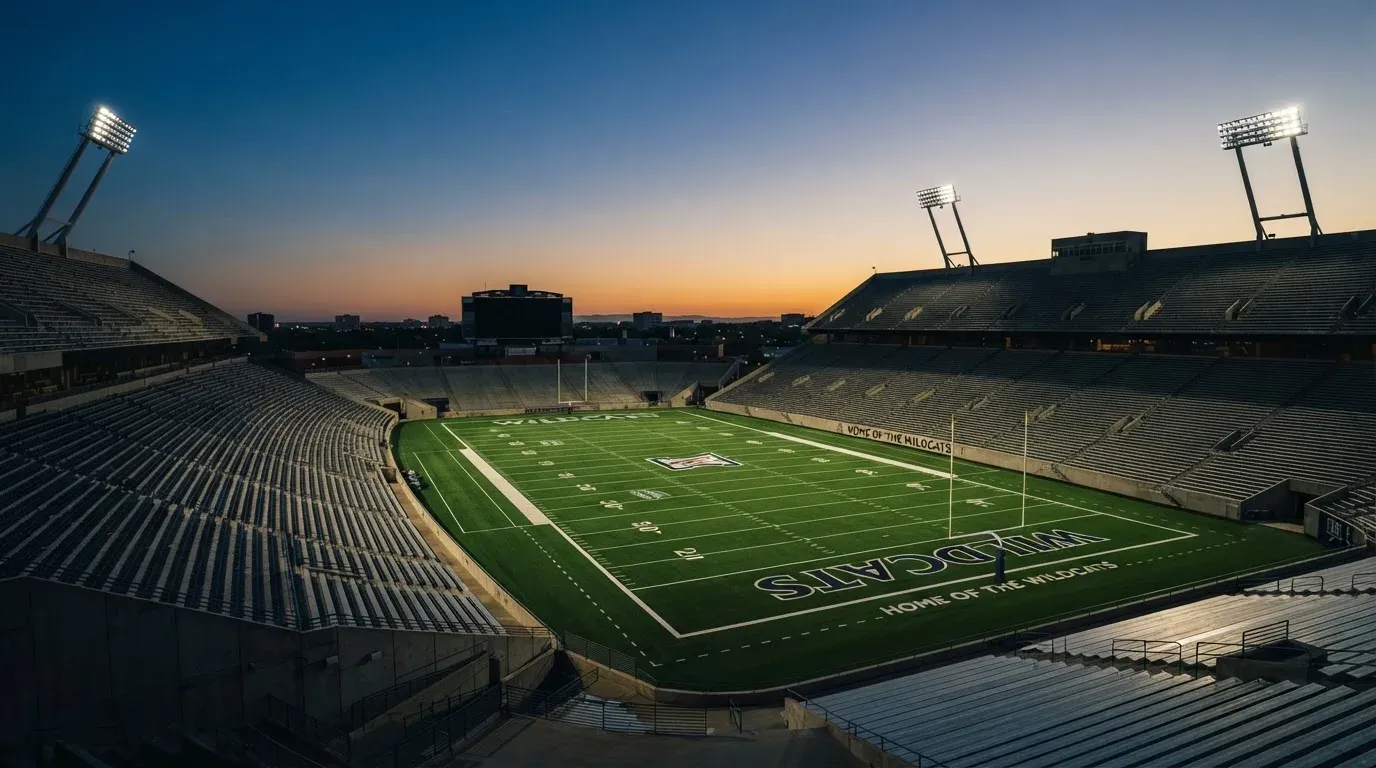
For a New Zealand punter, kick-off lands at lunchtime Monday local time. That is why the Super Bowl cuts across every other NFL Sunday: it is the one game on the fixture list that anyone in New Zealand can watch without a midnight alarm and that TAB NZ prices in fixed-odds form well in advance. The market depth on Super Bowl day is also the highest the NFL produces: every division, conference and futures market is settled, the prop catalogue is at its widest, and live betting runs from the opening coin toss to the final kneel-down.
What the Super Bowl is *not* is a contest of New Zealand teams. The league has no franchise here, the cup never tours, and there is no domestic angle for a New Zealand page beyond the broadcast and the betting handle. That is also why the betting market on it, in New Zealand, runs through one operator: TAB NZ lists NFL and the Super Bowl as a standard fixed-odds fixture, and the offshore brands price it as part of a global NFL book. The rest of this page is about which of those two kinds of price the rule lets a New Zealand punter actually take.
Why only TAB NZ can take a New Zealand Super Bowl bet
Section 74AAA of the Racing Industry Act 2020 — inserted by the Racing Industry Amendment Act 2025 and in force since 28 June 2025 — says that no person other than TAB New Zealand may offer racing betting, sports betting or other racing or sports betting to a person in New Zealand, regardless of where that person is resident or incorporated. The Department of Internal Affairs told unlicensed providers to withdraw with immediate effect on that date. There is no second bookmaker licence to apply for, no licence register for online sports books, and no carve-out for “offshore” brands simply because they route through a Curaçao or Anjouan licence — These licences only cover the operator’s home jurisdiction, meaning such brands cannot legally serve New Zealand residents.

TAB NZ is the trading name of the New Zealand Racing Board. Its partner Entain runs the TAB business under a 25-year agreement signed in 2023, with Entain taking a 50/50 share of gross profits, at least $150m a year going to TAB NZ for the first five years, and a one-off $100m payment pledged by Entain to the racing sector. Betcha is the second online brand of the same TAB NZ group, run by Entain New Zealand Limited and published on the New Zealand App Store on 6 August 2024. Because TAB and Betcha sit on the same licence, they are not rivals — they are the same bookmaker wearing two app icons.
What that means in practice for the Super Bowl: the only counter a New Zealand punter can lawfully use is TAB or Betcha. The price that appears in the TAB NZ app on Super Bowl Sunday is the price the law puts in front of New Zealand residents. Offshore brands can still *show* a price on a New Zealand IP address — the law does not geo-block websites — but the bet is unlawful for the operator to take, the New Zealand complaints framework does not apply, and the Department of Internal Affairs’ published warnings about unspent credits and un-paid winnings are aimed at exactly this situation.
Responsible gambling on the Super Bowl in New Zealand
The Super Bowl produces the year’s highest single-event betting handle in most legal jurisdictions. In New Zealand the only counter is also the only one bound by the harm-minimisation rules that come with the Racing Industry Act 2020 and the Gambling Act 2003. TAB NZ’s app lists three safer-gambling tools: deposit limits, time-outs and self-exclusion. An exclusion entered on one TAB NZ brand applies across both TAB and Betcha because both run on the same identity layer. Customers must be 18 or over to bet — the App Store listing carries a 17+ age rating for the broader content, but the betting terms state 18.
There is no single national online-betting exclusion register. The Online Casino Gambling Act 2026 sets up an exclusion register, but it is for online casino play, not sports and racing. A punt who wants to exclude themselves from sports betting has to do it through TAB NZ’s own self-exclusion, and that is the only New Zealand-recognised exclusion route. Help for a problem is not run by the bookmaker: the free Gambling Helpline is 0800 654 655, with a text line on 8006, and Safer Gambling Aotearoa is the public-facing service. TAB NZ also pays a Problem Gambling Levy of 0.74% — in force from 1 July 2025 to 30 June 2028 — which funds that help.
The offshore picture is different in two ways. An offshore brand that accepts a New Zealand customer carries no New Zealand-recognised exclusion register, no New Zealand-recognised complaints route, and the harm-minimisation tools it lists on its own site apply only as its own house rules allow. If a player self-excludes at TAB NZ and then opens an offshore account, the TAB NZ exclusion does not follow them. That gap is the single practical difference the section 74AAA monopoly closes.
Predictions, tips and what a betting line actually is
A “betting line” on the Super Bowl is the bookmaker’s quoted price for a market. It moves as money comes in. A line released in the off-season can be sharply different from the line on the morning of the game, because the price is the bookmaker’s read on where the public money and the sharp money sit, not a forecast of the outcome. Treating the opening line as a tip is one of the reliable ways to lose money on the Super Bowl — every season produces a side that the public hammered in September and that closed at a much shorter price by kick-off.
A “tip” in the betting sense is a forecast, and no forecast survives contact with a single game. The Super Bowl is decided by turnovers, a single coaching call, a flag, and the bounce of a ball — every one of which is by definition outside any model. The bookmaker’s job is to balance the book on a market, not to pick a winner, and the margin baked into the price is what pays for that balancing. The tipster industry sells predictions at a higher price than the betting line and charges for what the line already contains. A New Zealand punter is better served by reading the line than by paying for a tip, and is best served by reading the margin inside the line.
What a bettor *can* do with the line is read movement. A line that has drifted from a longer price to a shorter one tells the same story the form tells, and the form is the part that is freely available — team records, injury reports, weather forecasts, and the head-to-head history. Seattle’s 14–3 season and New England’s 14–3 season met in Super Bowl LX with Seattle a short favourite on most books, and the 29–13 scoreline tracked the closing price more than the opening one. That is what an analytical read on the line looks like: it tells you where the sharp money settled, not who wins.
Bet types and odds on the Super Bowl
A Super Bowl bet in New Zealand is priced in decimal odds, the way TAB NZ prices everything. A stake of $10 at decimal odds of 2.10 returns $21 — the $10 stake plus $11 in profit. Decimal odds are the unit; no conversion from fractional or American prices is needed because TAB NZ publishes the form a New Zealand punter uses. The other product form is the tote (pool), in which the payout is a *dividend* declared after the race or event closes: the bettor’s return is the stake multiplied by the dividend, and the dividend depends on how much was bet on each runner and on the pool itself.
The bet types available on the Super Bowl through TAB NZ follow the catalogue of the NFL book. The standard markets are:
- Head-to-head (moneyline) — pick the winner. Pays the price TAB NZ lists for each team.
- Point spread (handicap / line) — a margin set by the bookmaker; the favourite gives the points, the underdog receives them. A -3.5 favourite needs to win by four or more for the head-to-head side to pay.
- Totals (over / under) — a combined-score line set by the bookmaker; the bet is on whether the actual total goes over or under.
- Prop bets — markets on events inside the game: first touchdown scorer, the colour of the Gatorade shower, the length of the national anthem, the coin toss. The Super Bowl prop catalogue is the widest the NFL produces, and it is the market that moves the Super Bowl from a sporting bet to a party bet.
- Same-game multi (SGM) — a multi whose legs all come from the one Super Bowl, which lets the bettor string head-to-head, spread, totals and props into one slip.
- Multi bet / parlay — legs strung across different events; the prices multiply, and any voided leg drops the multi to the next-shortest version.
- Futures — outright markets on Super Bowl LXI run from the week after Super Bowl LX is settled, with the field shortening every week as the playoff picture firms up.
A feature worth naming explicitly is the boosted odds market TAB NZ lists — prices on selected Super Bowl outcomes that are longer than the standard book, available in limited windows. They are not “free” anything: the bettor’s stake is real money, and a winning boosted bet pays the boosted price, no more. The marketing word “boost” is doing what the marketing word “boost” does — it is a price concession by the bookmaker, not a gift.
The same-game multi has become the central product on the Super Bowl because the prop catalogue is dense enough to feed four or five legs from one game. A same-game multi has a higher margin than its individual legs carry on their own, because the bookmaker builds a margin into each leg and the multipliers compound it. The bettor trades the convenience of one slip for the higher margin of a multi. That trade is worth being explicit about.
The bookmaker’s margin on a Super Bowl market
The bookmaker’s margin — also called the overround or the juice — is the percentage of every dollar bet that the bookmaker keeps on average across all outcomes of a market. It is the price a bettor pays for the privilege of betting. The way to read it is to take the implied probabilities from a market’s odds, add them up, and see how much they overshoot 100%. The overshoot is the margin.
Take a simple illustration: a two-way market priced at decimal odds of 1.90 on either side. The implied probability on each side is 1 ÷ 1.90, which is roughly 0.5263. Adding the two sides gives roughly 1.0526 — or 105.26%. The extra 5.26 percentage points above 100% is the bookmaker’s margin on this market. Expressed the other way, the payout share to bettors across both outcomes is 1 ÷ 1.0526, roughly 95%. So the bettor receives 95 cents in return for every dollar that the market handles, and the bookmaker keeps the remaining 5 cents on average.
On a real Super Bowl market the price is not symmetric. A moneyline with Seattle at 1.75 and New England at 2.20 has different implied probabilities on each side, and the sum overshoots 100% by the margin the bookmaker has built into the market. The overshoot is always positive — that is how the bookmaker makes money on a market it has balanced — and a bettor reading the margin is reading how much of every dollar bet on this market the bookmaker expects to keep.
The margin differs by market. The head-to-head margin on an NFL game is typically the tightest because the book is deepest and the limit is highest. Prop markets carry a higher margin because the limit is lower and the bookmaker is taking more risk on each outcome. Same-game multis carry the highest margin of all because the bookmaker is modelling correlation between legs the bettor is stringing together, and that correlation is hard to price. The bettor’s read on a Super Bowl market depends on the market: the head-to-head price is the cheapest to take, the prop price is more expensive, and the same-game multi is the most expensive of the standard catalogue.
A bettor who wants to bet against the margin does so by shopping the price: the same market on two different books will rarely carry the same margin, and a tighter margin is a better expected return for the same forecast. In New Zealand the only lawful counter is TAB NZ, so the price-shop is between TAB and Betcha and the difference is usually small. The offshore comparison is for context only — those prices are not lawfully available to a New Zealand punter.
The Super Bowl 2026 result and what it set up for 2027
Super Bowl LX is settled history and it shaped the off-season market for Super Bowl LXI. Seattle won 29–13, with Kenneth Walker III taking the MVP award. The Seahawks and the Patriots were both 14–3 entering the game, so the season form was even and the price told the story — Seattle closed as a short favourite on most books, and the result tracked the price more than the public money on New England.
For Super Bowl LXI on 14 February 2027 at SoFi Stadium, the futures market opened the week after Super Bowl LX was settled and has since moved with every move in the off-season. The field shortens as the playoff picture firms: a futures bet placed in May is a different price from one placed in November, and the price moves on form, on injury news, and on the bookmaker’s read of where the public money is going. A New Zealand punter placing a futures bet through TAB NZ takes the price TAB NZ publishes on the day, and that price contains TAB NZ’s margin on the outright market.
The prop catalogue for Super Bowl LXI will follow the same template as Super Bowl LX — opening kick, first scoring play, MVP, the halftime show, the broadcast staples — with the addition of novelty markets attached to the Valentine’s Day staging. The novelty angle does not move the sporting line, but it does move the prop catalogue, and a New Zealand punter who wants to bet on the colour of the Gatorade shower or the length of the anthem is in the right Super Bowl for it.
What an offshore brand actually offers and why it matters even from New Zealand
The rest of this page’s reviewed set is offshore brands that show a Super Bowl price to a New Zealand IP address but are not licensed to take a New Zealand bet. The reason they are here is that a New Zealand punter will see them in search results, in affiliate pages and in bonus marketing, and the comparison matters because it tells the bettor what the law is *not* letting them have.
The shape of the offshore offer is mostly the same: a sportsbook pricing the NFL at high limit, with same-game multis, props and boosted odds, and a welcome package attached. The differences are in the catalogue, the payment rail, and the licence claim. Two brands are esports-first and price the Super Bowl as a side line. Two are crypto-first and price it as part of a wider sports and casino product. One is a conventional sportsbook running a deep football book. The rest are mid-sized Soft2Bet-group brands with a similar catalogue and a similar Anjouan or Curaçao licence.
None of them is licensed to take a bet from a person in New Zealand. The Department of Internal Affairs has said so, the Racing Industry Act 2020 says so, and the brands themselves name licences (Curaçao, Anjouan, or none stated) that do not extend to New Zealand residents. The New Zealand complaints framework does not apply, the New Zealand harm-minimisation tools do not apply, and the price is built on a margin the New Zealand regulator has no reach over.
The standard caveat applies: the offshore brands are not “the safe choice” because they offer a deeper book, and the New Zealand-licensed brands are not “the safe choice” by default. The trade-off is real. TAB NZ gives a New Zealand-recognised exclusion, a New Zealand complaints route, and the only price a New Zealand punter can lawfully take; the offshore book gives a deeper catalogue and a different price. The law is what it is, and the comparison below is what the catalogue looks like, not a recommendation to use it.
The New Zealand-licensed brands: TAB and Betcha
TAB — the only counter a New Zealand punter can lawfully use
TAB is the senior online brand of TAB New Zealand, the only provider lawfully offering racing and sports betting to people in New Zealand since section 74AAA of the Racing Industry Act 2020 came into force on 28 June 2025. The TAB app carries a 17+ App Store age rating while the betting terms require customers to be 18 or over to bet, and the app lists horse and harness racing, rugby union, rugby league and other sports in pre-match and live form. The catalogue on the Super Bowl is the standard NFL book: head-to-head, spread, totals, props, futures, boosted odds on selected outcomes, and same-game multis.
The safer-gambling tools in the TAB app are deposit limits, time-outs and self-exclusion, with an exclusion applying across both TAB and Betcha because both brands run on the same identity layer. The app also carries Trackside live race streaming with in-app betting, racing form tools, Blackbook, the Jockey Challenge, and a simplified wallet for deposits and withdrawals. The Trackside and racing tools are the giveaway that this is a tote-legacy product — the racing heritage is what TAB NZ was built on, and the sports book sits on top of it.
TAB’s payment methods and limits are its own and come only from its terms — there is no statutory payment rule for New Zealand betting accounts that overrides the operator’s own house rules. TAB NZ’s bonus-bets promotions are the only bonus product a New Zealand punter will see on a New Zealand counter, and the wagering terms are TAB NZ’s own. The Problem Gambling Levy of 0.74% funds the help services, and the levy is paid by TAB NZ, not by the customer.
What sets TAB apart in the comparison is the licence. It is the only lawful counter, which makes every other field on the page secondary. The catalogue is standard, the limits are TAB NZ’s own, the safer-gambling tools are present, and the price carries TAB NZ’s margin. A New Zealand punter who wants to bet on the Super Bowl legally uses TAB or Betcha; the choice between them is the choice between two apps of the same bookmaker.
Verdict. TAB is the only lawful counter for a Super Bowl bet from New Zealand. The catalogue is standard, the price carries the operator’s own margin, and the safer-gambling tools are the ones the New Zealand regulator recognises. For a New Zealand punter the choice is not between TAB and an offshore book; it is between betting through TAB or not betting at all.
Betcha — the second app of the same TAB NZ licence
Betcha is the second online brand of TAB NZ, published by Entain New Zealand Limited on the New Zealand App Store on 6 August 2024. The catalogue is the same NFL book TAB carries — head-to-head, spread, totals, props, futures, boosted odds and same-game multis — with the addition of a sports and racing coverage that runs from horse, greyhound and harness racing through rugby, NRL, MMA and UFC, the NBA, NFL, tennis, cricket, football, motorsports and esports.
Because Betcha sits on the same TAB NZ licence as TAB, the safer-gambling tools work the same way: deposit limits, time-outs, and self-exclusion that applies across both brands. The exclusions entered on TAB apply on Betcha and vice versa, and the identity layer is the same. The price carries TAB NZ’s margin, and the limits are TAB NZ’s own. There is no wagering advantage to choosing one brand over the other, because the two brands are the same bookmaker.
The practical reason a New Zealand punter opens Betcha rather than TAB is the product design — Betcha is the newer of the two apps and is positioned as the sports-first brand, while TAB is the tote-legacy brand with Trackside and the racing form tools. The choice is about which app the bettor prefers to use, not about which licence they sit on.
Verdict. Betcha is the same lawful counter as TAB in a different wrapper. A New Zealand punter choosing between them is choosing between two apps of one bookmaker, not between two bookmakers. The catalogue and the price are the same; the safer-gambling tools cover both.
The offshore brands reviewed for context
The brands below show a Super Bowl price to a New Zealand IP address but are not licensed to take a New Zealand bet. They are listed because New Zealand punters meet them, the comparison matters, and the law is the part the comparison makes explicit.
Thunderpick — esports-first with a sportsbook alongside
Thunderpick is an esports-first brand covering CS2, League of Legends, Dota 2 and Valorant as its core product, with a sportsbook attached that covers the Champions League through to the NFL and includes a cash-out feature. The Super Bowl sits inside the sportsbook, and the price carries the operator’s own margin. The licence named by Thunderpick is a Curaçao licence (OGL/2024/677/0722) held by Paloma Media B.V., which is invalid in New Zealand. There is no New Zealand-recognised exclusion, no New Zealand complaints route, and no harm-minimisation framework that reaches it.
Thunderpick’s focus is esports. The sportsbook operates without a New Zealand licence, and players must note Department of Internal Affairs warnings that unspent credits might be at risk and large wins may not be honoured.
Verdict. Thunderpick’s edge is esports. The Super Bowl is a side bet on a sportsbook that is not licensed in New Zealand, and the law does not give a New Zealand punter a counter there.
Telbet — crypto casino and sportsbook
Telbet describes itself as a crypto casino and sportsbook, with a welcome offer of 200% up to 1 BTC plus 50 free spins and a 5 USDT free bet on its Russian-language site. The sportsbook side carries the standard NFL catalogue, and the licence is not stated as applicable in New Zealand. There is no New Zealand-recognised exclusion, no New Zealand complaints route, and no harm-minimisation framework that reaches it.
Telbet centres on crypto, with the Super Bowl as a secondary market within its casino-heavy offer. Operating without a New Zealand licence, the brand presents risks highlighted by the Department of Internal Affairs regarding unspent credits and the potential for unpaid winnings.
Verdict. Telbet’s edge is the crypto rail. The Super Bowl is one market on a brand whose main offer is elsewhere, and the licence does not extend to New Zealand.
Rabona — the sixth Soft2Bet sportsbook
Rabona launched on 23 December 2019 as the sixth online sportsbook of the Soft2Bet group. The catalogue is the standard Soft2Bet sportsbook: head-to-head, spread, totals, props and boosted odds, with a casino attached. The Curaçao licence it holds is invalid locally. There is no New Zealand-recognised exclusion, no New Zealand complaints route, and no harm-minimisation framework that reaches it.
Rabona combines a deep catalogue with a casino-first approach. The Super Bowl sits within the standard sportsbook, with pricing set by the operator’s own margin. Since the brand lacks a New Zealand licence, its margin structure operates outside the oversight of local regulators.
Verdict. Rabona is a conventional Soft2Bet sportsbook. The Super Bowl is available as a standard market, though the Curaçao licence does not authorise operations here.
RTbet — standard sportsbook with live and virtual
RTbet’s sportsbook covers football, tennis, table tennis, basketball, ice hockey, American football and baseball, with live betting and virtual sports attached. The Super Bowl sits inside the American football menu, and the catalogue is standard: head-to-head, spread, totals, props and boosted odds.
The brand highlights virtual sports alongside its standard book. The Super Bowl is priced according to the operator’s own margin.
Verdict. RTbet is a standard Curaçao-licensed sportsbook with live and virtual sports alongside the football book. The Super Bowl is one of many markets and the licence does not extend to New Zealand.
FunBet — round-the-clock sportsbook
FunBet’s sportsbook offers odds on football, ice hockey, American football, basketball, volleyball, tennis, rugby and baseball, with live betting and a bookmaker described as open 24/7. The catalogue is standard and the Super Bowl sits inside the American football menu. The licence is not stated as applicable in New Zealand.
FunBet features 24/7 availability and broad rugby coverage. The Super Bowl is treated as a routine market on this unlicensed platform, which offers no New Zealand-recognised consumer protections.
Verdict. FunBet is a 24/7 sportsbook with a standard catalogue and no licence that applies in New Zealand. The Super Bowl is a routine line and the law does not extend the licence to a New Zealand punter.
Sportaza — Bet Builder and Asian lines on a wide catalogue
Sportaza offers cash out before an event or market is finalised, a Bet Builder (if one selection is void the whole betslip is void), multiples, Asian lines and interval markets in 1, 5, 10 or 15 minute ranges. American football offerings include the Super Bowl, and the catalogue is the standard book plus the Bet Builder and the Asian lines. The licence is an Anjouan licence (ALSI-202606064-FI2), which is invalid locally.
The brand trades on the Bet Builder and the Asian lines, which give a deeper same-game and handicap catalogue than a standard book. The Super Bowl price carries the operator’s own margin.
Verdict. Sportaza’s edge is the Bet Builder and the Asian lines, which deepen the same-game and handicap product on the Super Bowl. The licence does not extend to New Zealand and the law does not give a New Zealand punter a counter there.
Spinbara — casino-first with a sportsbook and crypto welcome
Spinbara advertises a first-deposit bonus of 100% up to EUR 100 and a sport-crypto welcome bonus of 100% up to 200 USDT on its English site, alongside a casino welcome bonus of 100% up to EUR 500 plus 200 free spins. The sportsbook sits alongside the casino and live casino, with the standard catalogue. The licence is not stated as applicable in New Zealand.
The brand’s distinguishing feature is the crypto welcome and the casino side. The Super Bowl sits inside the sportsbook with the standard catalogue.
Verdict. Spinbara is a casino-first brand with a standard sportsbook. The Super Bowl is available, but the licence does not authorise local operations.
LegendPlay — sports, live and virtual in one app
LegendPlay’s sportsbook has Sports, Live Betting and Virtual Sports sections, with football, tennis, basketball and ice hockey as the listed core. American football offerings include the Super Bowl, and the catalogue is the standard book plus live and virtual. The licence is an Anjouan Gaming Authority licence, which is invalid locally.
The brand offers virtual sports and a standard football book. The Super Bowl is a routine market, but the brand offers no local consumer protections.
Verdict. LegendPlay is a standard Anjouan-licensed sportsbook with virtual sports attached. The Super Bowl is a routine line and the licence does not extend to New Zealand.
Reading the table
The comparison below puts the ten brands on the same fields. The “status” column carries the only piece of information the law makes dispositive: whether the brand is one of the two TAB NZ online brands, or is not licensed in New Zealand. The “what the operator’s terms state” column carries the field research can verify from the brand’s own terms — the catalogue, the licence claim, the safer-gambling tool set, or the product angle. Cells without a fact from research stay blank, because a column of blanks tells the reader nothing and a sentence that explains the blanks is honesty of the wrong kind.
| Brand | New Zealand status | What the operator’s own terms state on the key’s subject |
|---|---|---|
| TAB | TAB NZ brand | TAB NZ’s app: horse and harness racing, rugby union and league, NFL and Super Bowl in fixed-odds and live form; Trackside live race streaming with in-app betting; safer-gambling tools include deposit limits, time-outs and self-exclusion across TAB and Betcha; customers must be 18 to bet |
| Betcha | TAB NZ brand | TAB NZ’s second online brand (Entain NZ, first released 6 August 2024); covers horse, greyhound and harness racing plus rugby, NRL, MMA/UFC, NBA, NFL, tennis, cricket, football, motorsports and esports; safer-gambling tools carry across from TAB |
| Thunderpick | Not licensed in New Zealand | Curaçao licence (OGL/2024/677/0722), holder Paloma Media B.V.; esports-first covering CS2, LoL, Dota 2 and Valorant; sportsbook covers Champions League through to NFL with cash-out |
| Telbet | Not licensed in New Zealand | Crypto casino and sportsbook; welcome offer 200% up to 1 BTC plus 50 free spins and 5 USDT free bet on the Russian-language site; no licence applicable in New Zealand |
| Rabona | Not licensed in New Zealand | Curaçao licence; launched 23 December 2019 as the sixth Soft2Bet sportsbook; standard catalogue with casino attached |
| RTbet | Not licensed in New Zealand | Curaçao licence; sportsbook covers football, tennis, table tennis, basketball, ice hockey, American football and baseball with live betting and virtual sports |
| FunBet | Not licensed in New Zealand | No licence applicable in New Zealand; sportsbook open 24/7 covering football, ice hockey, American football, basketball, volleyball, tennis, rugby and baseball with live betting |
| Sportaza | Not licensed in New Zealand | Anjouan licence (ALSI-202606064-FI2); Bet Builder (one void leg voids the slip), cash out, multiples, Asian lines, interval markets in 1/5/10/15-minute ranges |
| Spinbara | Not licensed in New Zealand | No licence applicable in New Zealand; first-deposit bonus 100% up to EUR 100 and a sport-crypto welcome bonus 100% up to 200 USDT on the English site, plus a casino welcome bonus 100% up to EUR 500 with 200 free spins |
| LegendPlay | Not licensed in New Zealand | Anjouan Gaming Authority licence; sportsbook with Sports, Live Betting and Virtual Sports sections covering football, tennis, basketball and ice hockey |
What this means for a New Zealand Super Bowl bet
A New Zealand punter who wants to bet on the Super Bowl has one lawful counter — TAB or Betcha, which are two apps of the same TAB NZ licence — and a long tail of offshore brands that show a price but cannot lawfully take the bet. The price on TAB NZ carries TAB NZ’s margin, which on a head-to-head market sits roughly in the band of the illustration earlier in this page: a two-way market priced near 1.90 / 1.90 carries a margin in the order of 5%, which means the bettor receives roughly 95 cents in return across both outcomes for every dollar the market handles. Same-game multis carry a higher margin, prop markets carry a higher margin still, and the head-to-head is the cheapest market on the book. The choice between TAB and Betcha is the choice between two apps of one bookmaker, and the catalogue and the price are the same.
A New Zealand punter who chooses an offshore brand takes the price the offshore brand publishes, on a licence that does not extend to New Zealand, with no New Zealand complaints route and no New Zealand harm-minimisation framework reaching it. The Department of Internal Affairs has published warnings that overseas operators may be in jurisdictions with minimal consumer safeguards, may not return unspent credits, and may not pay out large wins. The Racing Industry Act 2020 puts liability on the operator, not on the player, and section 19(4) of the Gambling Act 2003 (inserted in 2025) says an individual may not be convicted for placing a bet with an offshore operator in breach of section 74AAA — no published penalty for a player was found. The honest framing is that TAB NZ and Betcha are the only lawful option, with New Zealand harm-minimisation tools, regulator oversight and a complaints framework; offshore is unlawful for the operator to serve New Zealand, with no New Zealand complaints route, the regulator’s stated risks, and the limits the offshore brand’s own house rules allow. Neither is “the safe choice” by default; the choice is the bettor’s, and the law is what it is.
Frequently asked questions on Super Bowl betting in New Zealand
How do I bet on Super Bowl LXI from New Zealand?
You bet through TAB or Betcha, which are the two online brands of TAB NZ — the only provider lawfully allowed to take racing and sports bets from people in New Zealand under section 74AAA of the Racing Industry Act 2020, in force since 28 June 2025. Open a verified account with a New Zealand address, deposit, and take the price TAB NZ publishes on the Super Bowl market — head-to-head, spread, totals, props, futures, boosted odds and same-game multis. Offshore brands shown in search results are not licensed for this market.
How do I bet on the Super Bowl winner?
Pick the team you think will win Super Bowl LXI and take the head-to-head (moneyline) price TAB NZ publishes on that team. The price is in decimal odds, the stake is in New Zealand dollars, and the return is the stake multiplied by the price. Seattle won Super Bowl LX on 8 February 2026, beating the New England Patriots 29–13, with Kenneth Walker III the MVP. Super Bowl LXI is scheduled for 14 February 2027 at SoFi Stadium.
How do I bet on the Super Bowl with Proline?
Proline is a Canadian product and is not available in New Zealand. The New Zealand equivalent is TAB NZ’s fixed-odds sports book, which carries the Super Bowl and the full NFL season at the prices TAB NZ publishes. The bet type that most closely resembles Proline’s sports pool is TAB NZ’s same-game multi or multi bet — string outcomes across the Super Bowl, or across the Super Bowl and other NFL games, into one slip with the prices multiplied together.
Which bookmaker may lawfully take sports and racing bets in New Zealand?
TAB New Zealand, trading through its two online brands TAB and Betcha, is the only provider lawfully allowed to take racing and sports bets from a person in New Zealand under section 74AAA of the Racing Industry Act 2020, in force since 28 June 2025. There is no licence register for bookmakers because there is only this one lawful provider. The Department of Internal Affairs told unlicensed providers to withdraw with immediate effect on that date. Offshore brands carrying Curaçao or Anjouan licences are not licensed for this market and have no right to take bets from people in New Zealand.
How is the return on a bet worked out from the stake and the odds?
For a single bet the return is the stake multiplied by the decimal odds; the net profit is the stake multiplied by (odds − 1). A $10 stake at decimal odds of 2.10 returns $21, made up of the $10 stake plus $11 in profit. For a combination bet (multi) the prices of the legs multiply into one price, and the return is the stake multiplied by the combined price. The bookmaker’s margin is built into the prices, so the combined implied probabilities of all outcomes overshoot 100% by the margin the operator carries on that market.
What is the bookmaker’s margin and how can it be seen in the odds?
The bookmaker’s margin is the percentage of every dollar bet that the bookmaker keeps on average across all outcomes of a market. To read it, take the implied probability of each outcome (1 ÷ decimal odds), add them up, and see how much they overshoot 100%. The overshoot is the margin. A two-way market at 1.90 / 1.90 implies roughly 52.6% on each side, sums to roughly 105.3%, and carries a margin of roughly 5.0%. The same market at tighter prices carries a smaller margin, and the same market at wider prices carries a larger margin. Same-game multis and prop markets carry higher margins than head-to-head markets.
US sports – kiwiracingbets
Content created by the «kiwiracingbets» team
