
Table Tennis Betting in New Zealand
 Available in US

The search for “table tennis betting in New Zealand” lands the reader on a market with one gatekeeper and a long tail of brands they may already see online. Since 28 June 2025, TAB NZ and its sister app Betcha are the only one may lawfully take a racing or sports bet from a person in New Zealand; the rest of the bookmakers that show table tennis markets are not licensed here, even where their own pages look indistinguishable from a domestic operator. The job of this guide is to set out the choices that exist, name who each one suits, and put a price on what the bettor gives up by picking one path over another.
This page is current as of October 30, 2026 and was checked against TAB NZ’s published terms and the Racing Industry Act 2020, section 74AAA.
The table tennis calendar a New Zealand bettor actually bets on
Table tennis is unusual among the Olympic sports in that the international calendar runs almost year-round. The International Table Tennis Federation, founded in 1926 and an Olympic sport since 1988, runs a tour that places World Championships, World Cup events and the WTT (World Table Tennis) series in clusters through the calendar, with continental championships slotted between. For a New Zealand bettor the practical upshot is that there is rarely a week with no top-level fixtures, and the WTT Contender and WTT Feeder series fill the gaps when the headline events are on a break.

Match format shapes the betting menu. A table tennis game is won by the first player to reach 11 points, and if both players reach 10 the first to lead by 2 wins the game. A match is the best of any odd number of games, and competition matches are typically best of five or seven. Scoring changed from 21 points to 11 in 2001, and since then each player serves two points in a row before service alternates, except when both reach 10, after which each serves one point in turn.
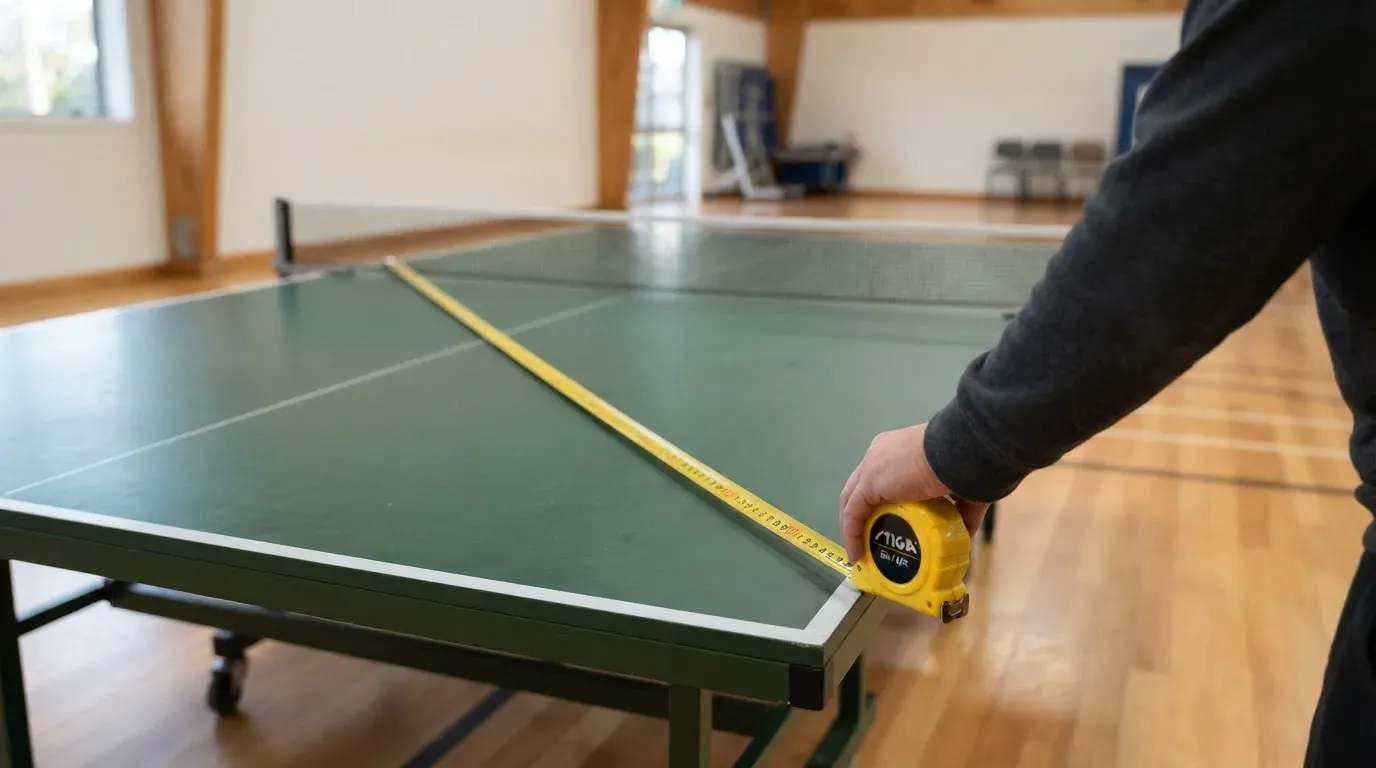
A table tennis table is 2.74 m long, 1.525 m wide and 76 cm high, with a net 15.25 cm high; the ball is 40 mm in diameter and weighs 2.7 g. None of that drives a betting decision, but the dimensions explain why in-play markets settle within minutes: a game is short, the rally count is finite, and the data that a live trader needs is on screen by the time the first serve is hit.
What matters for a New Zealand bettor is the local clock. Many WTT events run in European or Asian time, and a singles final that finishes at 23:00 NZT is on the betting slip in the evening. Set rules in that lag: TAB NZ’s app, like any fixed-odds bookmaker, settles markets off the result the officiating body publishes, and the price is locked at stake time. The wagering slip you place at 22:30 NZT settles on whatever the umpire scores, not on a replay.
How the table tennis shortlist was put together
A shortlist of betting sites is only useful if the criteria are stated up front. The ten names below were rated on five questions a New Zealand reader actually asks before depositing:
- Does the brand lawfully take bets from people in New Zealand, and if not, what does that leave the player without?
- Does the sportsbook carry table tennis as a standalone sport, and at what depth — outright winner only, or game handicaps, totals and interval markets?
- Are live markets available on table tennis, and does the operator offer cash out before the match ends?
- Does the brand publish a sports welcome or recurring promotion, and on what conditions does it pay out?
- What does the brand’s own terms page say on player protection, withdrawal time and account verification?
The first two names are the two online brands of TAB NZ. They are not rivals and they are not alternatives to each other: they are one operator group on two skins, and the difference between them is the product shape. The remaining eight are bookmakers New Zealand players meet online, and none is licensed to take bets from people in New Zealand. Each is described on its own terms, with the same five questions asked.
The brands, side by side
| Brand | New Zealand status | What the operator’s own terms state on table tennis |
|---|---|---|
| TAB | TAB NZ brand — lawfully takes racing and sports bets from people in New Zealand | Table tennis appears as a feature on the TAB NZ app alongside racing, rugby and other sports, with pre-match and live markets |
| Betcha | TAB NZ brand — lawfully takes racing and sports bets from people in New Zealand | Table tennis is included in the Betcha sportsbook menu alongside racing, rugby, NBA and esports |
| BetAlright | Not licensed in New Zealand | Sportsbook covers football, tennis, table tennis, basketball, ice hockey, American football and baseball, with a Live Betting section |
| Thunderpick | Not licensed in New Zealand | Esports-first brand covering CS2, League of Legends, Dota 2 and Valorant; sportsbook offers a cash-out feature alongside the esports markets |
| Telbet | Not licensed in New Zealand | Crypto casino and sportsbook, accepts cryptocurrency deposits and runs a sports welcome alongside its casino offer |
| BetNinja | Not licensed in New Zealand | Casino welcome runs alongside a 100% match on the first sports deposit, capped at a modest euro figure |
| Rooster.bet | Not licensed in New Zealand | Sportsbook shows Live, Sports Promotions, Results, Schedule, E-sports and Predictions sections, with odds in six formats |
| RTbet | Not licensed in New Zealand | Sportsbook covers football, tennis, table tennis, basketball, ice hockey, American football and baseball, with live betting and virtual sports |
| Sportaza | Not licensed in New Zealand | Cash out before an event is finalised, plus Bet Builder, Asian lines and interval markets in 1, 5, 10 or 15 minute ranges |
| Glorion | Not licensed in New Zealand | Pre-match and live betting, virtual sports, horse racing and esports, with markets grouped into popular, niche, indoor and outdoor categories |
Two things the table leaves out by design. The licence column says whether the brand may take the bet in the first place — and the answer for every name after Betcha is no. The table does not rank the offshore brands against TAB NZ, because the question they answer is different: one is the lawful domestic option with harm-minimisation tools, the other is a global brand that happens to carry the sport.
TAB
TAB is the retail and online face of TAB NZ. Its app, “TAB – Racing & Sports Betting”, was first released on the New Zealand App Store on 8 September 2014, is sold under the name New Zealand Racing Board, and carries a 17+ App Store rating while stating customers must be 18 or over to bet. The app covers horse and harness racing, rugby union and rugby league, and a long list of other sports, pre-match and live. Inside the app, Trackside carries live race streaming with in-app wagering, racing form, Blackbook and Jockey Challenge tools, and a simplified wallet for deposits and withdrawals.
For a table tennis bettor, the practical limits are honest. TAB NZ lists table tennis among the sports it covers, and the published app description does not single out table tennis as having deeper markets than other sports — outright match winner, game handicaps and totals are the standard fare, with live markets on the bigger WTT events. Set rules and stake limits are operator terms, not statute, so the bettor reads the betting rules before placing.
The wagering slip is fixed-odds, with tote (pool) bets the alternative on racing. Same Game Multis are available where the legs come from one event, and the dividend on a multi is the product of the legs at the price at stake time. Set rules state that the price is locked; a live price movement between stake and settle does not change the return.
A TAB NZ account requires a verified New Zealand address and ID, and the harm-minimisation tools — deposit limits, time-outs and self-exclusion — apply across both TAB and Betcha. Set rules state that an exclusion is operator-wide, not per brand.
Verdict. TAB is the only option that gives a New Zealand bettor a regulator to complain to and an exclusion register to lean on. For a table tennis bettor who wants every stake settled under New Zealand harm-minimisation rules, it is the default.
Betcha
Betcha is the second of TAB NZ’s two online brands, run by Entain New Zealand Limited under the 25-year partnership that gives Entain a 50/50 share of gross profits, with at least $150m a year going to TAB NZ for the first five years and a one-off $100m payment to the racing sector. The app was first released on the New Zealand App Store on 6 August 2024, and the brand is positioned as a sports-and-racing-first product, lighter on the racing form that defines the main TAB app.
Betcha covers horse, greyhound and harness racing alongside rugby, NRL, MMA/UFC, NBA, NFL, tennis, cricket, football, motorsports and esports. Table tennis appears in the menu, and the depth is the standard pre-match and live offering — outright match winner, game handicaps and totals on the bigger WTT fixtures, with cash out available in-play where the market is running.
The wagering slip and the rule book are the same as TAB’s, because both brands sit on the same platform and the same licence. Set rules state that the price is fixed at stake time and that the settling authority is the ITTF, WTT or equivalent body. Set rules state that an exclusion under one brand covers the other.
Verdict. Betcha is the sports-first skin of the same operator; a reader who finds the main TAB app heavy on racing form picks Betcha because the menu puts sport on the front page. Set rules and the licence are identical.
BetAlright
BetAlright is a sportsbook and casino that names football, tennis, table tennis, basketball, ice hockey, American football and baseball as the sports it covers, alongside Live Betting and Virtual Sports sections. The brand is not licensed in New Zealand, and the site names no licence that applies in New Zealand; it lacks a complaints route or a harm-minimisation framework for local bettors.
The relevant product point is that table tennis is a listed sport, with pre-match and live markets on the standard match lines. Each operator sets its own house rules and stake limits, and the bettor reads them before depositing since New Zealand protections do not apply.
Verdict. The product looks familiar to a New Zealand bettor who has used a global sportsbook, but the operator is not licensed here. The page lists it because New Zealand players meet it; the choice is the reader’s, not the page’s.
Thunderpick
Thunderpick leads with esports: CS2, League of Legends, Dota 2 and Valorant sit at the top of the menu, and the sportsbook is a second pillar rather than the main act. The brand names a Curaçao licence (OGL/2024/677/0722), holder Paloma Media B.V., which does not authorise the brand to accept bets from New Zealand residents.
What the sportsbook carries is a cash-out feature alongside markets from the Champions League to the NFL, with table tennis on the menu where the brand chooses to feature it. House rules and limits apply, and the reader views this as an esports-first product where the sportsbook is a secondary offering.
Verdict. A reader who wants esports and a sportsbook on the same wallet will recognise the shape. The page lists it for reference; the choice is the reader’s, and the New Zealand licence situation is unchanged.
Telbet
Telbet presents itself as a crypto casino and sportsbook, with deposits and withdrawals in cryptocurrency. The brand names no licence that applies in New Zealand, and there is no New Zealand complaints route. The sports menu covers the standard set of sports, with table tennis on the list where the operator has priced a market.
Set rules on the wagering slip, stake limits and welcome terms are operator-level, and the brand’s own terms page is the source. Crypto deposits are accepted; nothing in New Zealand law prevents a person from holding crypto, but nothing in New Zealand law makes a crypto-funded bet on an unlicensed site any other way either.
Verdict. A reader who wants crypto in and crypto out, and accepts that the operator is not licensed in New Zealand, will recognise the product shape. This is for reference.
BetNinja
BetNinja runs a casino welcome alongside a sports offer of a 100% match on the first deposit, capped at a modest euro figure. The brand names a licence from the Union of the Comoros, which does not allow it to accept bets here, and lacks a complaints route for local players.
The sportsbook covers the standard menu, with table tennis on the list where the operator has priced a market.
Verdict. The product is a familiar sportsbook-and-casino shape, with a modest welcome on the sports side. The page lists it because New Zealand players meet it; the choice is the reader’s.
Rooster.bet
Rooster.bet’s sportsbook organises itself around a Live tab, a Sports Promotions tab, Results, Schedule, E-sports and Predictions, with odds displayed in six formats. The brand names a Tobique Gaming Commission e-gaming licence (No. 0000002), holder Novatrix SRL, which does not authorise the brand to accept bets from New Zealand residents.
Table tennis appears in the menu with pre-match and live markets on the standard lines. House rules and stake limits are determined by the operator, and the bettor is reading the product in the context of a site that emphasizes the breadth of its sports menu and the format of its odds display.
Verdict. A reader who wants the sportsbook organised by tab and the odds in a format other than decimal will recognise the product. The page lists it for completeness; the choice is the reader’s.
RTbet
RTbet runs a sportsbook that covers football, tennis, table tennis, basketball, ice hockey, American football and baseball, with live betting and virtual sports alongside the pre-match menu. The brand names a Curaçao licence, which does not allow it to accept bets here, and lacks a complaints route for local players.
Set rules on the wagering slip and the limits on the welcome are operator-level. The bettor reads them before claiming because the New Zealand consumer protections do not apply.
Verdict. The product is a standard global sportsbook shape, with table tennis as a listed sport. The page includes it for information purposes.
Sportaza
Sportaza pitches cash out before an event is finalised, Bet Builder (where a void leg voids the whole slip), multiples, Asian lines and interval markets in 1, 5, 10 or 15 minute ranges. The brand names an Anjouan licence (ALSI-202606064-FI2), which does not authorise the brand to accept bets from New Zealand residents.
Table tennis is on the menu, and the interval markets are the part that catches the eye: a 5-minute interval line on a table tennis game is short, and the in-play trader has to work harder to hold the price. Set rules and stake limits are operator terms, and the bettor reads them in the context of a brand that pitches its in-play product rather than its welcome.
Verdict. A reader who bets in-play on short intervals will recognise the product shape. This is included for reference purposes.
Glorion
Glorion offers pre-match and live betting, virtual sports, horse racing and esports, with markets grouped into popular, niche, indoor and outdoor sports, plus entertainment events such as award shows and elections. The brand names no licence that applies in New Zealand, and there is no New Zealand complaints route.
Table tennis appears in the indoor sports list, with pre-match and live markets on the standard lines.
Verdict. A reader who wants a brand that organises its sports by category, with entertainment events on the same slip as sport, will recognise the shape. The page lists it for completeness; the choice is the reader’s.
What “lawful in New Zealand” actually means after 28 June 2025
The market the reader is looking at changed on 28 June 2025. The Racing Industry Amendment Act 2025 inserted section 74AAA into the Racing Industry Act 2020, and from that date no person other than TAB NZ may offer racing betting, sports betting or other racing or sports betting to a person in New Zealand, regardless of where that person is resident or incorporated. The Department of Internal Affairs told providers serving New Zealand to withdraw with immediate effect.
The change is not a licensing regime. There is no licence to apply for, no licence register for bookmakers, and no point at which an offshore brand can apply for the right to take bets here. The law names one operator and prohibits the rest, and the prohibition covers events held inside and outside New Zealand alike. The Online Casino Gambling Act 2026 licenses online casino gambling only and does not license sports betting; TAB New Zealand winning the right to apply for a casino licence does not extend the betting monopoly.
The penalty for breaching section 74AAA is not stated in the section, and no prosecution of an offshore bookmaker was found. The law targets the operator, and DIA has warned players of the risks of using an offshore brand: minimal consumer safeguards, no obligation to return unspent credits, and no guarantee that a large win will be paid out. The player side is different: section 19(4) of the Gambling Act 2003, inserted in 2025, says an individual may not be convicted for placing a bet with an offshore betting operator in breach of section 74AAA, so no published penalty for a player was found.
The greyhound code is closing in stages from 1 August 2026, and from that date offshore operators may not take bets on greyhound races either. The point-of-consumption charge on offshore racing and sports bets ceased on 30 June 2026, and the remaining offshore-gambling operator duty is 12% of profits from 1 July 2024, rising to 16% from 1 January 2027 — but a duty being payable does not make an offer lawful, and the page does not write that tax payment shows a bookmaker is legal.
Player protection under New Zealand rules
The age for TAB NZ betting is 18, and betting under 18 is an offence under section 89 of the Racing Industry Act 2020. Land-based casinos are 20, and the two are not merged: a casino limit is never a betting limit. TAB NZ accounts need a verified New Zealand address and ID, and the verification is the harm-minimisation gate.
Inside the app, TAB NZ lists deposit limits, time-outs and self-exclusion as its safer-gambling tools. An exclusion applies across both TAB and Betcha — the operator group, not the brand — and the Gambling Helpline (0800 654 655, text 8006) and Safer Gambling Aotearoa are the free routes for a person who wants to talk to someone outside the operator. TAB NZ pays a Problem Gambling Levy of 0.74%, in force from 1 July 2025 to 30 June 2028, and the levy funds the harm-minimisation work that runs alongside the operator’s own tools.
There is no single national online-betting exclusion register. The register the 2026 online casino law will require is for online casinos only, and the betting register is what TAB NZ operates internally across its two brands. The offshore operators named in the table above lack local complaints routes or harm-minimisation tools; the bettor who chooses one of them is outside the New Zealand consumer protection net.
The Advertising Standards Authority’s Gambling Advertising Code applies to betting advertisements: ads must not target children (under 14) or young people (14 to under 18), judged by context, appeal and expected audience (25% or more of the audience counts as significant where accurate data exists), must not encourage harm, and must be truthful with terms available. No New Zealand equivalent of a “whistle-to-whistle” ban for betting was found. Because only TAB NZ may offer betting here, DIA reads the prohibition as covering the promotion of another operator’s betting to a person in New Zealand.
Live table tennis and cash out on a New Zealand wallet
Live betting is the part of table tennis that is hardest to price and easiest to read. A rally is short, the score updates by the point, and the in-play trader has to hold a price against a feed that updates every serve. TAB NZ lists live betting in its apps, and the published app description does not single out table tennis as having deeper live markets than other sports — outright match winner, game handicaps and totals are the standard fare, with the cash-out button on the bigger WTT events where the trader has the data to hold a live book.
Cash out is the lever the bettor has in a live match. The TAB NZ bet slip exposes cash out where the in-play price is running, and the price is the operator’s quote at the moment the bettor presses the button, not a guaranteed value. A bettor who places a pre-match wager and then watches the favourite drop the first game can press cash out and lock in a smaller return; a bettor who waits and the favourite wins gets the original return.
The offshore brands in the table carry their own live products. Sportaza names cash out before an event is finalised, and the product is the standard global-sportsbook shape. Thunderpick names a cash-out feature alongside its esports markets, and the sportsbook sits in the same place in the menu. Set rules and stake limits are operator terms, and the bettor reads them before depositing because the New Zealand consumer protections do not apply.
The data point a live bettor cares about is the latency between the score update and the price update. The ITTF and WTT publish results through a standard feed, and the trader’s screen reads the feed within seconds. The price the bettor sees is the trader’s read on that feed, and a price change is the trader’s response to a point that the trader has already seen. A bettor who bets in-play is betting against a screen that is reading the same feed a fraction of a second faster.
Forecasts, predictions and the bettor’s toolkit
The search for “best table tennis bets today” is the one that brings the reader to a tipster, and the page answers it without pretending to be one. A tip is a forecast of an outcome, and a forecast that names a winner is a forecast the page cannot make: nobody knows an outcome, and a reader who acts on a predicted one loses real money on the page’s word.
What the page can do is describe the toolkit a bettor uses to make a forecast, and what each tool costs. The table tennis tour is data-rich: the ITTF and WTT publish player rankings, head-to-head records, recent form and the tournament draw, and a serious bettor builds a shortlist from those before looking at the price. The wagering slip is the next step: the bettor reads the price the operator has put on the shortlist, and decides whether the price is worth the stake.
Three tools recur in serious table tennis coverage, and each has a cost the bettor pays in time. Form is the recent record, weighted by the strength of the opposition; a player who has won the last six matches against top-50 opponents is a different proposition from a player who has won six against top-200. Head-to-head is the direct record between the two players, which catches stylistic mismatches that rankings miss. Surface and venue matter less than in tennis, because table tennis is played indoors on a standard surface, but the ball type and the altitude do affect the bounce, and the WTT series plays at altitude in a few events.
The bankroll is the budget the bettor has set for the table tennis book, separate from the racing and the rugby. A bankroll is not a prediction: it is the answer to the question of how much a losing streak costs. A bettor who stakes 5% of the bankroll on one match and loses is in a different position from a bettor who stakes 1%, and the bankroll is the lever that keeps the bettor in the game long enough for the form to come back.
The page does not publish tips and does not name winners, because it cannot. What it does is name the tools and the order to use them in. Shortlisting the form, reading the price, sizing the stake — that is the loop a table tennis bettor runs, and the loop is the same whether the bettor is betting on TAB NZ or on a brand not licensed in New Zealand.
Bet types, odds and what a wagering slip actually pays
The market menu on a table tennis event is built from a handful of bet types, and the menu recurs across the brands in the table. Outright match winner is the line on who wins the match; game handicaps give one player a head start of one or more games; totals are over/under on the total games or total points; interval markets on Sportaza are the 1, 5, 10 or 15-minute line on points scored in a window.
The price is decimal across the New Zealand-facing operators, and a stake of $10 at odds of $2.10 returns $21 — the stake plus $11 of profit. The return on a combination bet is the product of the legs at stake time: three legs at $1.50, $2.00 and $3.00 multiply to $9.00, and a $10 stake returns $90. The maths is the same on every brand, and the page works it out in plain sentences for the reader.
The margin is what the bookmaker keeps of every unit bet on a market, and it is the difference between the price the bettor sees and the price a fair market offers. Take an illustrative two-way market at decimal odds $1.90 / $1.90 — an example, not a quoted price. The payout share is 1 ÷ (1/1.90 + 1/1.90) = 1 ÷ (0.5263 + 0.5263) = 1 ÷ 1.0526, which is just under 0.95, or 95%. The margin is 1 minus the payout share, or just over 5%.
That is the band the market sits in: a two-way market priced symmetrically at $1.90 carries a margin of just over 5%, and the price a fair market offers is $2.00 / $2.00 with a margin of zero. A real table tennis market will sit inside that band, and a market that sits outside it — $1.95 / $1.95, say — is closer to fair, while a market that sits well inside it — $1.85 / $1.85 — is paying the bookmaker a heavier cut. The bettor reads the price the operator has put up, and the price carries the margin as a hidden line.
The same calculation works for a three-way market (a match with a retired-player rule, or a tournament outright), and the margin widens as the number of outcomes grows. A two-way market at $1.90 / $1.90 has a margin of just over 5%; a three-way market at $2.50 / $2.50 / $2.50 has a payout share of 1 ÷ (3 × 0.40) = 1 ÷ 1.20 = 0.833, or 83.3%, and a margin of just under 17%. The more outcomes a market has, the larger the margin a symmetric price implies, and the more the price the bettor sees has to clear that margin before it is worth a stake.
Picking the path that suits the reader
A New Zealand bettor who wants table tennis has three paths, and each one suits a different reader. The first is the TAB NZ path: the lawful domestic option, with New Zealand harm-minimisation tools, regulator oversight and a complaints framework. The second is the TAB NZ app Betcha: the sports-first skin of the same operator, lighter on racing form. The third is the offshore path: a sportsbook New Zealand players meet online, not licensed here, with no New Zealand complaints route and no harm-minimisation framework that reaches it.
The choice between TAB and Betcha is product, not regulation. TAB is the racing-first app with Trackside streaming, Blackbook and Jockey Challenge; Betcha is the sports-first app with the same wagering slip and the same exclusion framework. A reader who bets mostly on sport and rarely on racing picks Betcha because the menu puts sport on the front page; a reader who bets on both picks TAB because the racing form is on the home screen.
The choice between the domestic path and the offshore path is the harder one. The domestic path gives the bettor a regulator, a complaints route and the operator’s own harm-minimisation tools. The offshore path gives the bettor a global sportsbook product, with deeper market depth on the bigger WTT events and a welcome the domestic path does not match. The law targets the offshore operator, not the player, but the player’s protection is the operator’s own terms and the operator’s own goodwill. The page lists the offshore brands because New Zealand players meet them, and the choice is the reader’s.
The path that suits a particular reader is the path that fits the reader’s budget, the reader’s appetite for live betting and the reader’s appetite for risk. A reader who wants every stake settled under New Zealand harm-minimisation rules picks TAB or Betcha. A reader who wants a global sportsbook product and accepts the absence of New Zealand consumer protection picks one of the offshore brands. The page does not recommend, and the page does not advertise; the page describes the paths and the cost of each.
Frequently Asked Questions
How is the return on a table tennis bet worked out from the stake and the odds?
The return on a winning bet is the stake multiplied by the decimal odds at the time the wager was struck. A $10 stake at odds of $2.10 returns $21, which is the $10 stake plus $11 of profit. On a combination bet the odds of each leg multiply into one price, and the return is the stake multiplied by the combined price.
What is the bookmaker’s margin and how does it show in the odds?
The margin is the share of every unit bet that the bookmaker keeps, and it is built into the price the bettor sees. On a two-way market priced symmetrically at $1.90 / $1.90 the payout share is just under 95% and the margin is just over 5%. A market priced at $1.85 / $1.85 carries a heavier margin, and a market priced at $1.95 / $1.95 carries a lighter one. The price a fair market offers is $2.00 / $2.00 with zero margin built in.
Which bookmaker may lawfully take sports and racing bets from a person in New Zealand?
TAB NZ and its online sister brand Betcha are the only operators allowed to take online sports and racing bets from people in New Zealand, since the Racing Industry Amendment Act 2025 inserted section 74AAA into the Racing Industry Act 2020, in force from 28 June 2025. There is no licence to apply for and no licence register for bookmakers, because there is only one lawful provider.
How does a bettor place a table tennis bet on TAB NZ?
A bettor opens a TAB NZ account with a verified New Zealand address and ID, deposits through the methods the operator’s terms list, opens the table tennis menu, selects the match and the bet type, enters the stake on the slip, and confirms. The price is locked at stake time, and the wager settles on the result the officiating body publishes. Live betting is available in the app on the bigger WTT events, with cash out where the in-play price is running.
Can a New Zealand bettor use an offshore bookmaker?
The law targets the offshore operator: section 74AAA prohibits anyone other than TAB NZ from offering racing or sports betting to a person in New Zealand, and the Department of Internal Affairs has told providers serving New Zealand to withdraw. On the player side, section 19(4) of the Gambling Act 2003 says an individual may not be convicted for placing a bet with an offshore operator in breach of section 74AAA, so no published player penalty was found. Offshore operators carry no New Zealand complaints route and no harm-minimisation framework that reaches them, and the bettor’s protection is the operator’s own terms.
Tennis, golf & more – kiwiracingbets
Content created by the «kiwiracingbets» team
