
Virtual Sports Betting in New Zealand: Rules, Reality and Risk
 Available in US
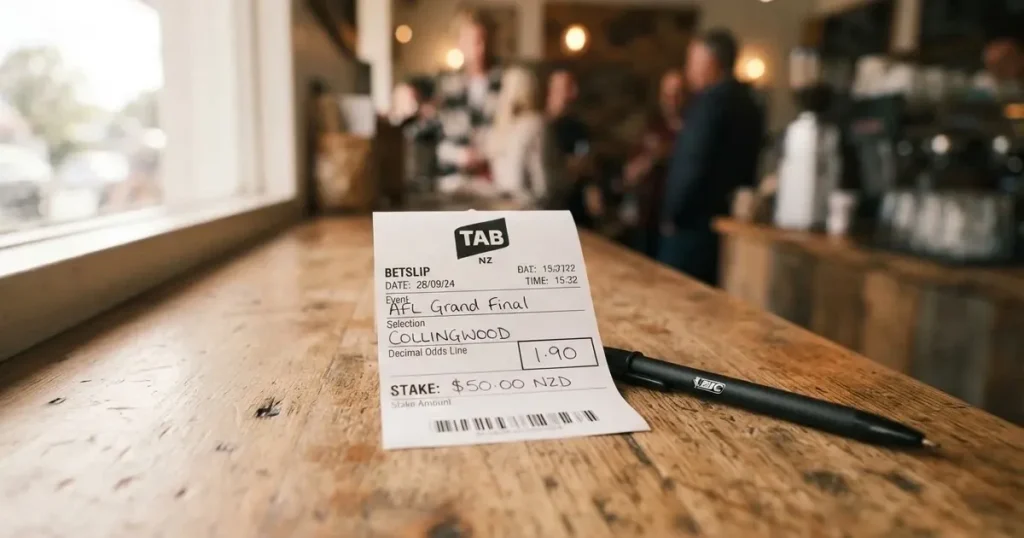
Current as of October 30, 2026 and checked against the Racing Industry Act 2020 and the Online Casino Gambling Act 2026.
New Zealand is the rare market where the entire question of virtual sports betting collides with a monopoly. Since 28 June 2025 only TAB NZ and its sister brand Betcha hold the rights to offer online sports and racing bets in New Zealand, and the long-running Online Casino Gambling Act 2026 treats betting on a computer-simulated sporting event as a casino product. That classification matters, because casino products in New Zealand do not sit on TAB NZ’s sports and racing licence, and a punter shopping for a virtual football or virtual greyhound market is asking a question the law has not finished answering. This page walks through how the regime works, what virtual sports betting actually is and how it pays, what strategy looks like in a market whose outcomes are random, and which operators a New Zealand resident can lawfully bet with.
Responsible Gambling and the Reality of Simulated Markets
A market that runs every two or three minutes is built for sustained play, not for someone thinking once a week. That is the first thing to settle, because the rest of the page sits on top of it.

New Zealand’s responsible-gambling framework centres on TAB NZ. The TAB NZ app, listed on the New Zealand App Store under the seller name New Zealand Racing Board, carries deposit limits, time-outs and self-exclusion alongside the free national Gambling Helpline on 0800 654 655 and a text line on 8006. A self-exclusion registered with TAB NZ applies across both TAB and Betcha because the two brands share a single operator identity. A national online-betting exclusion register does not exist; the register that the 2026 casino law will eventually require is for online casinos only, and it does not cover simulated sports or racing bets.
The reason this matters ahead of a page on virtual sports is mechanical. A real-horse race is bounded by distance, by form, by track conditions, and the time between races is measured in tens of minutes. A virtual race is bounded only by the next result, and the next result is generated every couple of minutes. The same deposit limit on an account running real bets at a meeting once a week is a different deposit limit on an account running simulated bets across a thousand events a day. The control the law asks TAB NZ to offer is the same, the cadence a punter faces is not, and that gap is the responsible-gambling conversation the rest of the page needs.
If a punter feels the pace is running away from them, three moves are useful before they place another bet. Lower the deposit ceiling in the TAB NZ app to an amount that stings to lose. Set a short time-out, even twenty-four hours, to break the loop the game generates. Save the 0800 654 655 number in the phone now, while the decision is calm rather than while it is needed. None of these are admissions of failure; they are exactly what the harm-minimisation framework expects a punter to use.
Betting under 18 is an offence under section 89 of the Racing Industry Act 2020, and TAB NZ identity checks on New Zealand address and ID sit on top of that. The age ceiling for land-based casinos, 20, is a casino number only; it is not the betting age for racing or sports.
Predictions and Strategy in Markets With No Edges
A market whose outcomes are produced by a certified random number generator is not a market where analysis finds winners. A page that pretends otherwise costs the reader money on its own word.

The honest framing is this. Virtual sports products publish their return-to-player percentage and the algorithm behind each event, and the result of every race, every match and every league is independent of every other. There is no form line that carries forward, no injury report that moves the line, no weather change between the second fixture and the third. A punter who watches a run of favourites losing cannot rationally conclude favourites are “due”; a punter who watches a sequence of three favourites winning cannot conclude favourites are “hot”. Both are the shape of small samples, and small samples in independent draws look like streaks without meaning anything.
That is why every “system” sold under terms like “virtual football betting system”, “how to predict virtual football betting” or “virtual basketball betting strategy” reduces, when the marketing words come off, to money management and stake sizing. A staking plan, a fixed-percentage bankroll rule, a stop-loss threshold and a disciplined walk-away are valuable for the same reason a budget is valuable in any other setting. They protect the punter from a sequence that will, over time, drift exactly to the published margin. They do not, and cannot, shift the margin. The bookmaker’s edge does not bend because the punter uses a system on top of it, and no betting guide that promises a winning method on simulated markets is honest about what it is selling.
A few discipline rules work in any punter’s interest and cost nothing. Treat the published RTP as the most generous the market will ever be. Pick one stake size before the session and refuse to chase loss on a bigger one. Stop after the same number of bets regardless of whether the session is up or down. Decline accumulator insurance, cashback offers and reload bonuses that condition further play, because every spin of the wheel those offers keep a punter at the table reduces the marginal bankroll rather than growing it. Look at the total staked in a session, not the largest single win, because the largest single win is what the marketing plants in memory while the cumulative loss is what the bank actually sees.
Strategy stops where the algorithm starts. Once a punter accepts that, the conversation moves from “how to win” to “how to spend an evening that is paid for up front”. The rest of the page is about that.
Bet Types, Odds and What a Virtual Market Pays
A virtual sports bet is a bet on a fixed-odds market priced by the operator and settled by the operator’s published result. The mechanics match real-event betting; what is different is what produces the result.
The bet types TAB NZ and other suppliers run on virtual sports cover the same families a punter will know from real racing and sports. Win pays out if the chosen finisher finishes first; place pays out if the chosen runner finishes in the published place positions; each way combines win and place into a single stake split across both. Head-to-head simply picks the higher of two named runners, or the higher of two teams; the same-game multi lets a punter combine a handful of outcomes from a single virtual event into one price; standard multi-bets combine outcomes across virtual events. Quinella, exacta and trifecta work across the finishers of one virtual race in the same way they do on real racing.
Odds format is the punter’s choice in most products. New Zealand uses decimal odds — a $10 stake at $2.10 returns $21 gross, $11 net — and most virtual markets are quoted in that form. Some products also publish fractional (1/1 = 2.00) or American (+100 = 2.00) for cross-market reading. Whatever format the price comes in, the arithmetic is unchanged.
A worked example: a $20 win bet on a virtual greyhound at $3.50 returns $20 × 3.50 = $70, which is $50 profit on the $20 stake. The same $20 split across a quinella — first and second in any order — at a combined $12 returns $20 × 12 = $240 gross, $220 net. The same $20 on a same-game multi whose four legs multiply to $7.50 returns $20 × 7.50 = $150 gross, $130 net. Each is paid if the result matches the bet; each is lost otherwise.
What the punter pays for the convenience of fixed odds is the operator’s margin. The standard illustration below in the margin section shows what that figure looks like on one virtual two-way market. The margin is what the operator keeps of every unit bet, on average, across many results. It is the price a punter pays for the menu itself, and it is the figure no staking plan changes.
Settling is automatic. Once the operator publishes the result of a virtual race or a virtual match, the bet is resolved against that result and the winnings land in the account. There is no official ruling, no protest, no stewards’ enquiry; the operator’s own result is final because there is nothing else to consult. Same-game multis are settled on the published score at the end of normal time in the simulated event, much as Sky Bet’s eSoccer rules settle on the official score at normal time. Cash-out, where the operator offers it, fixes the payout at the moment the punter accepts it and is not guaranteed to be available at any later point in the event.
A short note on each-way and place markets. Each way is two bets of equal stake: one on win at the quoted win odds, one on place at the place fraction the operator publishes (commonly 1/4 or 1/5 of the win odds, set against a smaller finishing band). A punter who backs a long-priced runner each way wins the win portion if the runner wins and the place portion if the runner makes the place band without winning; a punter who backs a short-priced favourite gives back little on the place portion because the place odds have already been compressed. That compression is built into the place fraction; the punter is not paying for it twice.
The Reviewed Operators and How They Compare
The ranking is short by design. TAB and Betcha are two brands of one operator; nothing else in this section takes a New Zealand betting licence, and the comparison serves a New Zealand punter only if it makes that fact the front of the page rather than burying it in fine print. The other eight names below are listed because New Zealand players meet them in the wild — in advertising, in app stores, in affiliate traffic — and a punter comparing options needs to know what each of those names actually is and which of them, if any, takes a New Zealand bet.
| Brand | New Zealand Status | Key Term |
|---|---|---|
| TAB / Betcha | TAB NZ lawful brand | Fixed odds, tote and live betting |
| Spinbara | Not licensed in New Zealand | Bonus and crypto offers |
| FunBet | Not licensed in New Zealand | 24/7 sportsbook and live betting |
| Alawin | Not licensed in New Zealand | Partial cash out availability |
| Rooster.bet | Not licensed in New Zealand | Tobique Gaming Commission licence |
| RoyalistPlay | Not licensed in New Zealand | Six odds format availability |
| Glorion | Not licensed in New Zealand | Live chat and email support |
| RTbet | Not licensed in New Zealand | Cash out settlement terms |
| BillyBets | Not licensed in New Zealand | Five-level VIP programme |
The brands other than TAB and Betcha are not rated against TAB NZ; they are not licensed to serve the New Zealand betting market, and a New Zealand punter cannot lawfully place a bet with them. They sit in this section so the page is honest about what is on offer when a punter searches, and so the verdict for each names, in one line, what using that brand actually costs.
The role the page is taking is consequence: these operators exist, New Zealand players find them, and a verdict that does not look at the offshore offering is a verdict missing half the field. Where a brand suits a reader, that reader is named; where it doesn’t, the line is written anyway. The operators the page covers are listed in their original order, not retitled.
TAB
TAB is the retail and online face of TAB NZ, the statutory monopoly for racing and sports betting in New Zealand. The betting it accepts is governed by section 74AAA of the Racing Industry Act 2020 — no other operator may take such bets from a person in New Zealand — and the framework has been in force since 28 June 2025.
The site tab.co.nz is the address the brand publishes; the same operator runs betcha.co.nz. TAB’s app, TAB – Racing & Sports Betting, was first released on 8 September 2014 and now carries the full racing and sports menu plus integrated safer-gambling tools. The TAB menu covers fixed-odds and tote (pool) bets across racing codes — thoroughbred, harness and greyhound, with greyhound racing closing in stages from 1 August 2026 — and sports betting on the major New Zealand and international leagues (rugby, basketball, cricket, rugby league, football, tennis and more). Bet types follow the published New Zealand racing and sports book: Win, Place, Each Way, Quinella, Exacta, Trifecta, First4, Daily Double, Running Double, Quaddie, Big6 and same-game multis.
Safer gambling on TAB sits in the account holder’s hands: deposit limits, time-outs, self-exclusion, and the Gambling Helpline. TAB NZ pays the Problem Gambling Levy at 0.74 percent, in force from 1 July 2025 to 30 June 2028.
Verdict: the only lawful place to bet on real and virtual racing and sports in New Zealand, and the only one of this list where a New Zealand punter’s deposit, identity check and complaint sit on the same framework as the law itself.
Betcha
Betcha is the second online brand of TAB NZ, built around the social side of punting rather than the retail counter side. TAB and Betcha are not rivals; they are two interfaces to the same operator, and the same legal regime covers both.
Betcha runs three product surfaces alongside the standard racing and sports menu. A daily Toolbox hosts odds boosts and insurance tools for bets that don’t land. A Bet Social section lets punters chat, follow tipsters and share bets or pools in a feed-style layout. A Playbook publishes tips and match analysis for the day. Same-game multis, boosted odds and accumulator insurance sit inside the betting slip the same way they do on TAB.
Betcha’s safer-gambling account controls reach both brands because the operator identity is the same, and a self-exclusion registered against Betcha covers TAB and vice versa.
Verdict: the same legal standing as TAB for New Zealand punters, with a product surface that adds the chat, follow and share features a social punter wants on a Saturday meeting. Read it as TAB with a louder feed, not a different bookmaker.
Spinbara
Spinbara is an English-language online casino and sportsbook that advertises a first-deposit bonus of 100 percent up to EUR 100, a sport crypto welcome bonus of 100 percent up to 200 USDT, and a casino welcome bonus of 100 percent up to EUR 500 plus 200 free spins on its own homepage. Those figures are Spinbara’s own; the brand names no licence that reaches New Zealand, and the Department of Internal Affairs identifies only TAB NZ as authorised to take racing and sports bets from a person in New Zealand under section 74AAA of the Racing Industry Act 2020.
A New Zealand punter at Spinbara is gambling with an operator outside the New Zealand regulatory framework. No New Zealand complaints route reaches Spinbara; no New Zealand harm-minimisation register applies; and DIA’s published warning, that overseas operators may not return unspent credits and may not pay out large wins, applies in full.
Verdict: not lawful for a New Zealand racing or sports bet; the bonus terms Spinbara advertises do not move that. The brand suits readers outside New Zealand, not readers this page is written for.
FunBet
FunBet is an online sportsbook and casino whose sportsbook menu publishes odds on football, ice hockey, American football, basketball, volleyball, tennis, rugby and baseball alongside live betting. FunBet describes itself as a 24/7 bookmaker. The brand names no licence that applies in New Zealand; the only provider lawfully taking racing and sports bets from people in New Zealand under section 74AAA of the Racing Industry Act 2020 is TAB NZ.
A New Zealand punter opening a FunBet account is opening an account that no New Zealand regulator oversees. The DIA warning — minimum safeguards in the operating jurisdiction, possible non-return of unspent credits, large-win disputes unmediated — applies on the same terms as for any other offshore name on this list. FunBet’s menu is broad, the framework behind the menu does not extend to New Zealand.
Verdict: broad sportsbook, narrow framework for the reader here. A punt on rugby or basketball at FunBet from a New Zealand address is outside the section 74AAA permission.
Alawin
Alawin runs an online sportsbook and casino whose published terms set out cash out — including partial cash out — for settled-bet locks, with the feature not guaranteed to be available at any particular time and not available on free bets or risk-free bets. The brand names no licence that applies in New Zealand; only TAB NZ may lawfully take racing and sports bets from a person in New Zealand (section 74AAA of the Racing Industry Act 2020).
The cash-out feature is the strongest product surface Alawin names in its own terms. A punter who wants to lock a win or a loss before settlement has a place where that option is published. The published terms also say the option is not unconditional, which is honest framing for a feature most operators describe as if it were always on.
Verdict: cash out, no New Zealand reach. The feature list is real; the licence that lets a New Zealand punter use it is not there.
Rooster.bet
Rooster.bet is operated by Novatrix SRL, a company incorporated in Costa Rica under registration number 3-102-893958. Rooster.bet’s terms state that the brand holds e-gaming licence No. 0000002 issued by the Tobique Gaming Commission. The Tobique Gaming Commission is not a New Zealand regulator; its licence gives Rooster.bet no right to take bets from a person in New Zealand.
The sportsbook menu at Rooster.bet lists Live, Sports Promotions, Results, Schedule, E-sports and Predictions sections, and publishes odds in six formats. Predictions as a menu item is unusual and worth naming — the brand’s “Predictions” page is positioned as a tipster-style feature, separate from the betting menu proper.
Verdict: Tobique-licensed, not New Zealand licensed. The bookmaker’s market breadth is on a page; the law behind the bookmaker is not New Zealand law. A New Zealand punter’s bet at Rooster.bet is outside the section 74AAA permission.
RoyalistPlay
RoyalistPlay is owned and operated by Novatrix SRL, the same Costa Rica company behind Rooster.bet, under the same Tobique Gaming Commission e-gaming licence No. 0000002. RoyalistPlay’s own homepage carries a country switcher and an English-NZ version of the site at /en-NZ, which is a customer-facing accommodation, not a New Zealand licence.
The site’s published offering covers sports betting, casino, and odds in European, British, Hong Kong, American, Indonesian and Malaysian formats. The breadth of odds formats reflects an international bookmaker targeting multiple markets; it does not change which law the brand operates under for each market.
Verdict: same ownership as Rooster.bet, same Tobique licence, no New Zealand licence. The English-NZ version of the site does not extend the framework behind the site; the framework that applies to a New Zealand bet remains the New Zealand framework, and that framework names only TAB NZ.
Glorion
Glorion is an online casino and sportsbook whose published About page says support is available by Live Chat or by email and that the site accepts customers over 18 years of age only. The brand names no licence that applies in New Zealand.
The age ceiling Glorion names is 18, which matches New Zealand’s TAB NZ betting age (the gambling age for land-based casinos is 20). A matching age ceiling is not a licence. Glorion’s age check is Glorion’s policy; the licence that lets it take a New Zealand bet is not on the page.
Verdict: 18-plus policy, no New Zealand framework. The brand’s published age ceiling is a procedural line, not the legal permission to take a New Zealand racing or sports bet.
RTbet
RTbet is an online sportsbook and casino whose published terms set out cash out — the operator settles the cash-out amount at the moment the punter accepts it — with the feature not guaranteed to be available at any moment. RTbet’s licence is a Curaçao licence; that licence gives RTbet no right to take bets from a person in New Zealand.
The cash-out rule is the strongest product line in RTbet’s own terms. RTbet names Curaçao, not Tobique; that is a different licensing authority from the Novatrix-branded sites above. The brand’s market surface is broad; the framework behind the surface does not extend to New Zealand.
Verdict: Curaçao, not New Zealand. Cash-out terms are clear; the rule that lets the operator take a New Zealand bet is not there.
BillyBets
BillyBets is an online casino and sportsbook whose published terms publish odds in Decimal (2.00), American (+100) and Fractional (1/1) formats. The site lists cashback and reload bonuses on sports, a coin shop where coins earned through depositing, betting, tournaments and challenges exchange for free bets and free spins, and a five-level VIP programme.
The coin shop is the unusual feature. It is published as a closed-loop economy inside the brand — earning by activity, spending on bonus bets and spins — and it is the kind of feature that makes cashback and reload a continuous hook rather than a one-off. The licence that lets a New Zealand punter use the feature is not on the page.
Verdict: odds-format breadth, no New Zealand framework. A New Zealand punter’s bet at BillyBets is outside the section 74AAA permission, and the coin-shop hook doesn’t shift the legal frame.
Overview and Core of Virtual Sports Betting in New Zealand
Virtual sports betting is betting on a computer-simulated sporting event whose outcome is decided by a certified random number generator rather than by the action on a track, a pitch or a court. The visual product is a real-event video, with realistic horses running a realistic race or realistic teams playing a realistic match; the mechanics underneath are a draw from a known distribution, and the results settle on the operator’s own published scores.
The search trends around virtual sports betting — including terms like “matched betting virtual sports” and “virtual football betting apps” — track a market where several concepts are confused. Matched betting requires an exchange, and no lawful New Zealand betting exchange exists. A “virtual grand national free bet” offer is only valid if issued by a lawful New Zealand operator, which means TAB NZ or Betcha. A “virtual football betting app” for a New Zealand punter is restricted by the same monopoly framework as everything else.
That is the spine of the overview: a virtual market is a product type, the New Zealand legal regime is a monopoly, and the two collide in the Online Casino Gambling Act 2026. The casino law treats betting on a simulated sporting event as online casino gambling, which is a different licence category from sports betting under the Racing Industry Act 2020. The law does not say TAB NZ can offer virtual products on its sports-betting licence; it does not say it cannot. The most a page can honestly say is that the question is unsettled, and that a New Zealand punter shopping for virtual markets may be shopping in the casino category rather than the sports-book category.
The fundamentals for a punter looking at the question are these. Virtual markets settle on the operator’s published scores, with no stewards, no appeal and no steward of last resort. The RTP the operator publishes is the most generous reading any punter will get from the long-run. The bookmaker’s margin, illustrated below, is the average deduction the operator makes per unit bet and is the figure no staking plan moves. The pace of the product (a new event every few minutes) makes session length the dangerous variable, because the same stake size paid every five minutes adds up faster than the punter tracks it. Punters who want the product are entitled to bet on it; punters who want a regulated framework around it must understand the framework is racing and sports under TAB NZ, and the casino frame is a separate conversation.
The landscape is narrow on the lawful side and broad on the offshore side. TAB NZ is the lawful bookmaker; offshore brands are everywhere, easily found, and not lawful for a New Zealand racing or sports bet. The honest comparison is not TAB NZ versus an offshore name — the comparison is between lawful and unlawful — but the page lists offshore brands because New Zealand players find them and need to know what they are.
The primer on the question: virtual sports betting in New Zealand, in the year the page is written, is a market that no one outside TAB NZ can lawfully operate for New Zealand betting purposes, and a category of bet the 2026 casino law treats as casino gambling. Whether TAB NZ itself offers virtual products under one regime or the other is the question research did not establish. The rest of this section looks at where that leaves the law.
Legality and Regulation of Virtual Sports Betting in New Zealand
The New Zealand betting monopoly is the centre of the legality story, and the Online Casino Gambling Act 2026 is the change that brings virtual sports into the conversation. The two together explain most of what a punter needs to know about the legal frame.
The Department of Internal Affairs is the regulator. The Gambling Act 2003 gives DIA its general gambling role, while the Racing Industry Act 2020 gives it the betting prohibition and the racing-system oversight. Section 92A of the Racing Industry Act 2020 is the betting-prohibition provision; section 74AAA is the insertion made by the Racing Industry Amendment Act 2025, and it is the rule the 2025 amendment added. Section 74AAA’s plain effect is that no person other than TAB NZ may offer racing betting, sports betting, or other racing or sports betting to a person in New Zealand, regardless of where the operator or the punter is resident or incorporated. The change took effect on 28 June 2025, and DIA told providers serving New Zealand to withdraw with immediate effect.
The Online Casino Gambling Act 2026 is the second legal layer that affects this page. The casino law regulates online casino gambling; it does not extend TAB NZ’s sports-betting monopoly, but it does classify betting on a computer-simulated sporting event as online casino gambling. That classification matters because it puts simulated-event betting under a different regime from the racing-and-sports regime TAB NZ was set up to run. The casino law’s own online casino licence is a separate permit, and TAB NZ winning the right to apply for it does not extend the betting monopoly. Whether TAB NZ’s own virtual products are sold under the sports-betting regime, the casino regime, or both, is not established; the honest line is that the classification is unsettled.
The 2026 page-level facts:
- Since 28 June 2025 only TAB NZ (TAB and Betcha brands) may lawfully take online sports and racing bets from people in New Zealand (Racing Industry Act 2020, section 74AAA).
- TAB NZ’s online operation runs under a 25-year agreement with Entain, signed in 2023, with Entain getting a 50/50 share of gross profits and at least $150m a year going to TAB NZ for the first five years. Entain also pledged a one-off $100m payment to the racing sector.
- The Online Casino Gambling Act 2026 classifies betting on a computer-simulated sporting event as online casino gambling, not as a sports or racing bet.
- Greyhound racing is closing in stages from 1 August 2026, and from that date offshore operators may not take bets on greyhound races either.
- New Zealand does not geo-block offshore sites; the law puts liability on the offshore operator, not on the player. Section 19(4) of the Gambling Act 2003 (inserted in 2025) says an individual may not be convicted for placing a bet with an offshore operator in breach of section 74AAA; no source has published a penalty for a player.
- TAB NZ pays the Problem Gambling Levy at 0.74 percent, in force from 1 July 2025 to 30 June 2028. Offshore operators supplying New Zealand residents pay online gambling duty of 12 percent of profits from 1 July 2024 and 16 percent from 1 January 2027. A duty being payable does not make an offer lawful.
The bets TAB NZ accepts. The published betting rules cover fixed-odds and tote (pool) bets: Win, Place, Each Way, Quinella, Exacta, Trifecta, First Four, Double, Treble, Daily Double, Running Double, Quaddie, Big6, Multis and same-game multis. Live betting is in the TAB NZ apps; any statutory restriction on in-play markets is not established. There is no statutory per-bet cap; limits are TAB NZ’s own terms. The ban covers events held inside and outside New Zealand. No lawful New Zealand exchange exists, and spread betting is outside TAB NZ’s sports-betting definition; the page says nothing about a New Zealand exchange for that reason.
The age and identity check. Betting under 18 is an offence under section 89 of the Racing Industry Act 2020. TAB NZ account opening asks for a verified New Zealand address and ID, and the age for casino play in a land-based casino is 20 — that is a casino number, not a betting one, and the two are not merged on this page.
Advertising and bonuses. Because only TAB NZ may offer betting here, DIA reads the prohibition as covering promoting or taking such bets for another operator; how DIA treats betting affiliates is not established, which is why this page describes the monopoly and does not invite readers to sign up with an offshore brand. The Advertising Standards Authority’s Gambling Advertising Code applies to betting advertisements: ads must not target children (under 14) or young people (14 to under 18), judged by context, appeal and expected audience (25 percent or more of the audience counts as significant where accurate data exists), must not encourage harm, and must be truthful with terms available. TAB NZ runs “bonus bets” promotions; no New Zealand rule on bet-bonus size or wagering terms was found in the materials, so the page quotes TAB NZ’s own terms where they appear and prints no promo code.
Tax — the player side. Inland Revenue guidance says recreational gambling winnings are generally not taxable, and prize money from TAB horse, dog and trotting races is not taxable. A person who bets as a business is a different case and must consult Inland Revenue or an accountant; the page treats this as general information rather than tax advice. Operator side: TAB NZ pays the Problem Gambling Levy (0.74 percent). Overseas operators supplying New Zealand residents pay online gambling duty (12 percent of profits since 1 July 2024, 16 percent from 1 January 2027), and a duty being payable does not make an offer lawful. The point-of-consumption charge on offshore racing and sports bets ended on 30 June 2026, which means DIA’s lever on the offshore side is now prosecution under section 74AAA rather than tax collection.
The honest framing. TAB NZ and Betcha are the only lawful option, with New Zealand harm-minimisation tools, regulator oversight and a complaints framework. Offshore operators serving a New Zealand bet are unlawful under section 74AAA and carry DIA’s stated risks, no New Zealand complaints route, and no New Zealand harm-minimisation framework. Neither is “the safe choice” by default; the choice is between a lawful monopoly and an unlawful offering, and the consequences of each are different.
DIA’s warning, written out in plain terms: overseas operators may be in jurisdictions with minimal consumer safeguards; they may not return unspent credits; they may not pay out large wins. The materials do not state how DIA has handled any particular payout dispute from a New Zealand punter, so the page says only what DIA has published.
The Margin, the Real Cost of a Virtual Bet
What the punter actually pays for the menu is the bookmaker’s margin, and the arithmetic of it is the most useful number on this page. The framework above rules the operator; this section says what every price on the operator’s slip costs the punter.
The point of the calculation is to make plain what every odds panel hides: the per-unit deduction the operator takes on average, across many results, and the share the operator returns on a winning bet. The illustrative market below is two equal prices on a two-way event, drawn at 1.90 / 1.90 — an example rather than a quoted price. The two equal prices are the worst case the punter faces on a two-way market without a draw, and they make the arithmetic clean.
The two-way fair-out line. A two-way market with two equally likely outcomes at fair odds prices each side at 2.00. If each side is at 1.90 instead, each implied probability is 1 / 1.90 = 0.5263, or about 52.63 percent. The two probabilities add to 1.0526, or 105.26 percent — a 5.26 percent overround. The payout share is the inverse of that overround: 1 / 1.0526 = 0.9500, or 95.00 percent. The margin is 1 minus the payout share, or 5.00 percent — and that is the share the operator keeps on average of every dollar bet on this market.
What that figure means to a punter. On a $20 win bet at 1.90, a winning return is $20 × 1.90 = $38. The $18 of that beyond the $20 stake is the gross profit on a win. Across many bets at the same margin, the punter keeps 95.00 cents on the dollar and the operator keeps 5.00 cents. A punter who bets $20 a hundred times at this margin has staked $2,000 and is expected, across the long run, to receive $2,000 × 0.9500 = $1,900 in returns, a $100 average loss across the hundred bets.
The same arithmetic on different prices. Move the price to 1.85 / 1.85 and the implied probabilities become 1 / 1.85 = 0.5405 each, totalling 1.0811, an overround of 8.11 percent and a margin of 7.50 percent. Move to 1.95 / 1.95 and the implied probabilities become 1 / 1.95 = 0.5128 each, totalling 1.0256, an overround of 2.56 percent and a margin of 2.50 percent. The band on a two-way market with both sides priced close is roughly 2.5 percent to 7.5 percent, with cheaper margins at the equal-priced end and fatter margins when one side is short. A margin of 2.5 percent is a competitive read; 5.0 percent is ordinary for many virtual markets; anything over 8 percent is reading expensive against the band.
The same idea on a three-way market. A racing market with three runners each priced at, say, 4.00 / 4.00 / 1.90 implies probabilities of 0.250 + 0.250 + 0.526 = 1.026 — a 2.6 percent overround and a 2.6 percent margin. A 1.50 / 6.00 / 10.00 card implies 0.667 + 0.167 + 0.100 = 0.933, which is underround and a sign of a mispriced market. The two tools a punter has are reading the overround and reading the spread between the most and least likely outcomes on the same market.
The result, then, as a band with its condition. With both sides of a clean two-way market at equal decimal prices, the punter pays 5.26 percent of the stake on average across results, and the operator returns 95.00 percent — that is the 5.0 percent margin that matters. The band across virtual two-way markets reads 2.5 percent to 7.5 percent, where cheap means under 3 percent and expensive means over 6 percent, and the punter who knows the band can spot the price that sits at the unfair end of it before placing a bet.
A consequence for stake size. At a 5.0 percent margin, $100 staked across the evening returns $95 on average. The night ends with most punters down, some up — the result is the arithmetic, not the streak. Staking more does not pay back the margin faster; it pays the margin back faster on more turnover. A punter who wants to bet for an evening sets a budget, not a target, because the budget is the line that survives the margin and the target is the line the marketing wants them to draw.
A consequence for the staking plan. A punter’s discipline, the one thing they control, is fixed stakes, fixed session length, and a fixed stop-loss. None of that changes the 5.0 percent. The 5.0 percent is what the rest of the page is paying for the product.
Frequently Asked Questions
How does virtual betting work?
A virtual bet is a fixed-odds wager on a computer-simulated sporting event whose result is decided by a certified random number generator and published by the operator. The bet is a normal fixed-odds stake against the published result, settled automatically once the event ends; there is no stewards’ enquiry or appeal, and same-game multis are settled on the operator’s published score.
How does virtual football betting work?
The mechanics are the same as virtual horse racing or virtual greyhound betting: a simulated match produces a result, the operator publishes it, and bets on Win/Draw/Outcome, totals, handicaps and same-game multis settle on the published score. Punters place a stake at the operator’s price, and a winning bet returns stake times odds; a losing bet returns nothing.
How to bet on virtual football and win?
No staking plan can move the margin the operator publishes, and virtual outcomes are independent draws. Disciplined bankroll management — a fixed stake, a fixed session length and a hard stop-loss — preserves the budget but does not change the average deduction. The honest framing is that simulated football is paid for as entertainment, not invested in as analysis.
Which bookmaker may lawfully take sports and racing bets in New Zealand?
TAB NZ, through its TAB and Betcha brands, is the only operator that may lawfully take online sports and racing bets from a person in New Zealand (section 74AAA of the Racing Industry Act 2020, in force since 28 June 2025). No other operator holds a New Zealand betting licence, and offshore brands accepting a New Zealand bet are acting outside section 74AAA; the law targets the operator, not the player.
How is the return on a bet worked out from the stake and the odds?
In decimal odds, the gross return on a winning single bet is stake multiplied by odds, and the net profit is stake multiplied by (odds minus one). For example, a $20 win bet at decimal odds of 3.50 returns $70 gross ($50 net); on a same-game multi the odds of the legs multiply into one price and the same formula applies.
What is the bookmaker’s margin and how can it be seen in the odds?
The margin is the share of every unit bet the operator keeps on average, and it shows in the odds as an overround — the sum of the implied probabilities of all outcomes is above 1.00. The margin is one minus the inverse of that overround: at odds of 1.90 / 1.90 on a two-way market the implied probabilities add to 1.0526, the payout share is 95.00 percent, and the margin is 5.00 percent.
Tips & strategy – kiwiracingbets
Content created by the «kiwiracingbets» team
